
The Bernardine Church — History & Facts
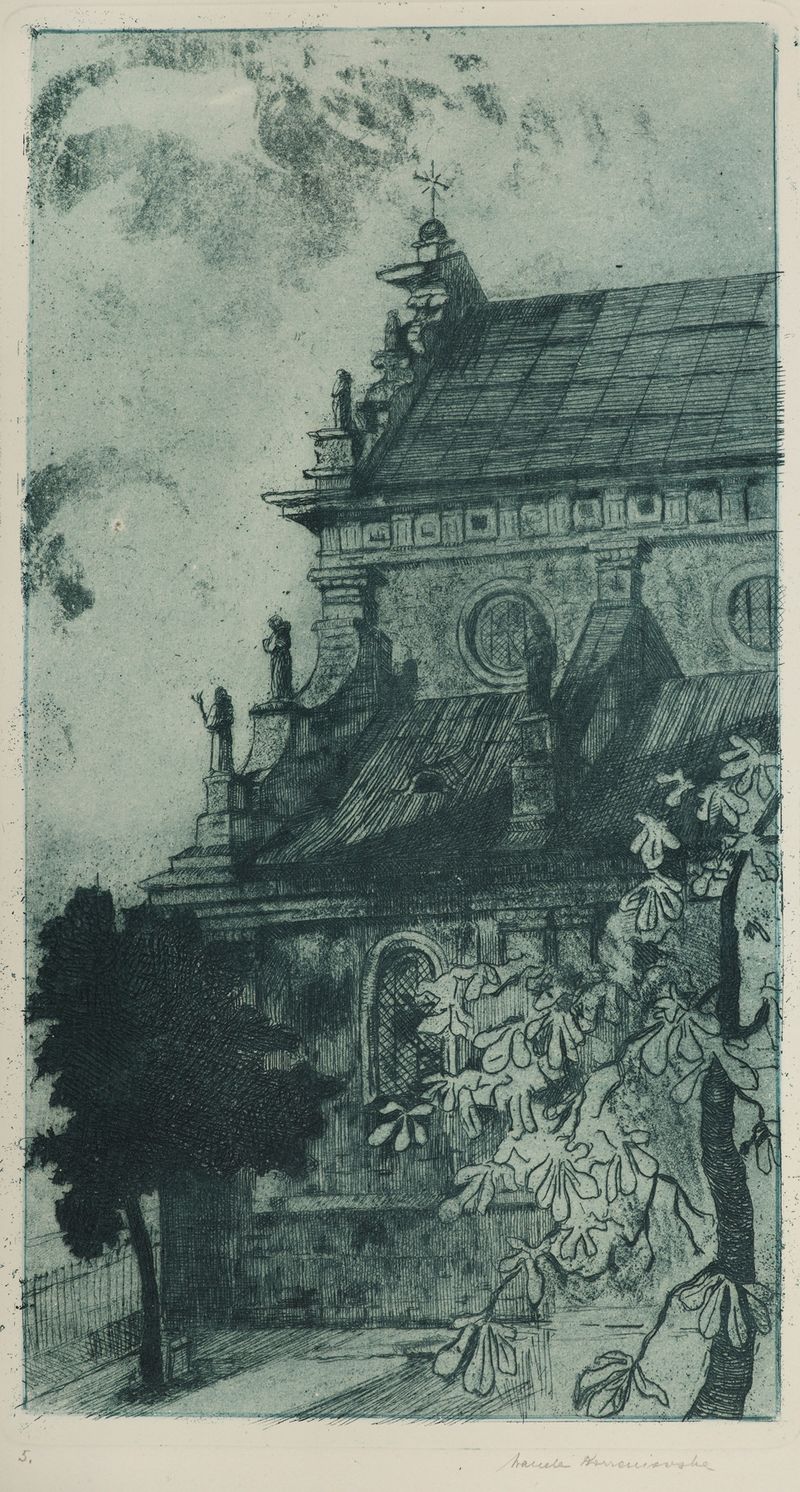
Can beauty exist without sorrow? This question lingers in the air as one gazes upon the hauntingly serene The Bernardine Church. The painting encapsulates a moment of quiet reflection, juxtaposing the architectural splendor of the church with an undercurrent of melancholy, hinting at the grief that often accompanies reverence. Focus on the delicate interplay of light and shadow that envelops the church’s façade. Notice how the soft, muted colors evoke an ethereal ambiance, guiding the eye to the intricate details of the stonework and the elegant arches.
The composition is masterful; Korzeniowska’s brushstrokes create a sense of movement in the sky, as if the clouds themselves are mourning over the sacred space below. The church stands resolute yet vulnerable, a testament to faith amid the absence that surrounds it. There is a profound contrast between the solidity of the church and the fluidity of the sky, symbolizing the tension between earthly existence and spiritual aspiration. The muted palette may reflect the artist's own emotional landscape, as the soft blues and greys invite contemplation of loss and remembrance.
Small details, such as the distant, solitary figure at the church's entrance, add layers of narrative, suggesting a personal connection to the place, perhaps a confrontation with sorrow within the sanctuary of beauty. Created in 1917, The Bernardine Church emerged during a time of significant upheaval in Poland and Europe, marked by World War I and its aftermath. Wanda Korzeniowska, navigating these turbulent times, sought solace in the spiritual and architectural heritage of her homeland. This painting reflects not only her artistic exploration but also the collective grief and hope of a nation in transition, imbued with a sense of longing for peace and restoration.
More Artworks by Wanda Korzeniowska
Browse all →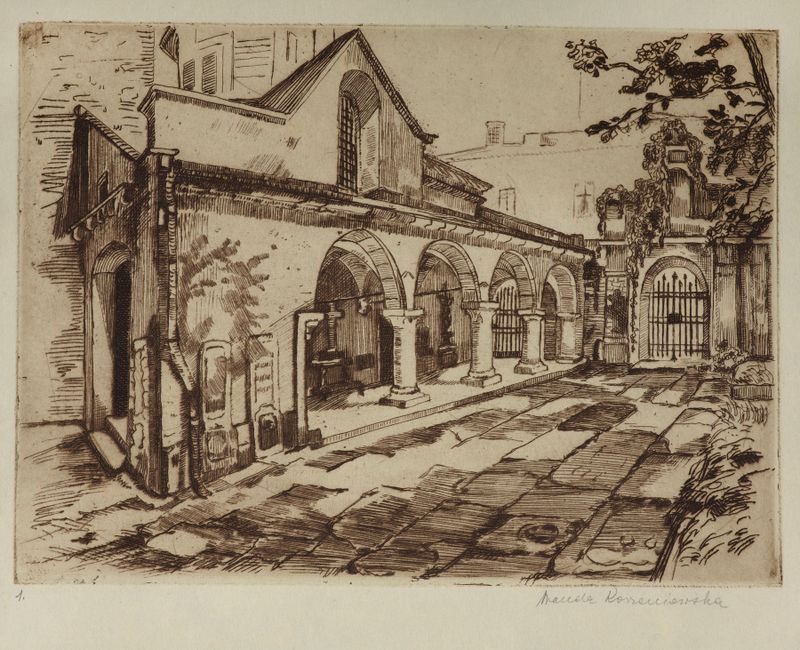
The Armenian Cathedral
Wanda Korzeniowska

The Bernardine Church
Wanda Korzeniowska
The Dominican Church
Wanda Korzeniowska
The Bernardine Church
Wanda Korzeniowska
The Armenian Cathedral
Wanda Korzeniowska

The Latin Cathedral.
Wanda Korzeniowska
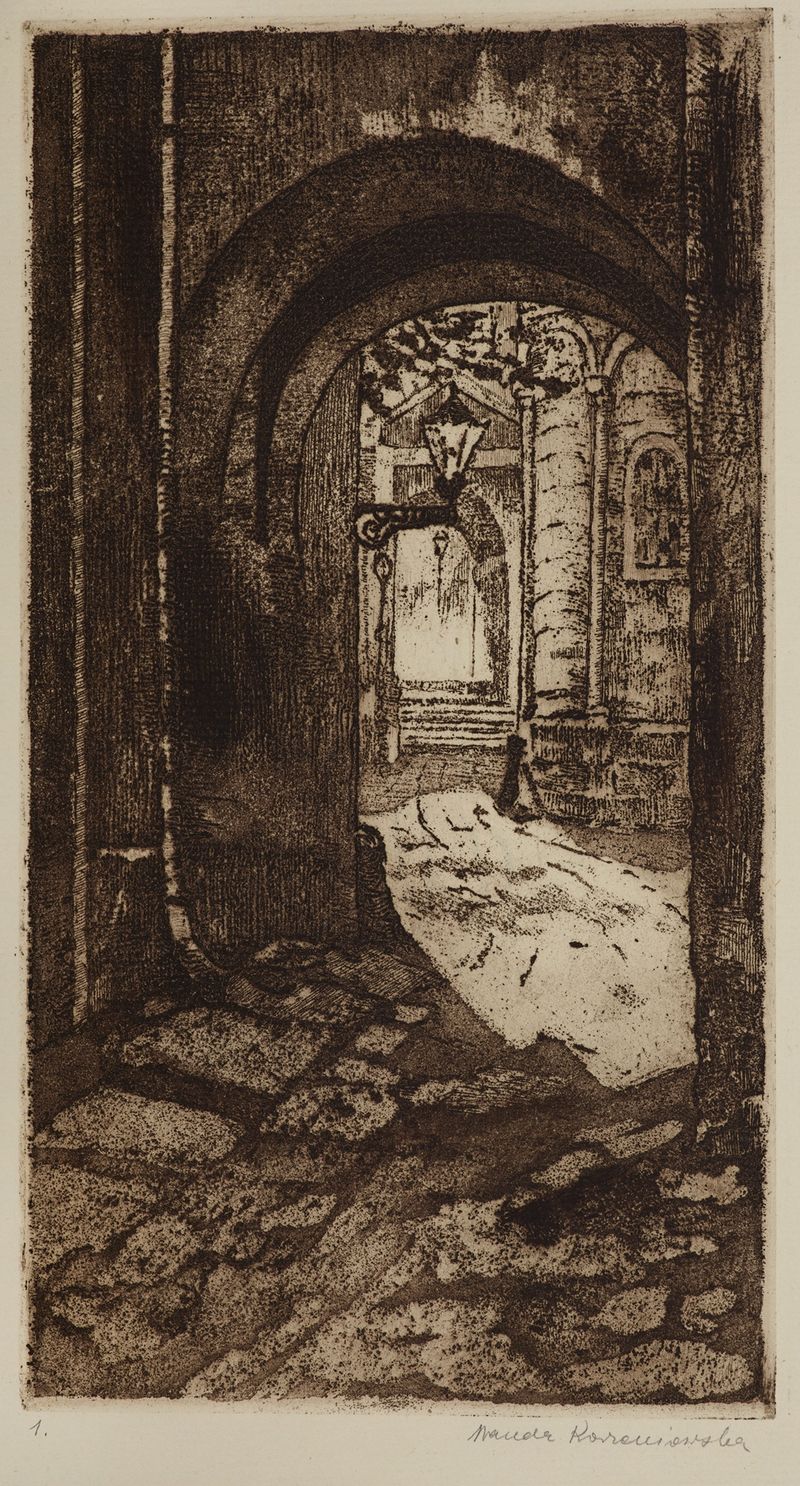
The Armenian Cathedral
Wanda Korzeniowska
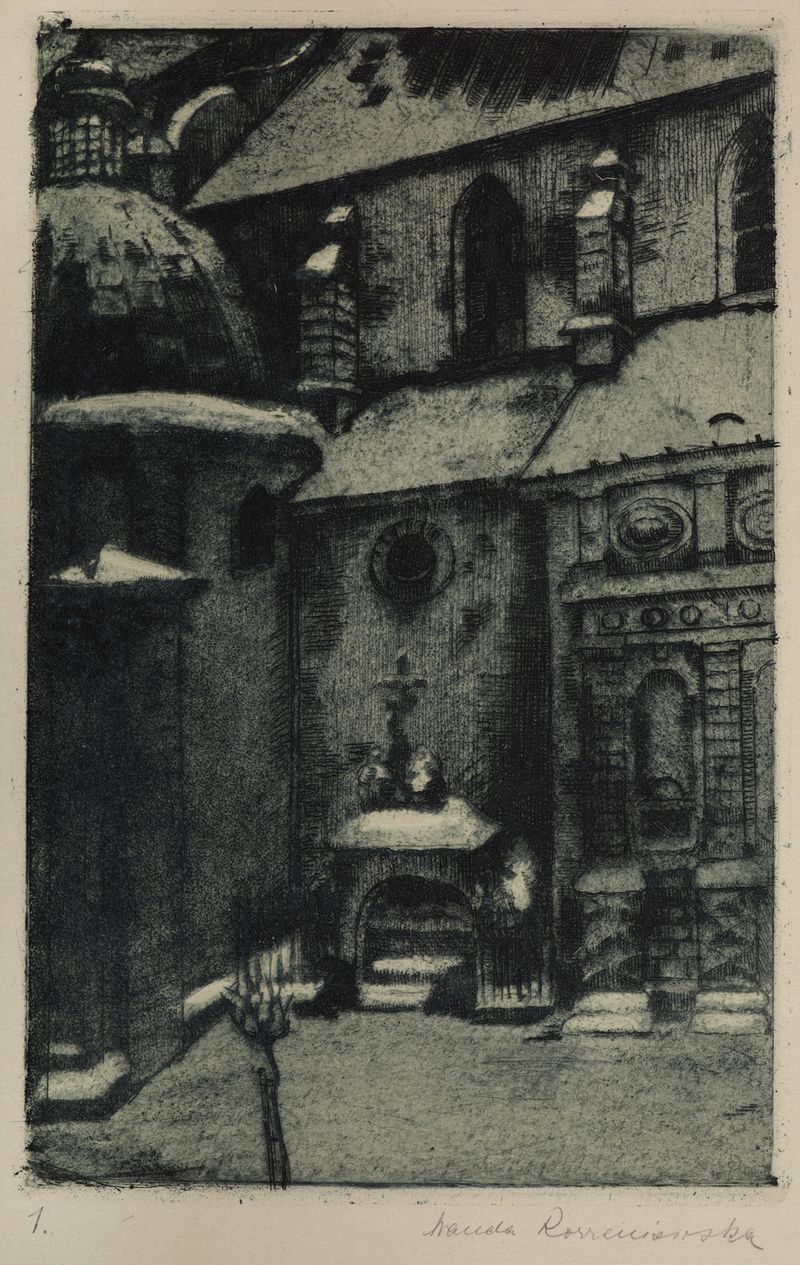
The Latin Cathedral
Wanda Korzeniowska
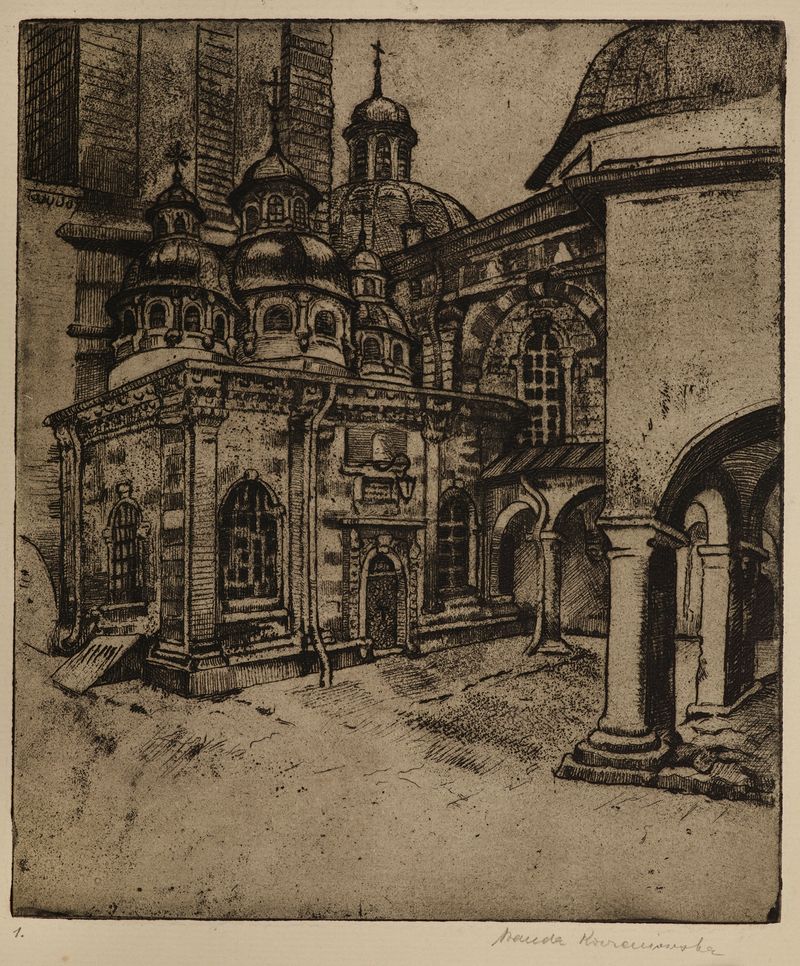
Wallachian church’s courtyard
Wanda Korzeniowska
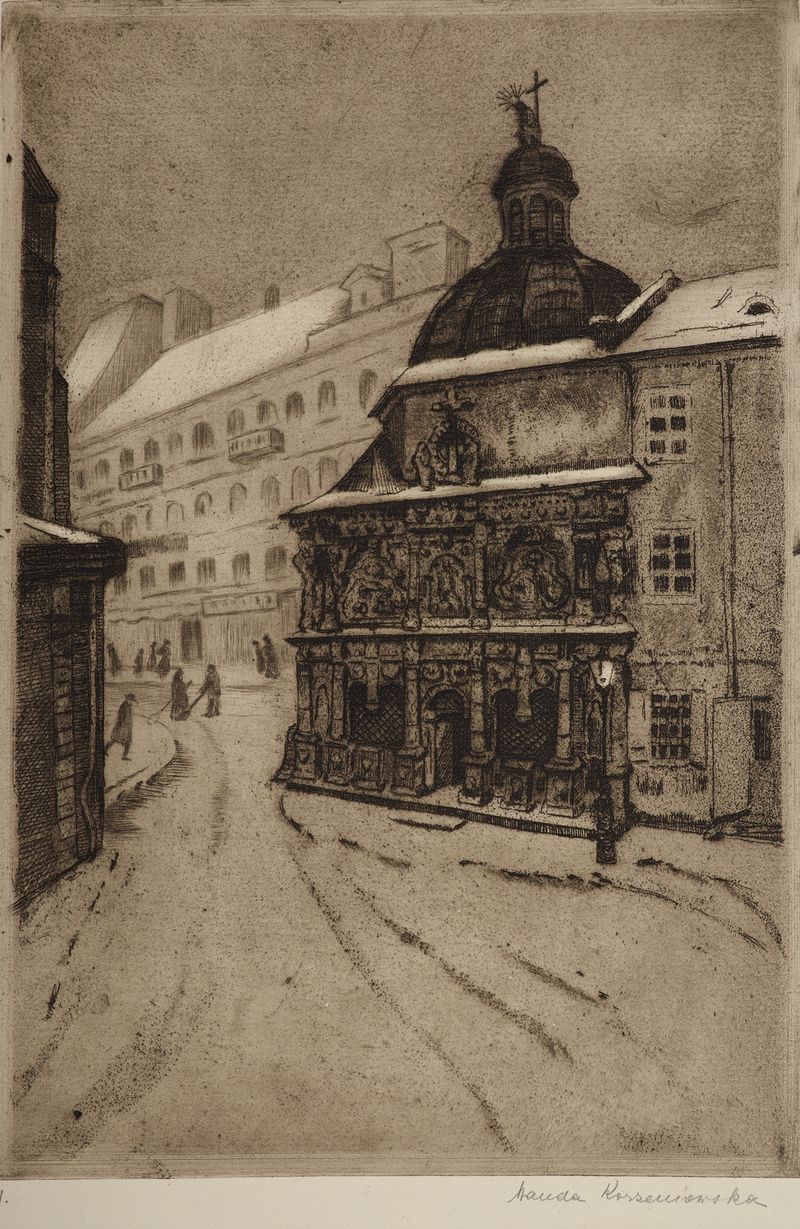
The Boim Chapel
Wanda Korzeniowska
More Architecture Art
Browse all →
The statue of Liberty
Frédéric Auguste Bartholdi

View of Houses in Delft, Known as ‘The Little Street’
Johannes Vermeer

View of Houses in Delft, Known as ‘The Little Street’
Johannes Vermeer

The Cathedral in Rouen. The portal, Grey Weather
Claude Monet

The yellow house
Vincent van Gogh

The Church in Auvers-sur-Oise, View from the Chevet
Vincent van Gogh