
The Bishop’s Barn, Wells — History & Facts
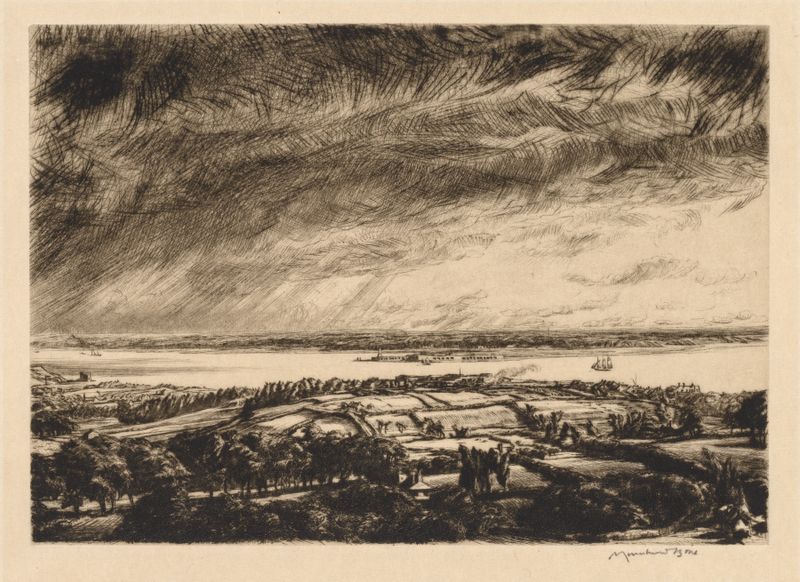
Look closely at the foreground; the barn looms large, its weathered wood speaking volumes of forgotten stories. The play of light casts long shadows, accentuating the solitude that envelops the space. Notice how the muted earth tones create a somber atmosphere, while the delicate strokes in the background hint at the distant hills, softening the starkness of the structure.
The composition draws your eye inward, inviting you to explore the uninhabited space that seems to breathe with a melancholic presence. Beyond the surface, the barn stands as a metaphor for isolation—a once vibrant hub now surrendered to quiet decay. The interplay of light and shadow suggests a passage of time, evoking the transient nature of life and the weight of memories left behind. Each brushstroke resonates with the heartbeat of neglect, highlighting not just physical absence but emotional detachment, inviting reflections on the significance of place and the memories that linger. Muirhead Bone created The Bishop’s Barn, Wells in 1919, during a tumultuous period following World War I.
He was grappling with the loss and disillusionment that permeated society, while also experimenting with his style, blending realism and impressionism. The post-war era saw artists exploring themes of solitude and quiet, mirroring a collective yearning for peace amidst the chaos of change.
More Artworks by Muirhead Bone
Browse all →
On the Clyde, 1917-1918; Building a Liner at Greenock
Muirhead Bone
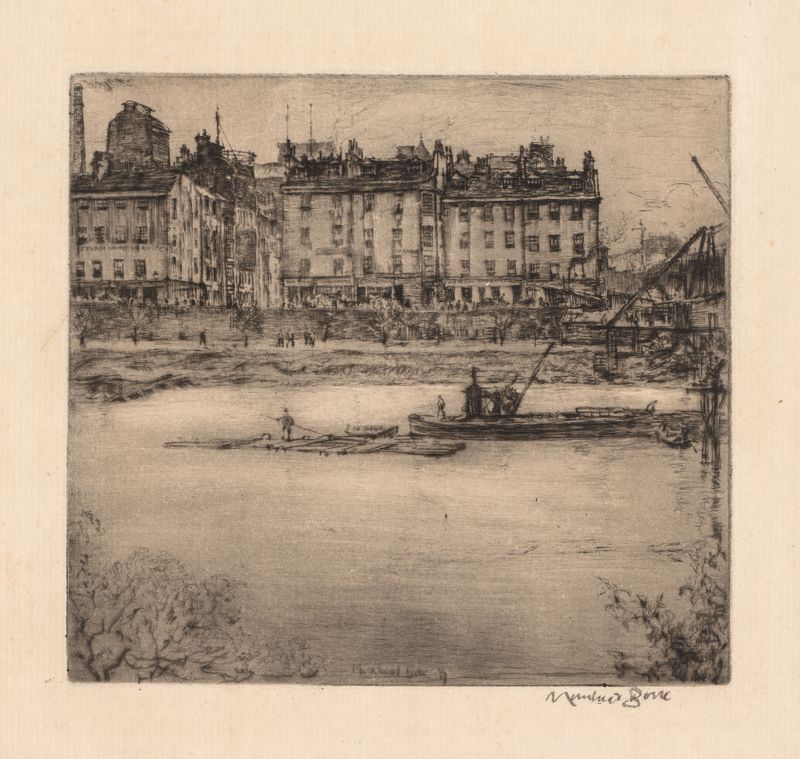
Etchings of Glasgow; Gorbals
Muirhead Bone

On the Clyde, 1917-1918; Reconstructing a Clyde Shipyard
Muirhead Bone

The Great War; Britain’s Efforts and Ideals; Building Ships; A Fitting Out Basin
Muirhead Bone

Picadilly Circus
Muirhead Bone

Demolition of St. James Hall, Exterior
Muirhead Bone
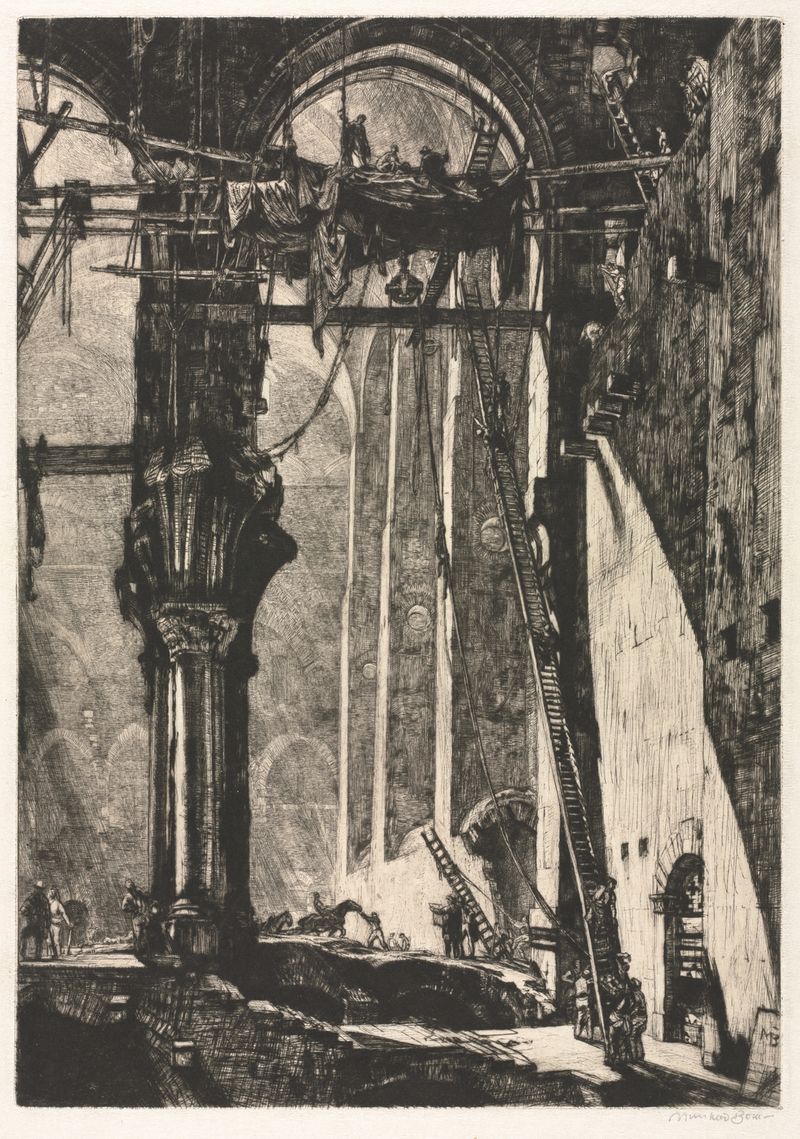
Demolition of St. James Hall, Interior
Muirhead Bone
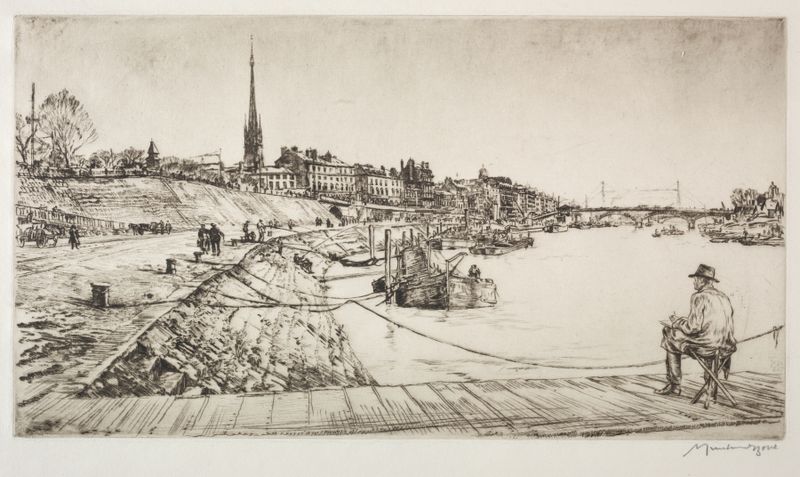
Rouen
Muirhead Bone
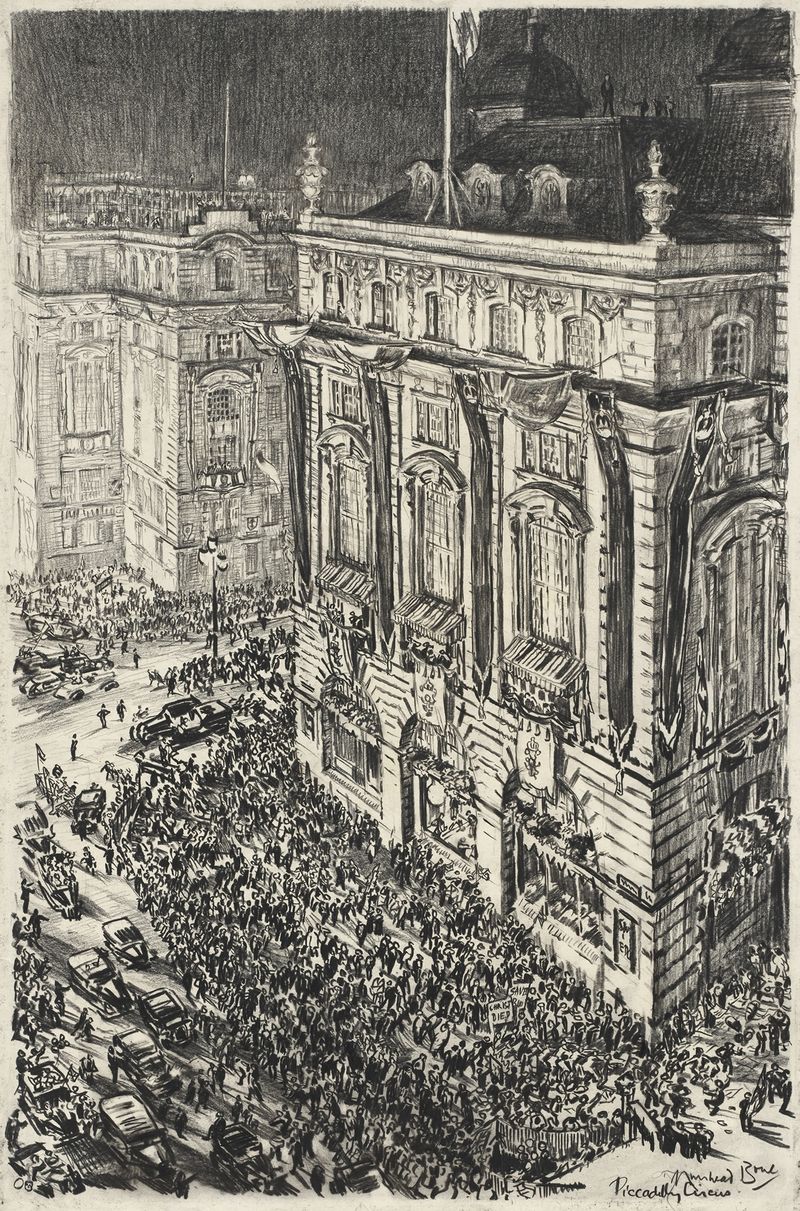
Piccadilly Circus, Eve of the Coronation of George VI
Muirhead Bone
The Solent
Muirhead Bone





