
The Bishop’s Palace, Bromley — History & Facts
In the stillness of a country house, moments of quietude breathe life into the essence of hope, echoing the whispers of forgotten stories. Look to the left at the elegantly arched windows, the soft glow from within spilling onto the cobblestone path, inviting curiosity. The intricate details of the façade draw the eye, where each brushstroke seems to capture a breath of life, a flicker of memories suspended in time. Notice how the lush greenery surrounding the estate encloses it, almost as if nature itself cradles the structure, while the muted palette enhances the serene ambiance, evoking a sense of longing. A subtle contrast emerges in the play of light and shadow, underscoring the tension between the warmth of the welcoming interior and the coolness of the world outside.
The gentle curve of the path suggests a journey, perhaps one of introspection or reminiscence. Small figures in the distance hint at the presence of life, yet their indistinct nature leaves room for imagination, allowing viewers to weave their own narratives of connection and solitude. Samuel Hieronymus Grimm painted this work in the late 18th century while residing in the United Kingdom. During this time, he was immersed in the burgeoning Romantic movement, reflecting nature's beauty with tenderness.
His experiences in the picturesque English countryside inspired him to capture the essence of places like this, blending architectural elegance with the organic charm of their surroundings.
More Artworks by Samuel Hieronymus Grimm
Browse all →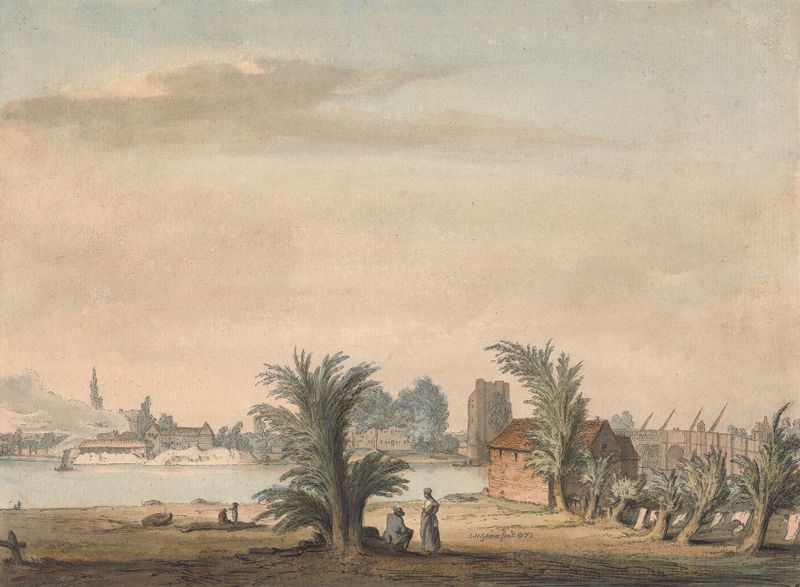
Putney Church and Bridge
Samuel Hieronymus Grimm

Between Chiswick and Brentford
Samuel Hieronymus Grimm
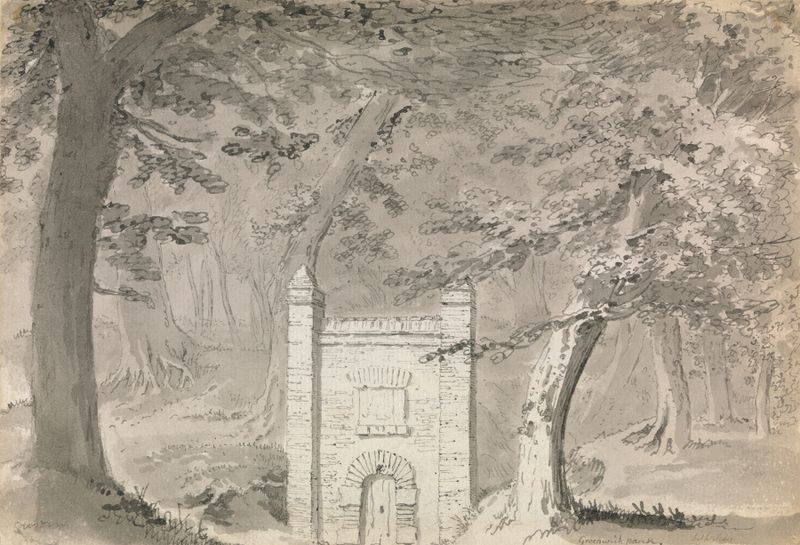
Greenwich Park
Samuel Hieronymus Grimm
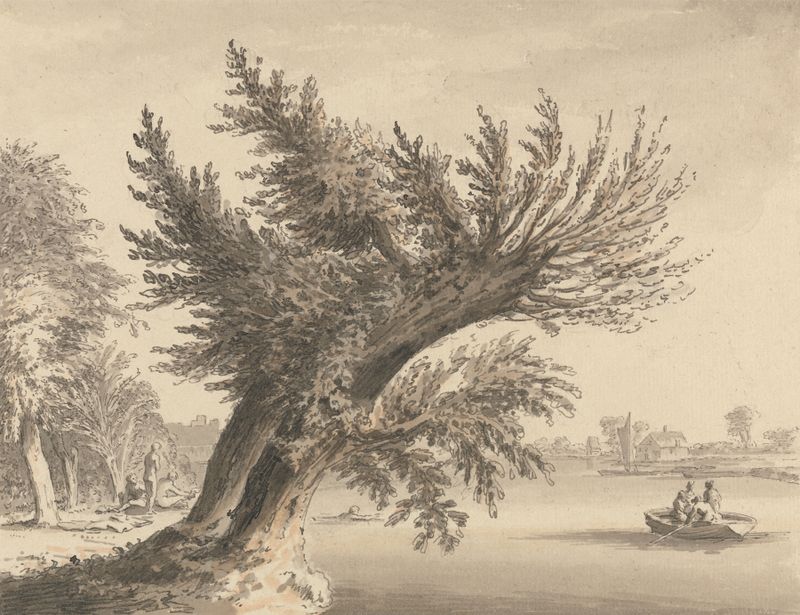
On the Thames at Barnes
Samuel Hieronymus Grimm

View of a Village alongside a River
Samuel Hieronymus Grimm
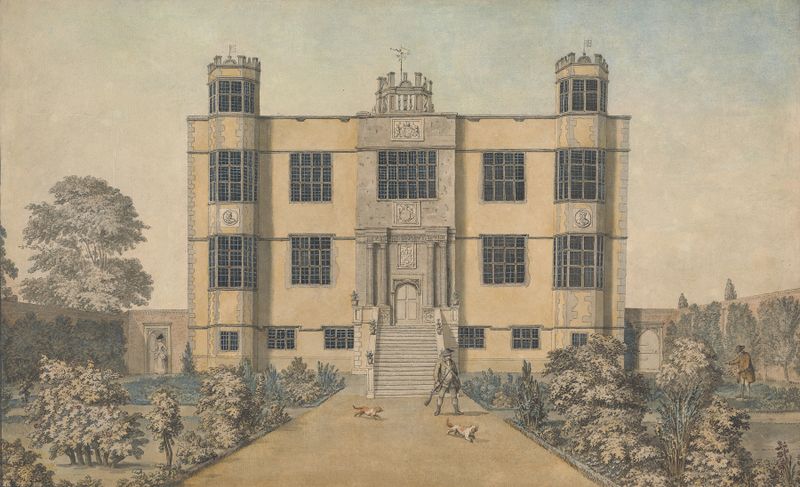
Barlborough Hall, near Chesterfield, Derbyshire; the Main Front of the Hall
Samuel Hieronymus Grimm

Haverfordwest, Pembrokeshire
Samuel Hieronymus Grimm
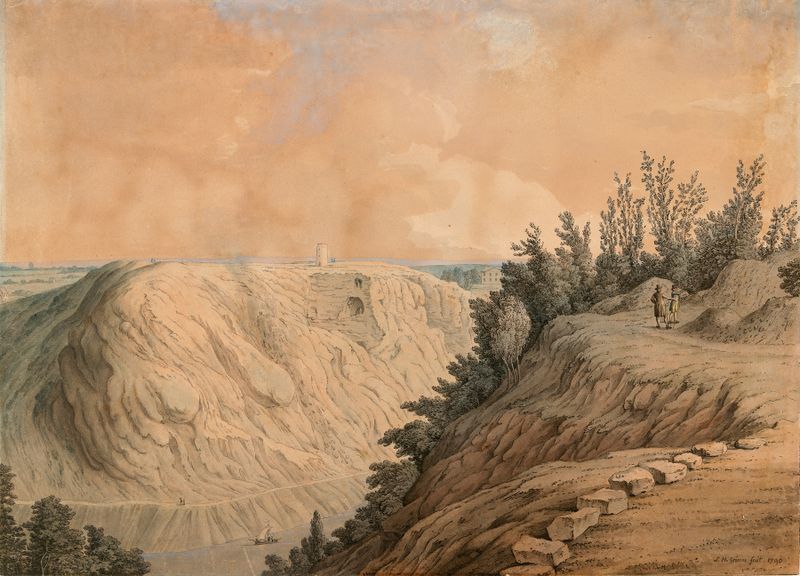
Saint Vincent’s Rock and Cave (The Giant’s Hole) on the River Avon, Somerset
Samuel Hieronymus Grimm

The Gatehouse, Reading Abbey
Samuel Hieronymus Grimm
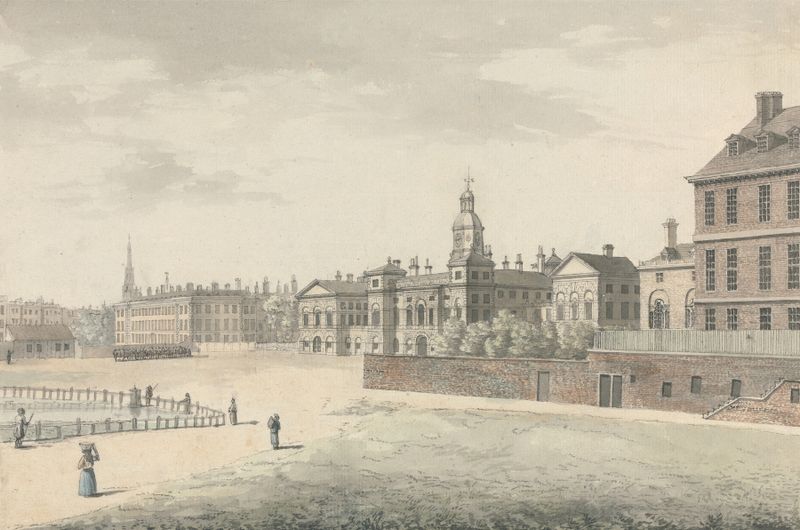
The Horse Guard’s Parade, Whitehall
Samuel Hieronymus Grimm
More Architecture Art
Browse all →
The statue of Liberty
Frédéric Auguste Bartholdi

View of Houses in Delft, Known as ‘The Little Street’
Johannes Vermeer

View of Houses in Delft, Known as ‘The Little Street’
Johannes Vermeer

The Cathedral in Rouen. The portal, Grey Weather
Claude Monet

The yellow house
Vincent van Gogh

The Church in Auvers-sur-Oise, View from the Chevet
Vincent van Gogh