
The Capture of Louvain in — History & Facts
The sweep of the land draws you in first, a grand stage set beneath a sky thick with rolling clouds. In the foreground, a procession of mounted figures commands attention, their presence both surveying and directing the action below. The city of Louvain stretches across the horizon, its spires and ramparts etched with precision against the open fields.
Every line of the engraving pulls the viewer’s gaze from the tangled foliage and riders at the front, through the winding roads and scattered troops, and finally to the distant city — a composition that tells of strategy, anticipation, and the tense quiet before or after conflict. The figures’ gestures, some pointing, some in motion, animate the stillness, while the careful rendering of trees and clouds gives the scene a sense of both immediacy and permanence. Works like this, produced in the era of Adam Frans van der Meulen, were more than mere records; they were instruments of power and memory, commissioned to celebrate victories, document campaigns, and impress upon viewers the might and order of armies. Van der Meulen, known for his detailed battle scenes and landscapes, often worked in service of royal patrons, especially the French court, who sought to immortalize their military exploits.
The engraving’s meticulous detail and panoramic scope reflect the Baroque fascination with spectacle and control, as well as the growing market for prints that could circulate news and glory far beyond the battlefield. Preserved today in the Gallica Digital Library, this work is a window into a world where art, war, and propaganda were tightly interwoven — and where every cloud and cavalryman was chosen to shape how history would be seen.
More Artworks by Adam Frans van der Meulen
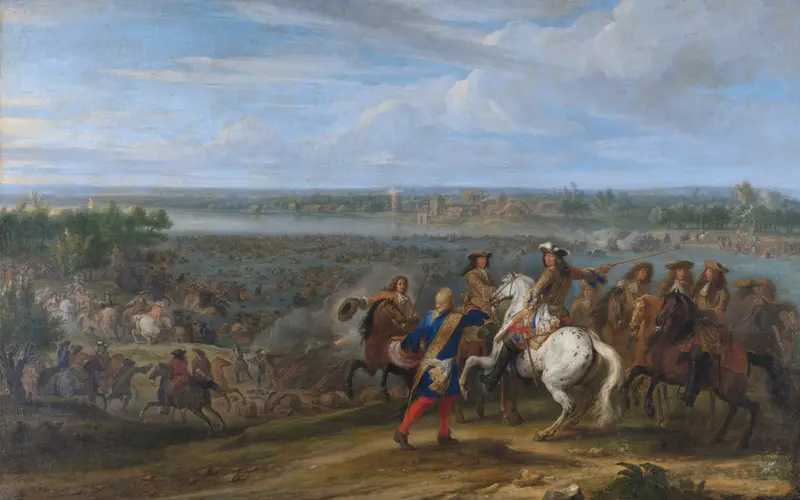
Louis XIV Crossing into the Netherlands at Lobith
Adam Frans van der Meulen
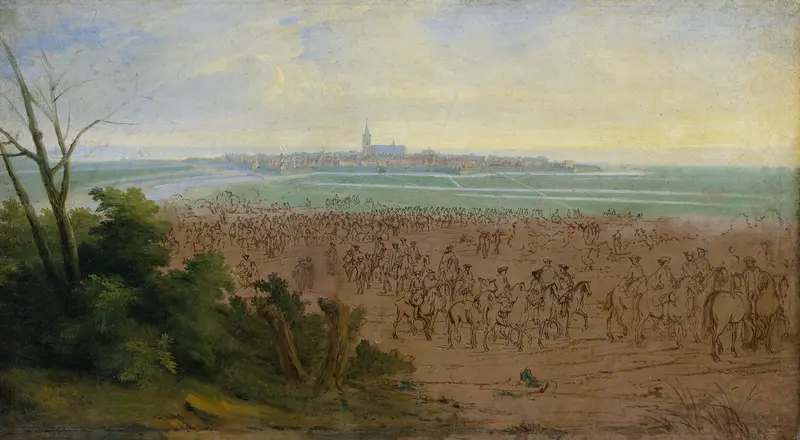
The Troops of Louis XIV before Naarden, 20 July 1672
Adam Frans van der Meulen
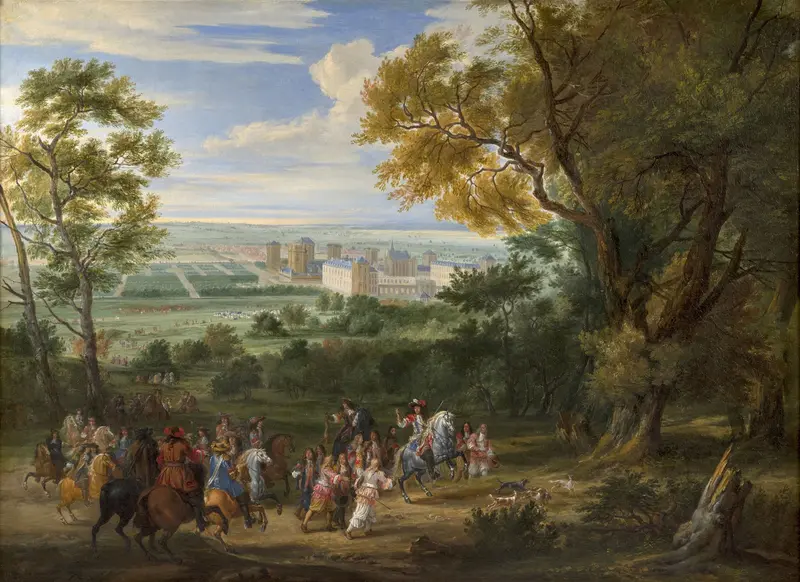
View of the château de Vincennes or The Departure of Louis XIV for the hunt
Adam Frans van der Meulen

A battle scene
Adam Frans van der Meulen
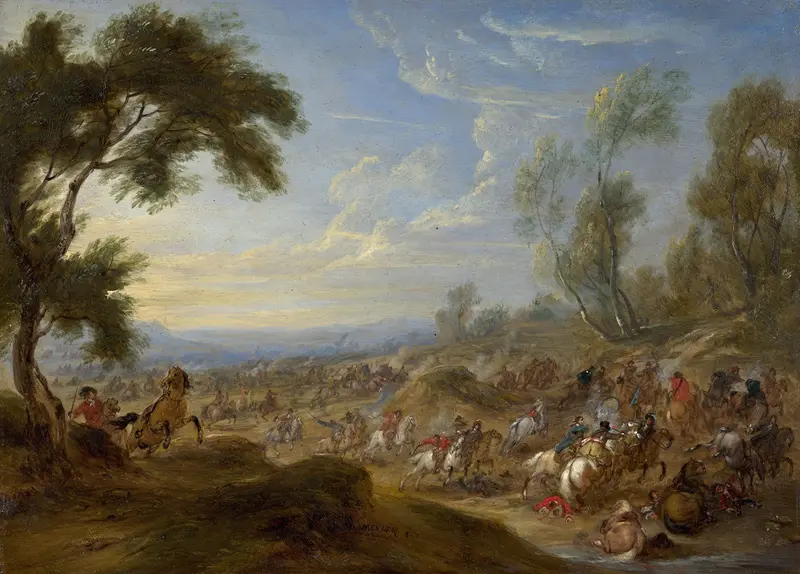
A cavalry charge
Adam Frans van der Meulen
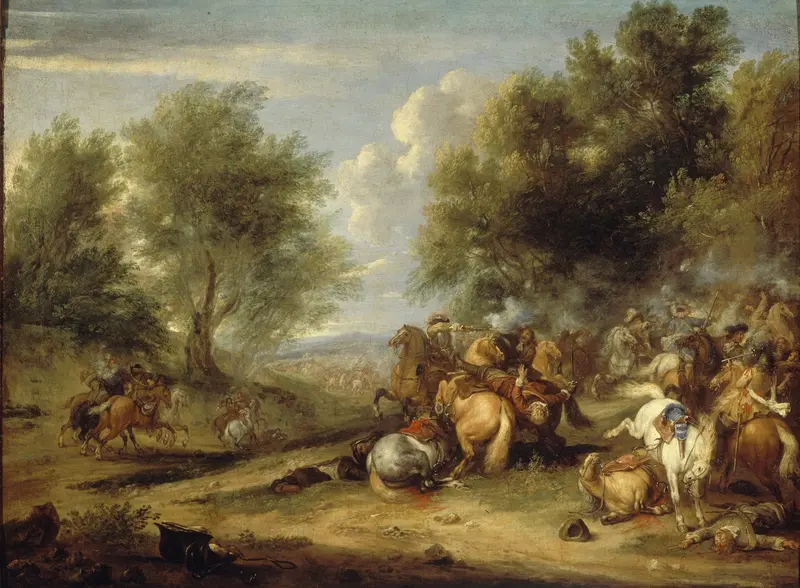
Choc de cavalerie ou Combat de cavalerie
Adam Frans van der Meulen
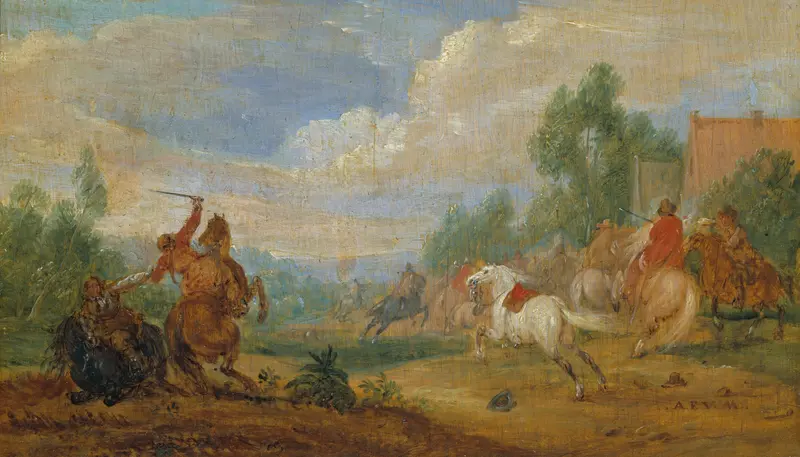
Cavalry Skirmish
Adam Frans van der Meulen
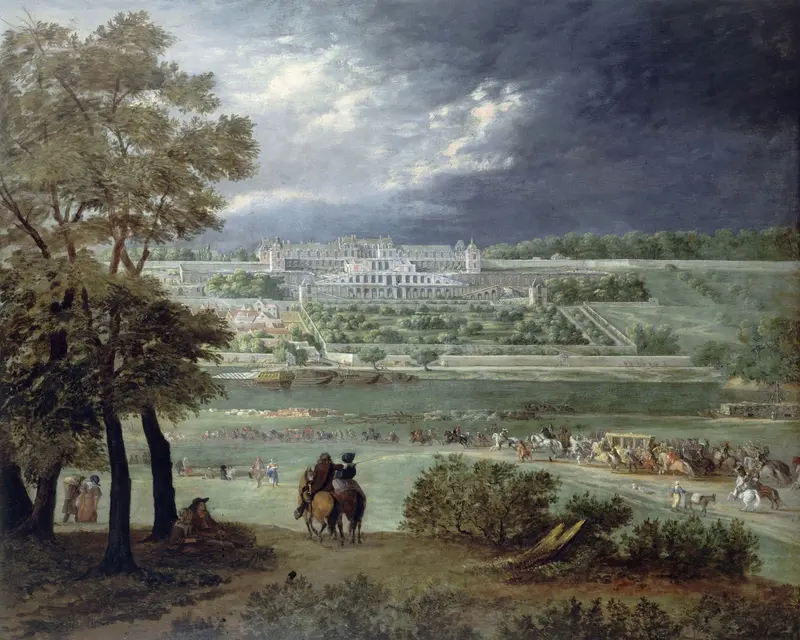
Le Château Neuf de Saint-Germain-en-Laye et les jardins, vus de la rive droite de la Seine
Adam Frans van der Meulen
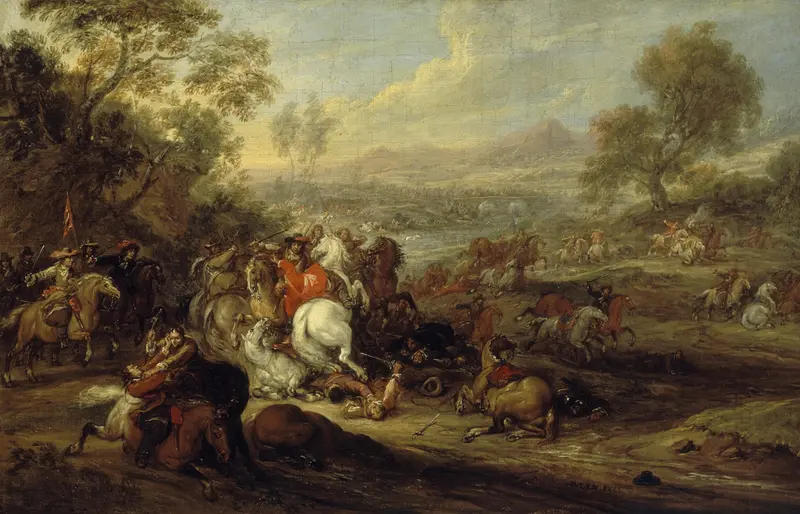
Choc de cavalerie ou Combat de cavalerie
Adam Frans van der Meulen
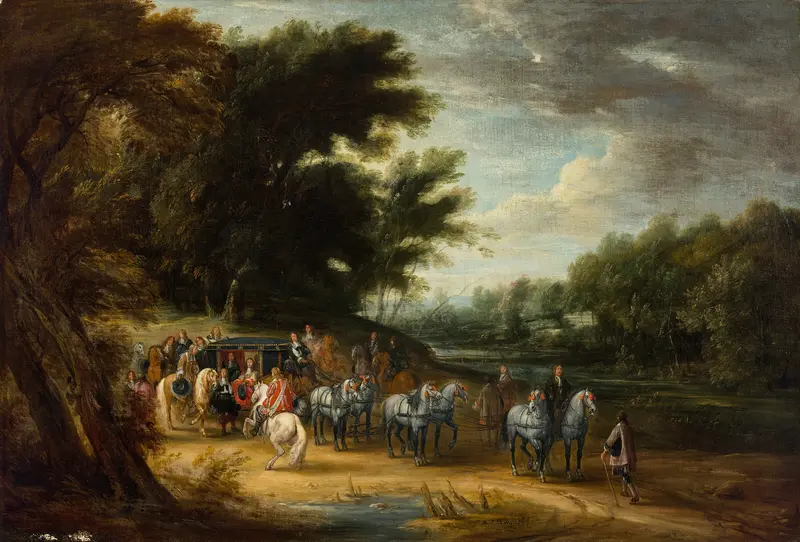
A nobleman in a state coach at rest escorted by his men and horses, with a gentleman on a white horse approaching and landscape beyond
Adam Frans van der Meulen





