
The Casemates before Naarden, 1814 — History & Facts
In the stillness of a landscape, transformation pulses beneath the surface, where nature mingles with humanity’s hand. The vibrant hues and serene composition beckon contemplation, inviting the viewer to unearth the quiet stories hidden within the brushstrokes. Look to the foreground of The Casemates before Naarden, where the delicate interplay of light and shadow reveals a tranquil expanse. Observe how the lush greens of the grass frame the fortified walls, drawing your gaze toward the ancient structure that stands as a testament to resilience.
The artist employs a soft palette, melding blues and browns, which harmonizes with the gentle rise of the landscape, creating a sense of calm before the storm of transformation that looms over the horizon. Yet, beneath this idyllic scene lies a tension between nature’s cycle and man-made permanence. The casemates, sturdy and unyielding, contrast with the surrounding wildflowers swaying in the wind, embodying the delicate balance of existence. Shadows lengthen, hinting at change, while the distant sky, touched with brimming clouds, whispers the possibility of upheaval.
This artwork speaks to the temporality of both nature and civilization, capturing a fleeting moment poised on the edge of transformation. In 1814, Pieter Gerardus van Os painted this work during a period of significant change in Europe, following the Napoleonic Wars. Living in the Netherlands, the artist was deeply engaged with the Romantic movement, which emphasized the beauty of nature alongside the trials humanity faced. This backdrop of political and social upheaval informed his artistic vision, allowing him to convey a landscape that reflects both stability and the inevitability of change.
More Artworks by Pieter Gerardus van Os
Browse all →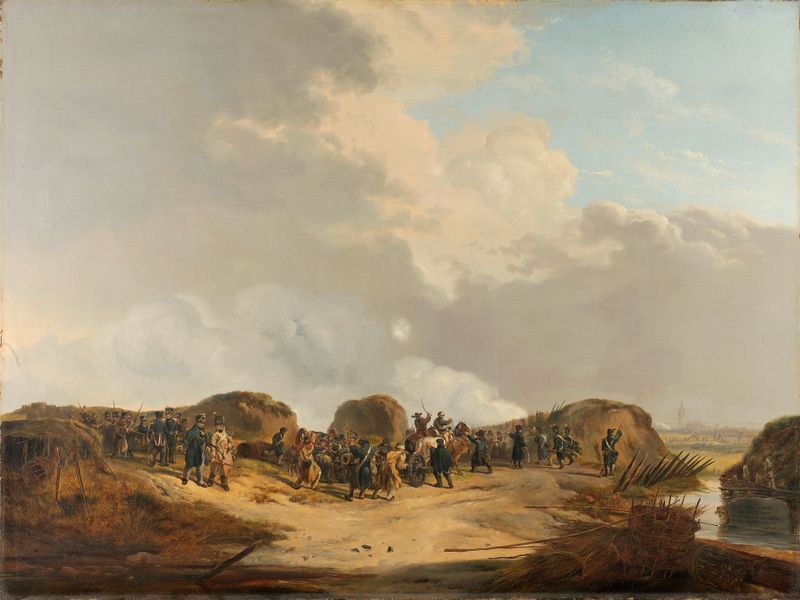
The Demilune constructed at the Siege of Naarden, April 1814
Pieter Gerardus van Os
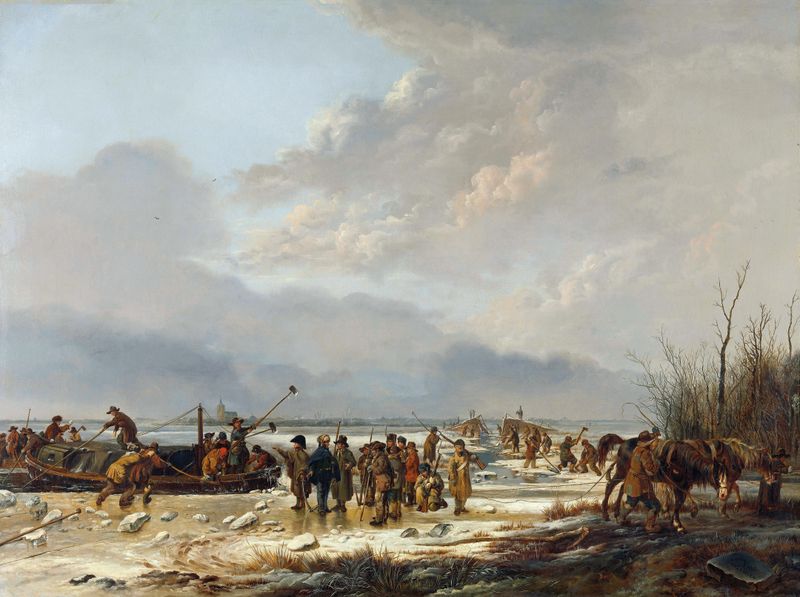
Breaking the Ice on the Karnemelksloot, Naarden, January 1814
Pieter Gerardus van Os
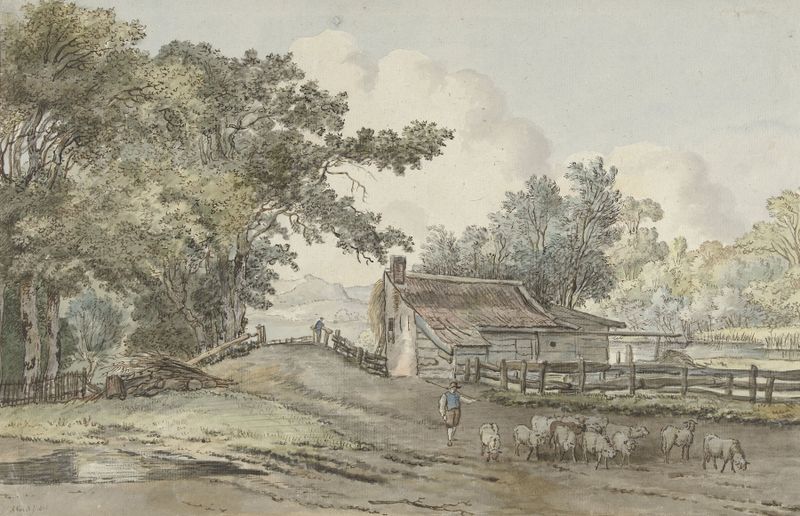
Elswoutshoek te Overveen
Pieter Gerardus van Os
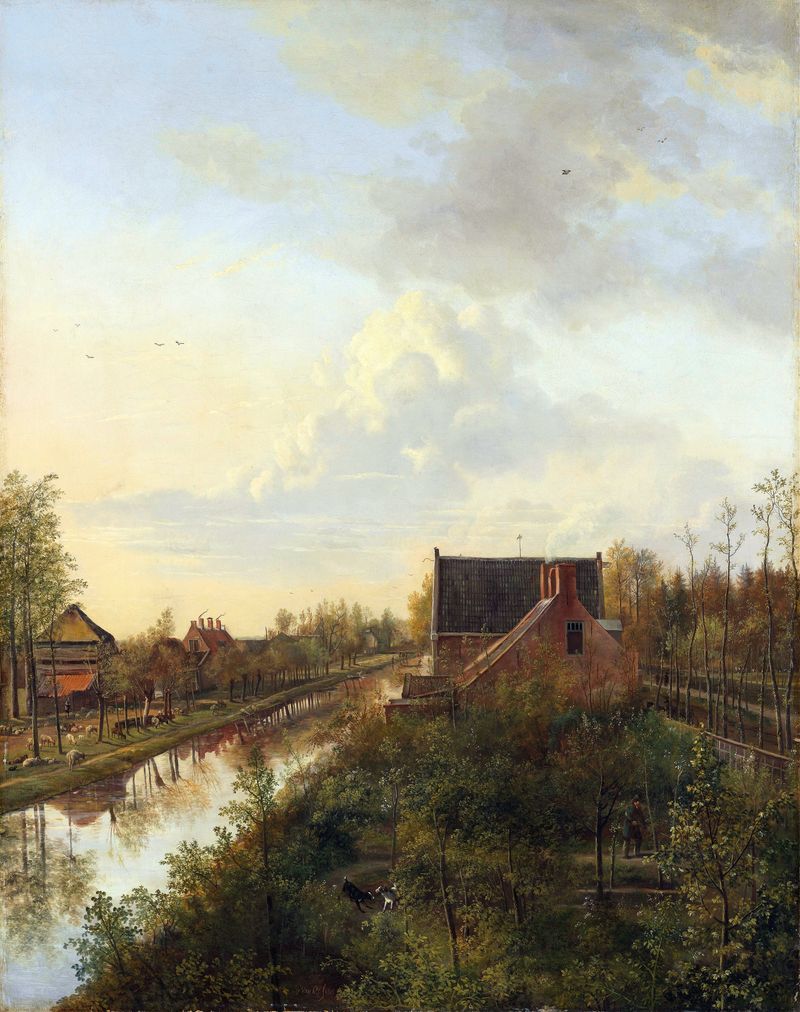
The Canal at ’s-Graveland
Pieter Gerardus van Os
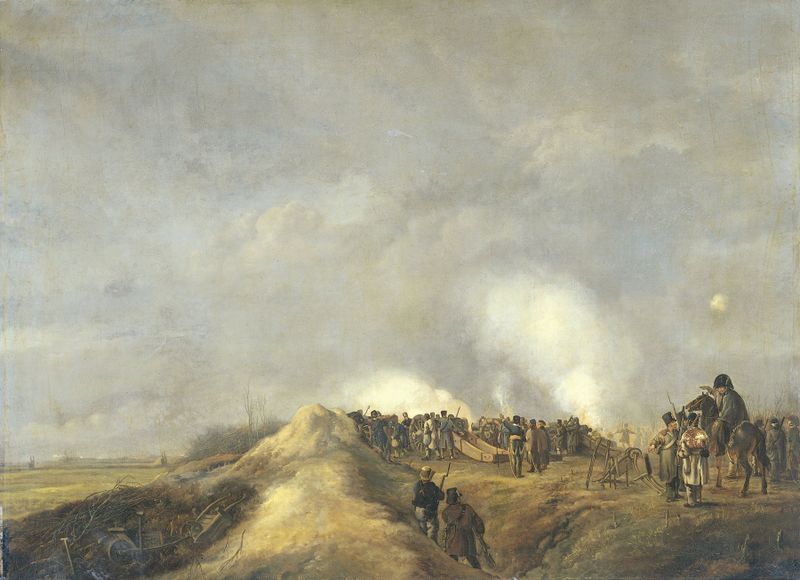
The Bombardment of Naarden, April 1814
Pieter Gerardus van Os
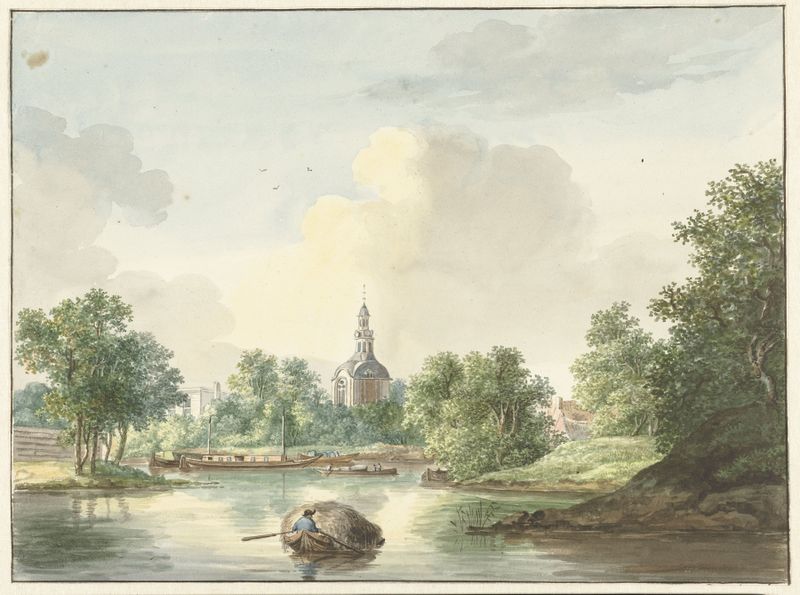
De Hogerwoerdse Poort te Leiden vanaf de Singel gezien
Pieter Gerardus van Os
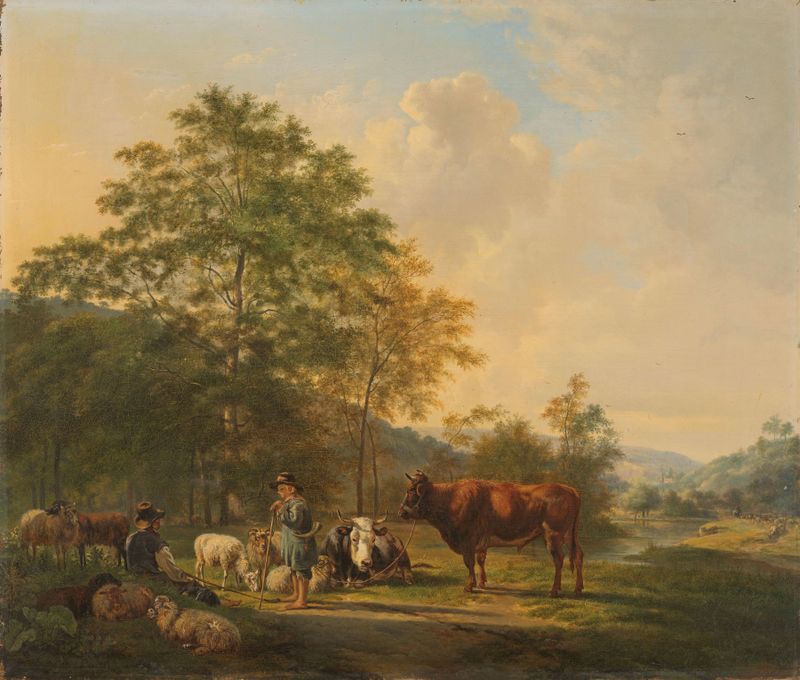
Hilly Landscape with Shepherd, Drover and Cattle
Pieter Gerardus van Os
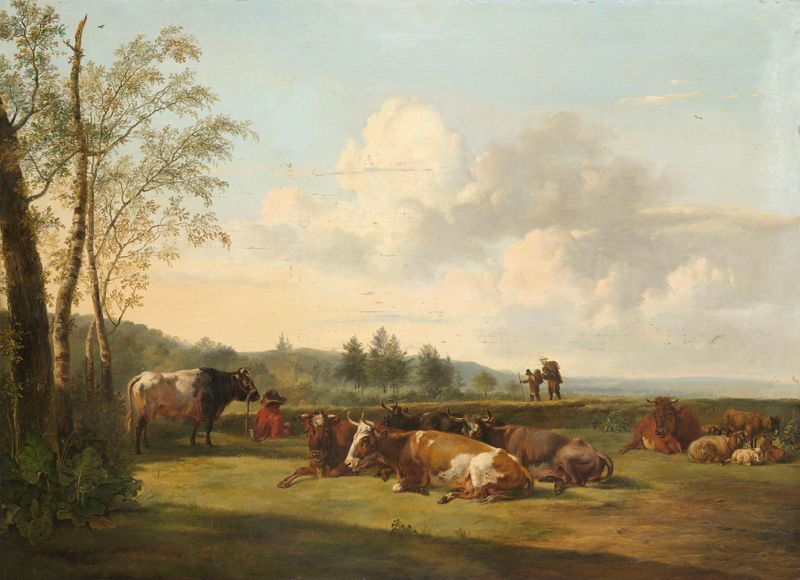
Landscape with Cattle
Pieter Gerardus van Os
The Canal at ’s-Graveland
Pieter Gerardus van Os
Rast nach der Jagd
Pieter Gerardus van Os





