
The Church Of The Salute, Venice — History & Facts
This reflection invites us to ponder the layers beneath our perceptions of beauty. How might stillness and light converge to reveal the essence of a place, and perhaps, ourselves? Look to the left at the delicate interplay of light dancing across the rippling waters of the Grand Canal. Notice how the soft pastels of dawn illuminate the façade of the Church of the Salute, casting a warm glow that beckons the eye.
The artist employs a masterful blend of color and texture, using gentle brushstrokes that evoke a sense of serenity while highlighting the intricate architectural details that frame the sacred space. As you delve deeper, consider the tension between the vibrant city life and the tranquil waters. The church stands resolute against the transient flow of life, symbolizing both sanctuary and community. Reflection ripples through the canvas, hinting at the duality of the sacred and the mundane, reminding us that in moments of stillness, deeper truths often emerge. Created during a time when realism was evolving into impressionistic interpretations, the artist found inspiration in the enchanting landscapes of Venice.
Although the exact date of this work remains unknown, it likely emerged amidst a burgeoning fascination with capturing ephemeral light and atmosphere, mirroring the broader artistic shift of the late 19th century. Pritchett’s exploration of Venice encapsulates a dialogue between the physical and the spiritual, cementing its place in the era’s artistic narrative.
More Artworks by Edward Pritchett
Browse all →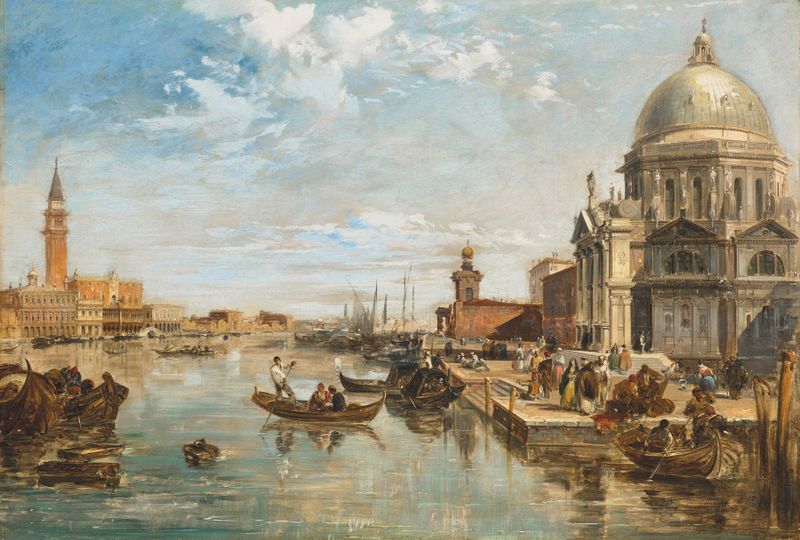
The Grand Canal, Venice, with the Doge’s Palace, the Dogana, and Basilica di Santa Maria della Salute
Edward Pritchett
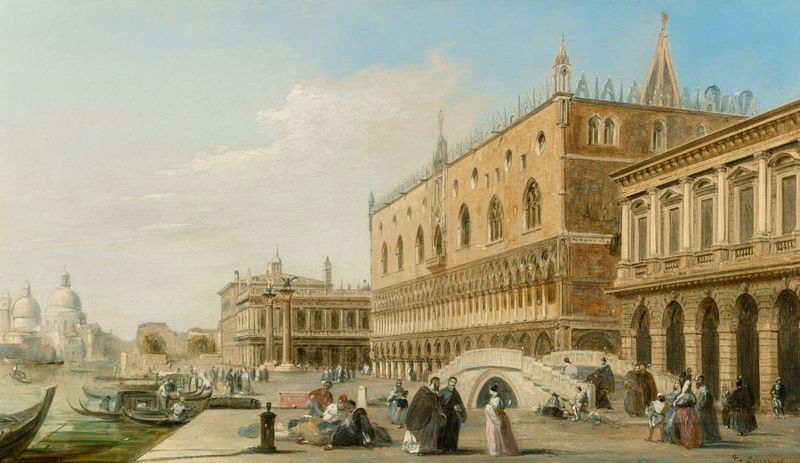
The Doge’s Palace, the Piazzetta and the Biblioteca, with Sta Maria della Salute beyond, Venice
Edward Pritchett
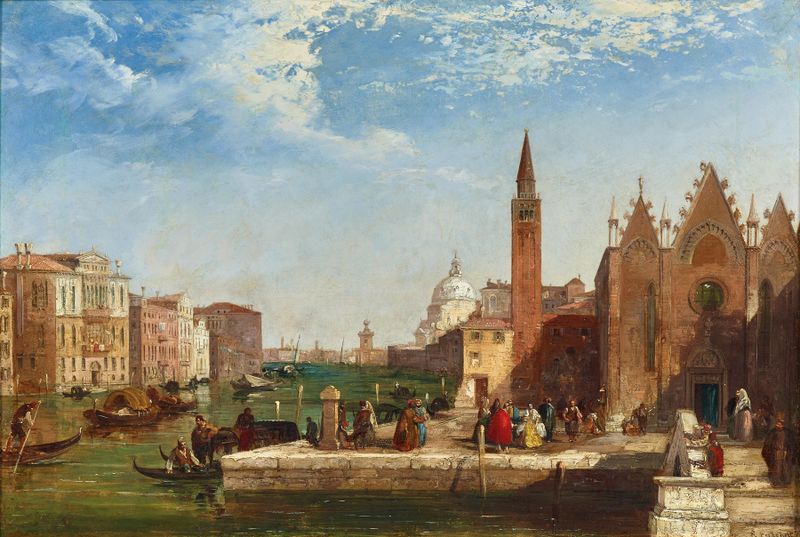
Venice, A View of the Grand Canal
Edward Pritchett
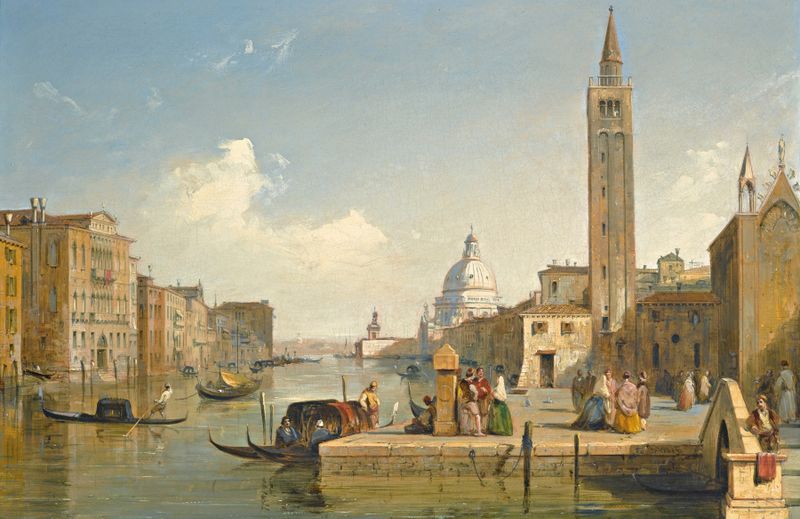
View Of The Grand Canal, With The Church Of Santa Maria Della Salute, Venice
Edward Pritchett
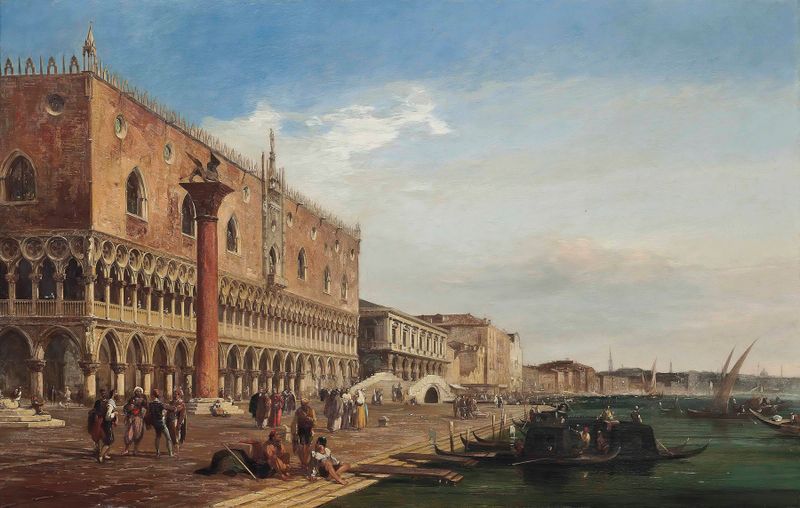
The Doge’s Palace, Venice
Edward Pritchett
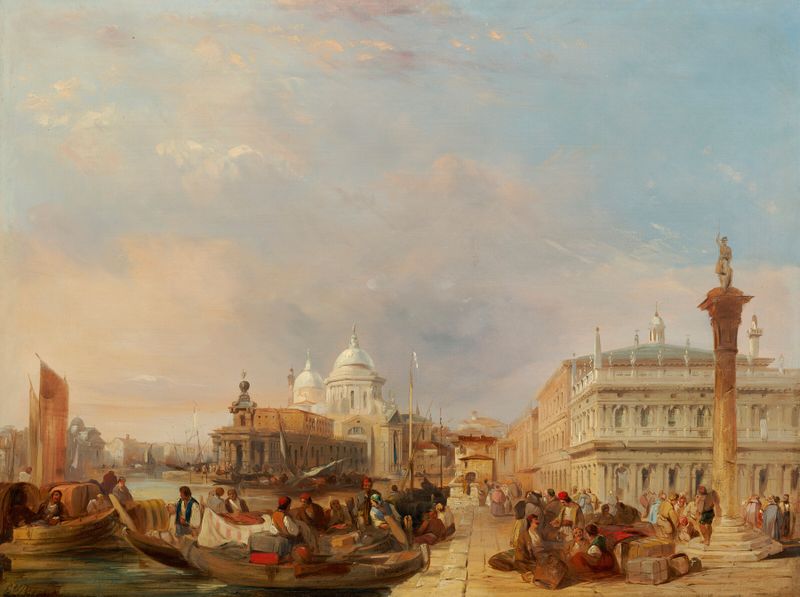
Santa Maria della Salute viewed from St Mark’s
Edward Pritchett
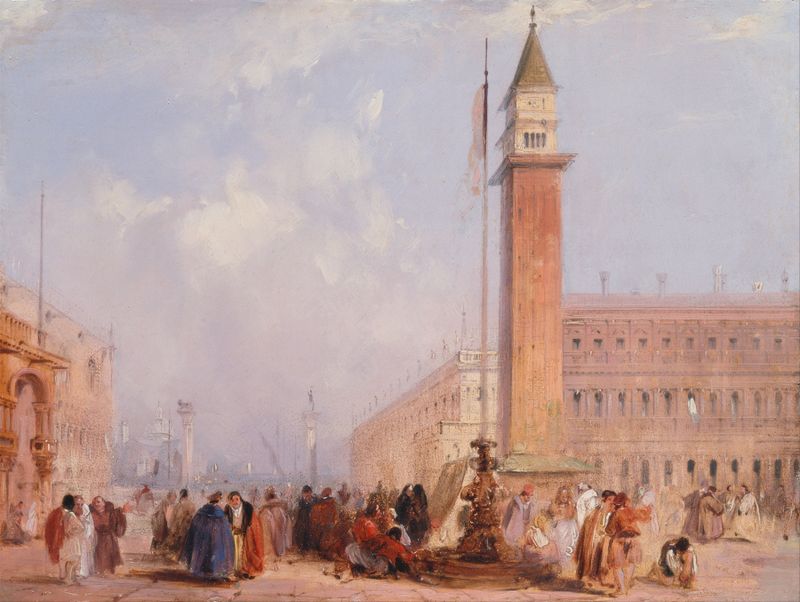
The Piazzetta, Venice
Edward Pritchett
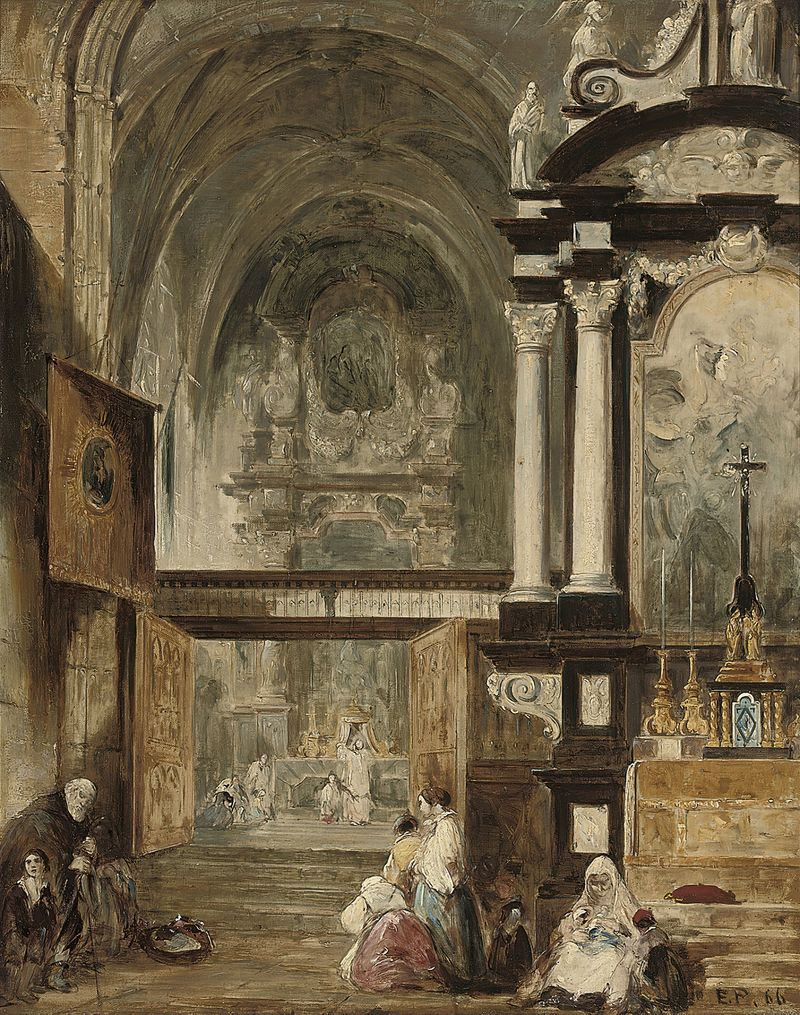
The interior of Santa Maria Gloriosa Del Frari, Venice
Edward Pritchett
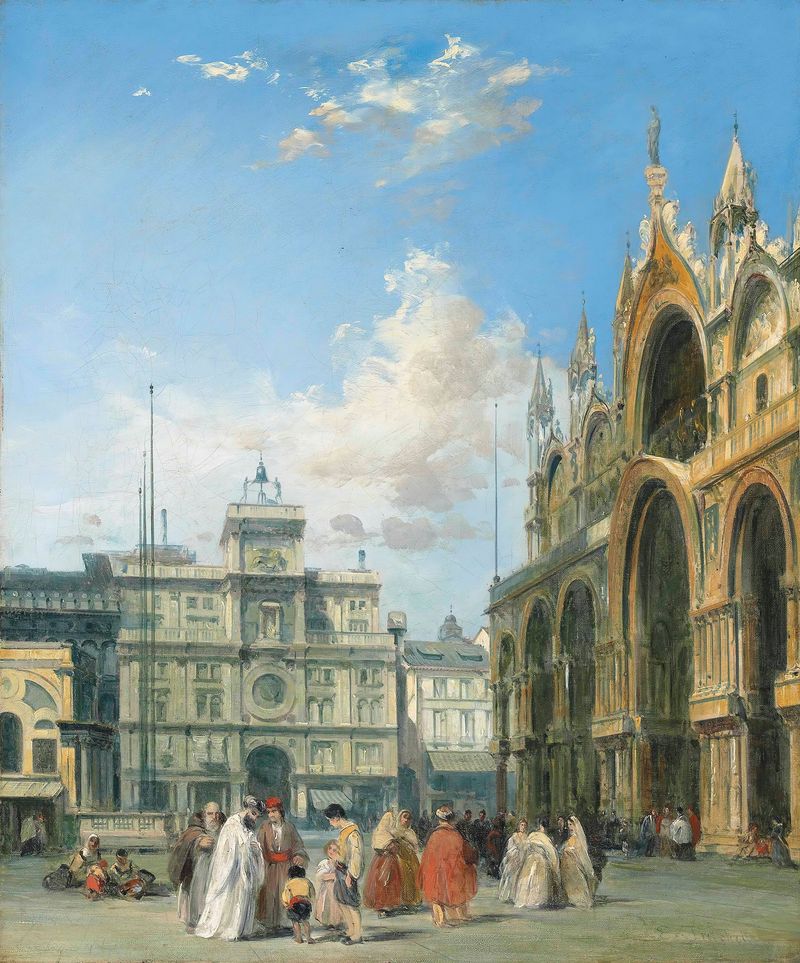
Figures Beside The Basilica Of San Marco And The Torre Dell’orlogio, Venice
Edward Pritchett
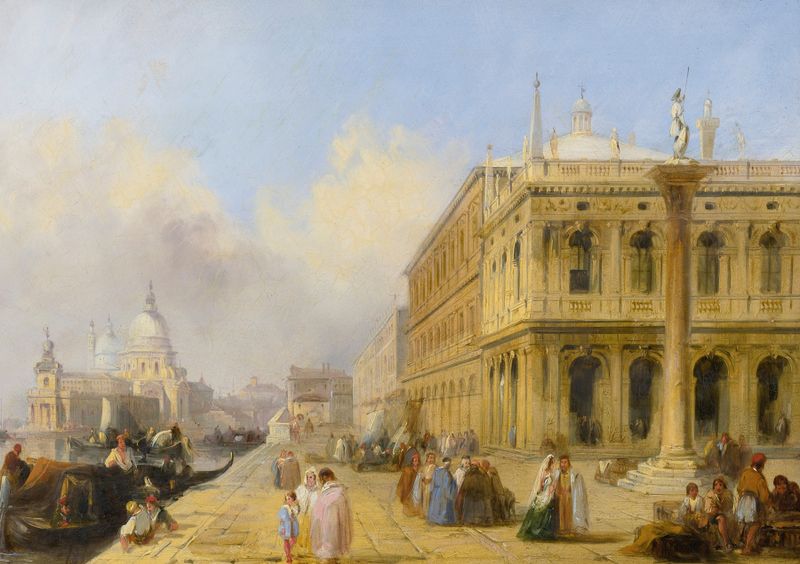
The Grand Canal
Edward Pritchett





