
The Doge’s Palace, Venice — History & Facts
What if silence could speak through light? In the shadows of a grand structure, a subtle tension hangs in the air, as if the silence itself is a whisper of history waiting to be unveiled. Focus on the intricate façade to the left, where delicate architectural elements rise with grace, each column and arch bathed in a soft golden hue. The artist employs a gentle palette, blending warm and cool tones, allowing the play of light to breathe life into the scene. Notice how the shimmering reflections dance upon the water, mirroring the opulence of the Doge’s Palace, while the calmness of the canal enhances the sense of stillness, inviting you to linger. Within this composition lies a profound contrast between the vibrant life of Venice and the haunting void of its history.
The stillness of the water speaks to the passage of time, suggesting both tranquility and an underlying emptiness. Hidden figures within the shadows evoke the lives once lived here, their stories echoing through the silent grandeur, while the splendor of the palace looms as a testament to human achievement and an acknowledgment of what has faded. In this undefined moment, Pritchett captures the essence of Venice's architectural beauty while reflecting his own artistic journey during the mid-19th century. Working in an era marked by Romanticism, he sought to convey not just what was visible, but also the emotional resonance of place, as he rendered this iconic structure in a time of both personal exploration and a broader artistic evolution across Europe.
More Artworks by Edward Pritchett
Browse all →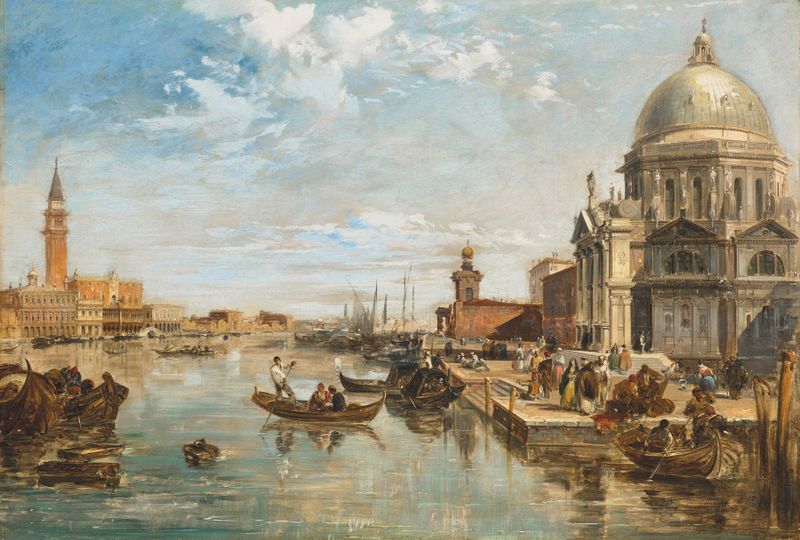
The Grand Canal, Venice, with the Doge’s Palace, the Dogana, and Basilica di Santa Maria della Salute
Edward Pritchett
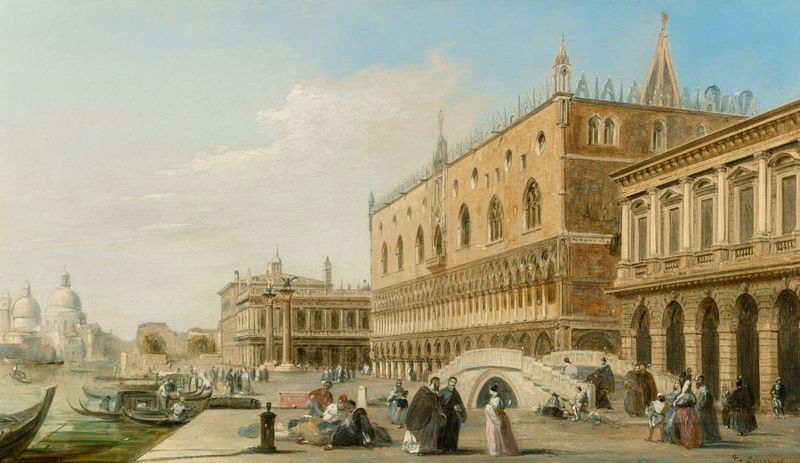
The Doge’s Palace, the Piazzetta and the Biblioteca, with Sta Maria della Salute beyond, Venice
Edward Pritchett
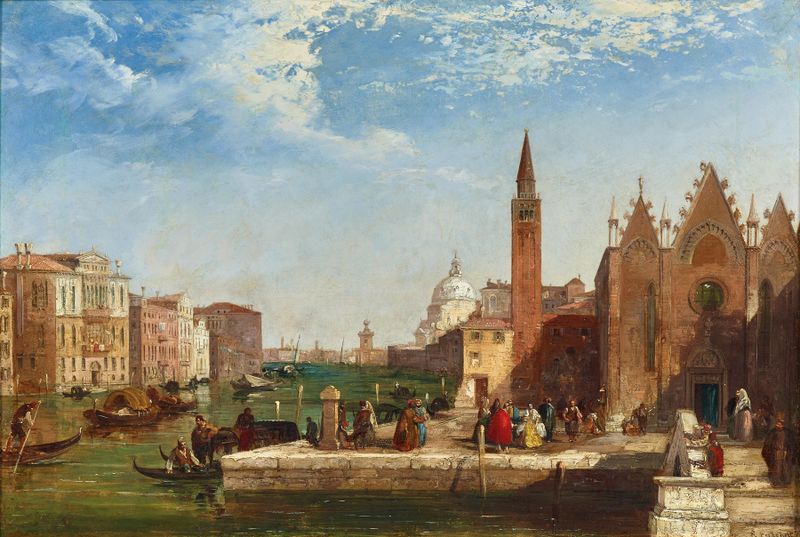
Venice, A View of the Grand Canal
Edward Pritchett
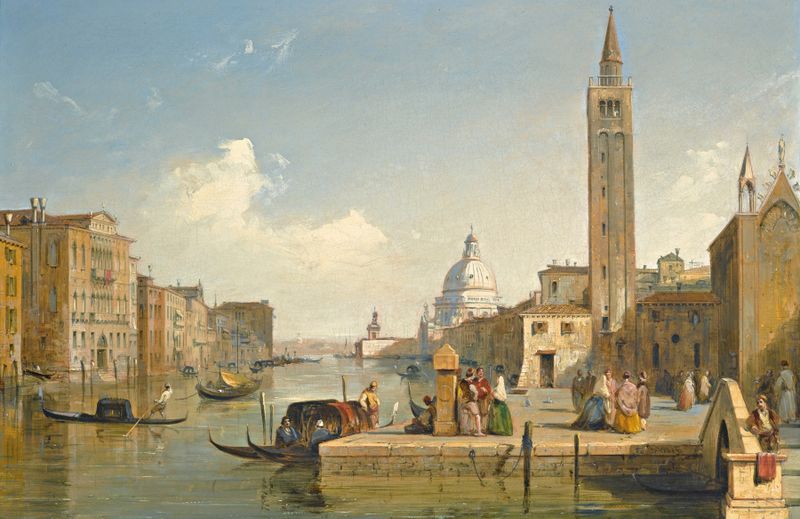
View Of The Grand Canal, With The Church Of Santa Maria Della Salute, Venice
Edward Pritchett
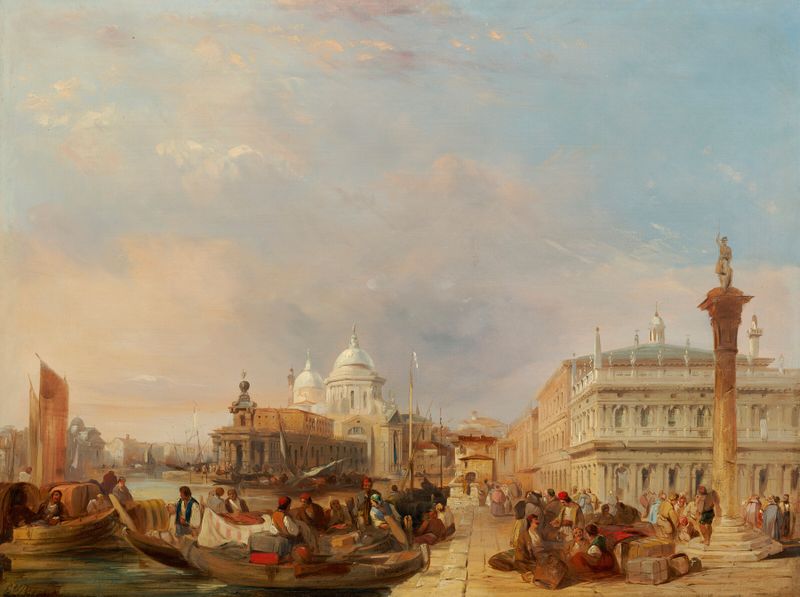
Santa Maria della Salute viewed from St Mark’s
Edward Pritchett
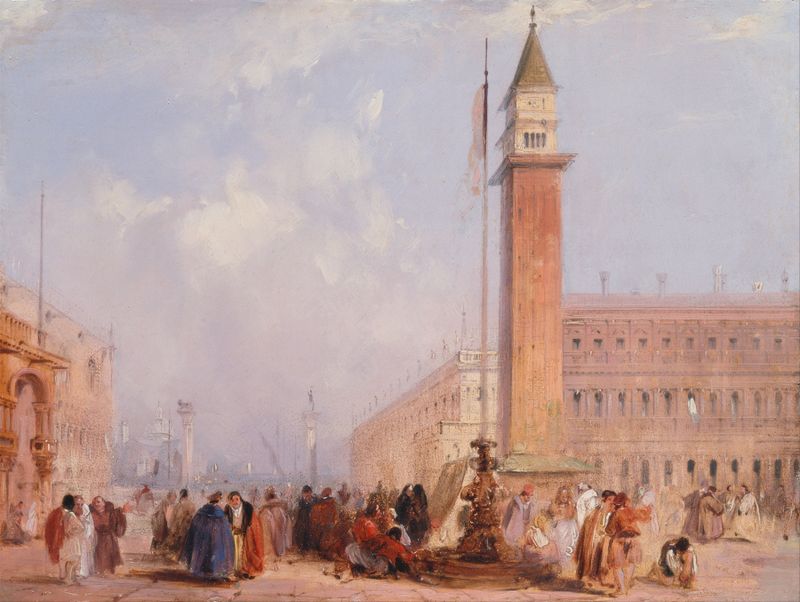
The Piazzetta, Venice
Edward Pritchett
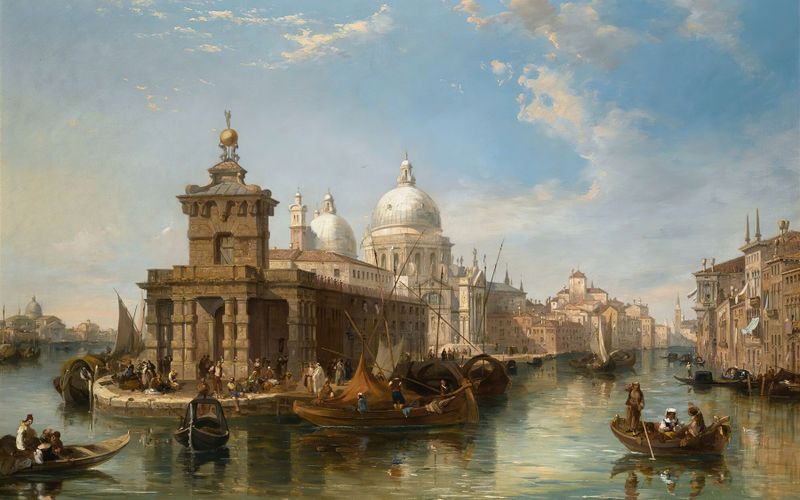
The Church Of The Salute, Venice
Edward Pritchett
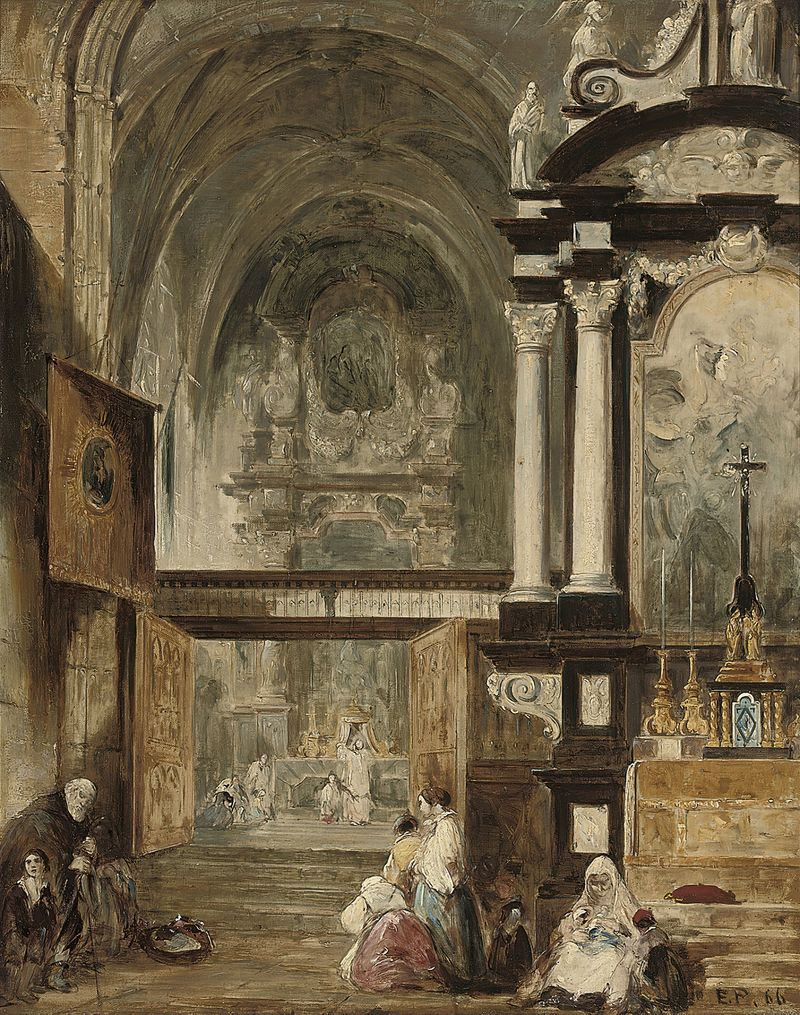
The interior of Santa Maria Gloriosa Del Frari, Venice
Edward Pritchett
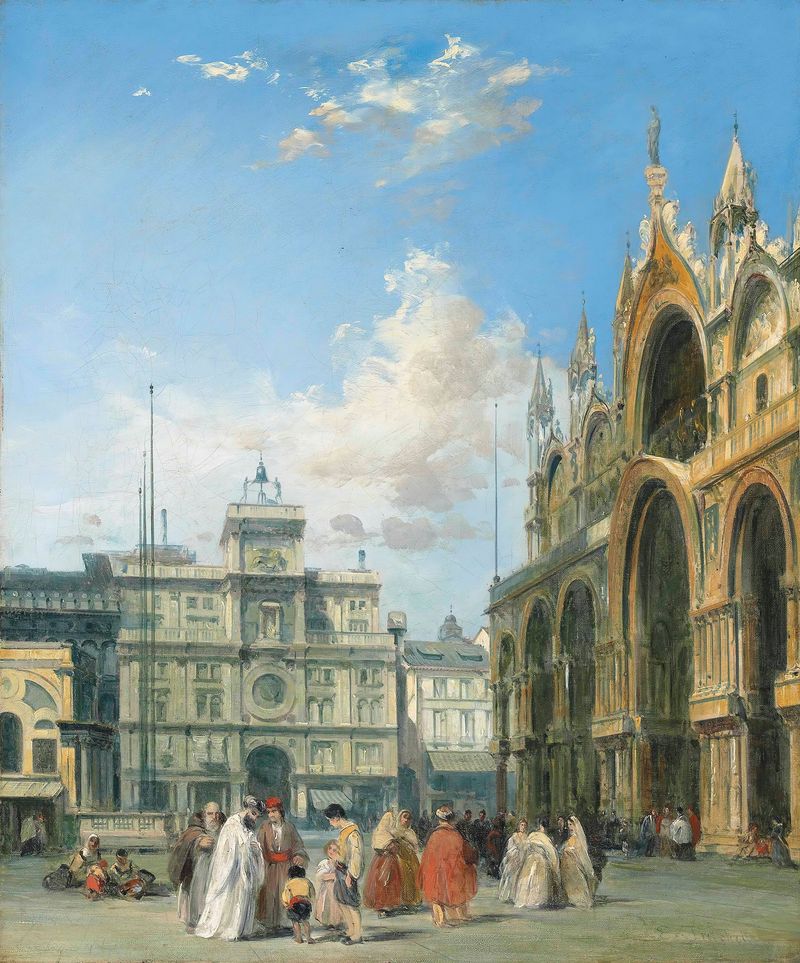
Figures Beside The Basilica Of San Marco And The Torre Dell’orlogio, Venice
Edward Pritchett
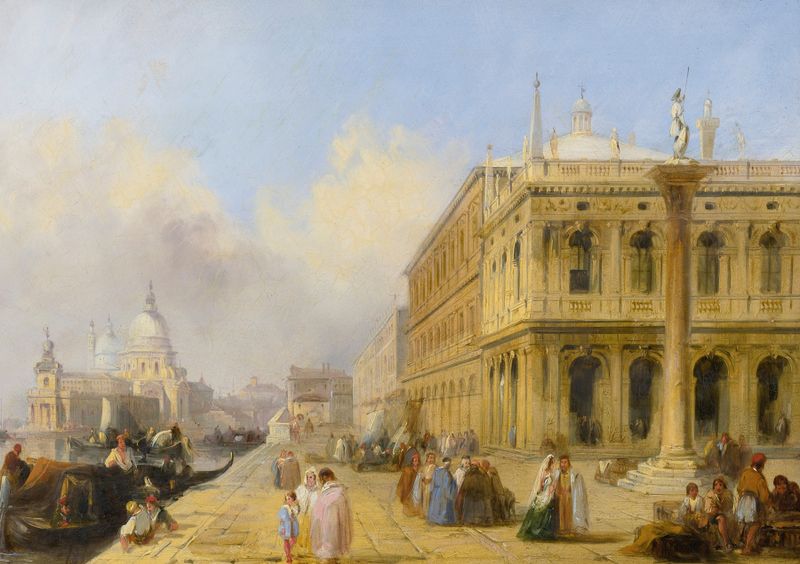
The Grand Canal
Edward Pritchett
More Architecture Art
Browse all →
The statue of Liberty
Frédéric Auguste Bartholdi

View of Houses in Delft, Known as ‘The Little Street’
Johannes Vermeer

View of Houses in Delft, Known as ‘The Little Street’
Johannes Vermeer

The Cathedral in Rouen. The portal, Grey Weather
Claude Monet

The yellow house
Vincent van Gogh

The Church in Auvers-sur-Oise, View from the Chevet
Vincent van Gogh