
The Cooke Monument in St. Paul’s Churchyard, from ‘Scenes of Old New York’ — History & Facts
What if silence could speak through light? In the stillness of a forgotten corner of time, it beckons us to listen closely. Focus on the radiant beams that filter through the trees, illuminating the Cooke Monument in a soft, reverent glow. The intricate stonework catches the light, revealing a delicate interplay of shadows and highlights that breathe life into the age-worn granite. Look closely to the left, where an ivy tendril reaches upward, striving for the sun, a symbol of nature’s perseverance amidst human history.
The subtle palette of greens and grays enhances the sense of tranquility, inviting contemplation. Within this tranquil scene lies an emotional tension—the juxtaposition of mortality and memory. Notice the weathered surface of the monument, etched with time's passage, as it silently witnesses the lives that have come and gone. The contrast between the cool stone and the gentle warmth of sunlight suggests a dialogue between the eternal and the ephemeral.
Here, the monument stands as a testament not only to its namesake but to the collective memories of those who have paid homage. Henry Farrer painted this work in 1870, a time when the burgeoning city of New York was rapidly transforming its landscape. As urbanization surged forward, the artist found himself drawn to the remnants of a past that echoed through the streets. His mastery of light and atmosphere captured the essence of a city at the crossroads of history, where the past intermingled with the present, creating a poignant reminder of the unbroken chain of existence.
More Artworks by Henry Farrer
Browse all →
St. Paul’s Chapel, New York, from ‘Scenes of Old New York’
Henry Farrer

Evening, New York Harbor
Henry Farrer
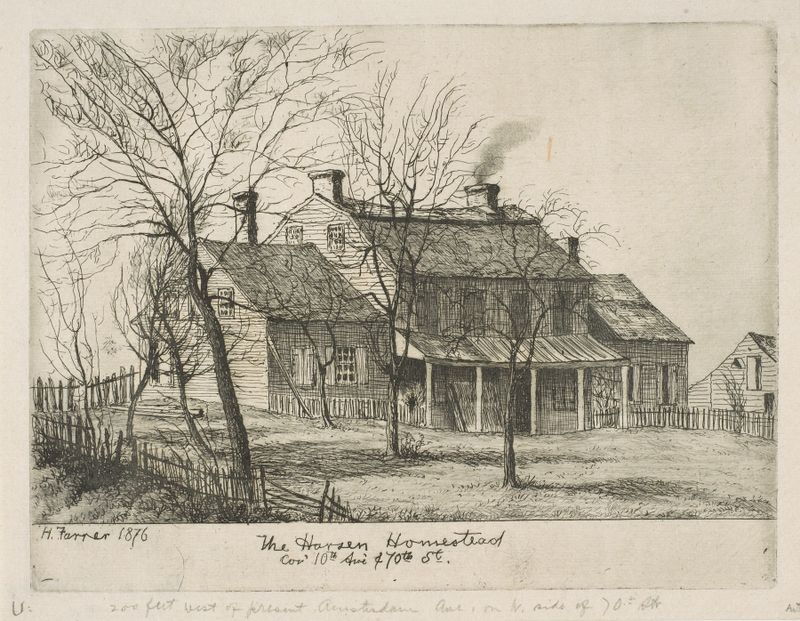
The Harsen Homestead, Corner of 10th Avenue and 70th Street, from ‘Scenes of Old New York’
Henry Farrer

Old House, Corner of Peck Slip and Water Street, from ‘Scenes of Old New York’
Henry Farrer
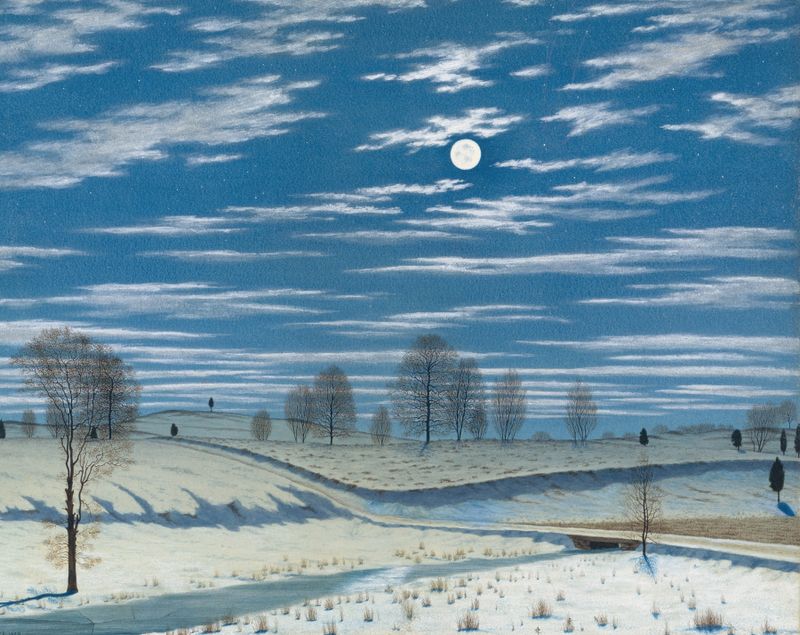
Winter Scene in Moonlight
Henry Farrer

A Powder Magazine in Central Park, from ‘Scenes of Old New York’.
Henry Farrer

The Old Revenue Office, Whitehall, from ‘Scenes of Old New York’
Henry Farrer
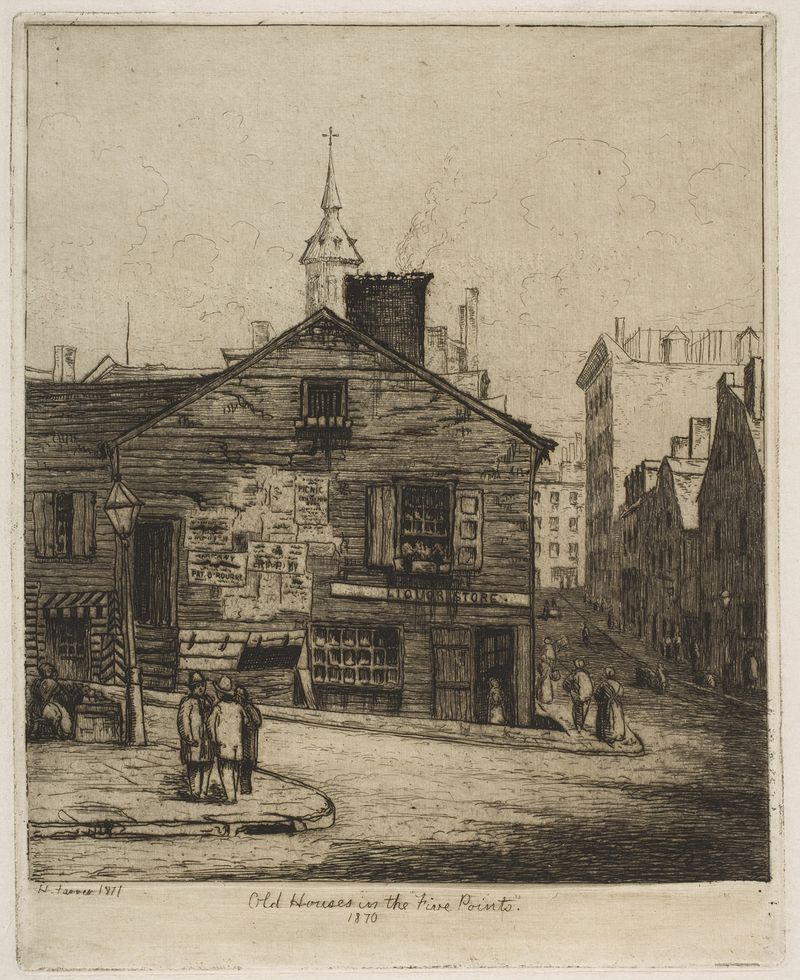
Old Houses in the ‘Five Points’, 1870, from ‘Scenes of Old New York’.
Henry Farrer

City and Sunset
Henry Farrer
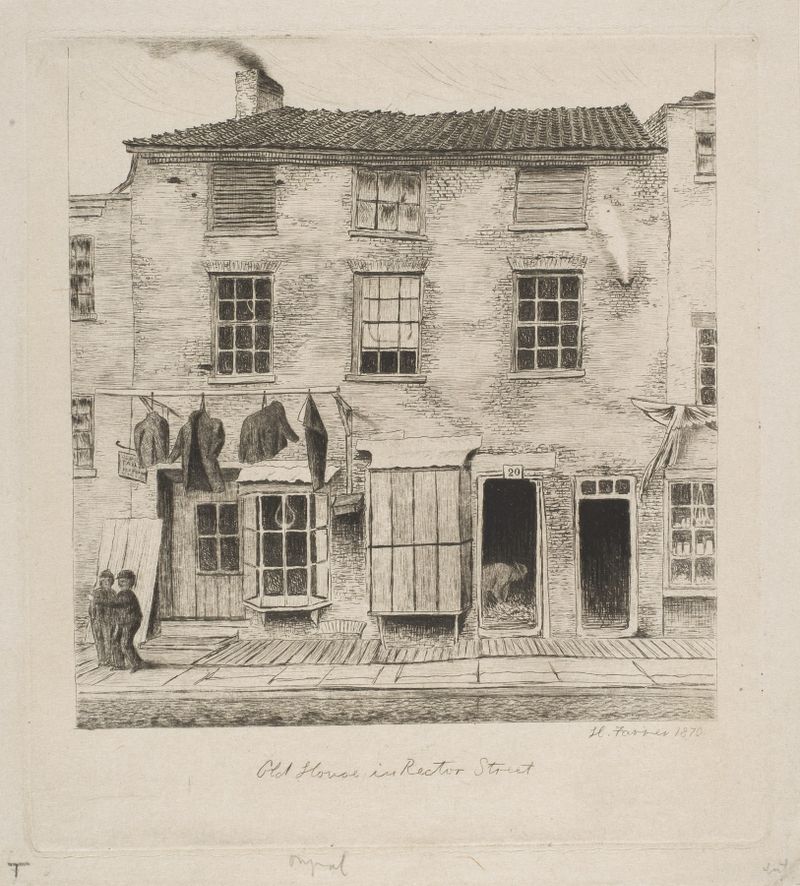
Old House in Rector Street, from ‘Scenes of Old New York’.
Henry Farrer





