
The Court of Appeal — History & Facts
Where does light end, and longing begin? A question that echoes with the weight of solitude, beckoning us to delve into the depths of human experience. Focus on the subtle interplay of light and shadow across the canvas. Notice how the muted palette of grays and blues envelops the figures, creating an atmosphere both somber and reflective. The composition draws your gaze toward the central figure, whose posture speaks volumes; a slight lean forward suggests an eager anticipation, while the surrounding silhouettes linger in a suspended state of uncertainty, their expressions lost in thought.
Every brushstroke captures the essence of a moment teetering between hope and despair. Beneath the surface, the painting resonates with themes of exclusion and yearning. The stark contrast between the illuminated figure and the darkened shadows surrounding it emphasizes a sense of isolation. Each character seems to embody a facet of longing, as if they are reaching out for connection but remain ensnared in a void.
This tension invites the viewer to contemplate their own experiences of longing and the bittersweet nature of unresolved desires. In 1947, Akamatsu Rinsaku created this poignant work during a transformative period in post-war Japan. As the nation grappled with its identity amidst social and political upheaval, Rinsaku's artistry focused on the complexities of human emotion. Living in a time of recovery and introspection, he brilliantly encapsulated the struggle between light and shadow, echoing the collective consciousness of a society striving to emerge from the darkness.
More Artworks by Akamatsu Rinsaku
Browse all →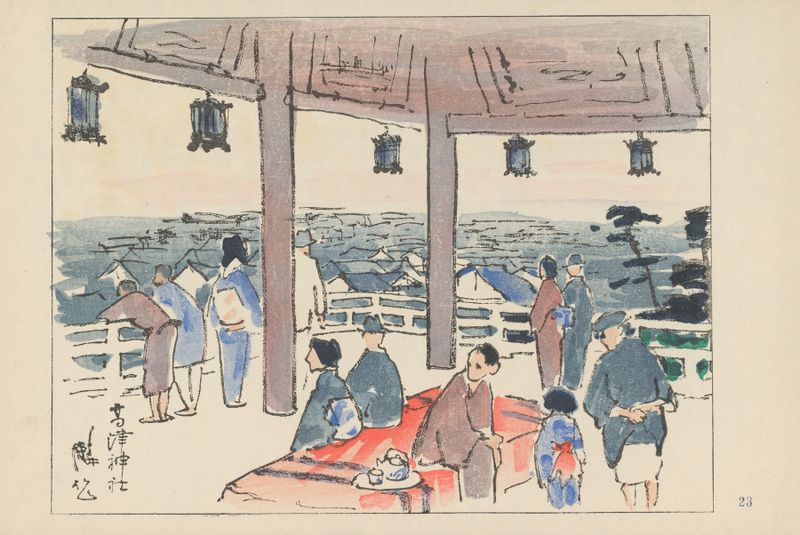
Kozu shrine dedicated to Nintoku Emperor
Akamatsu Rinsaku
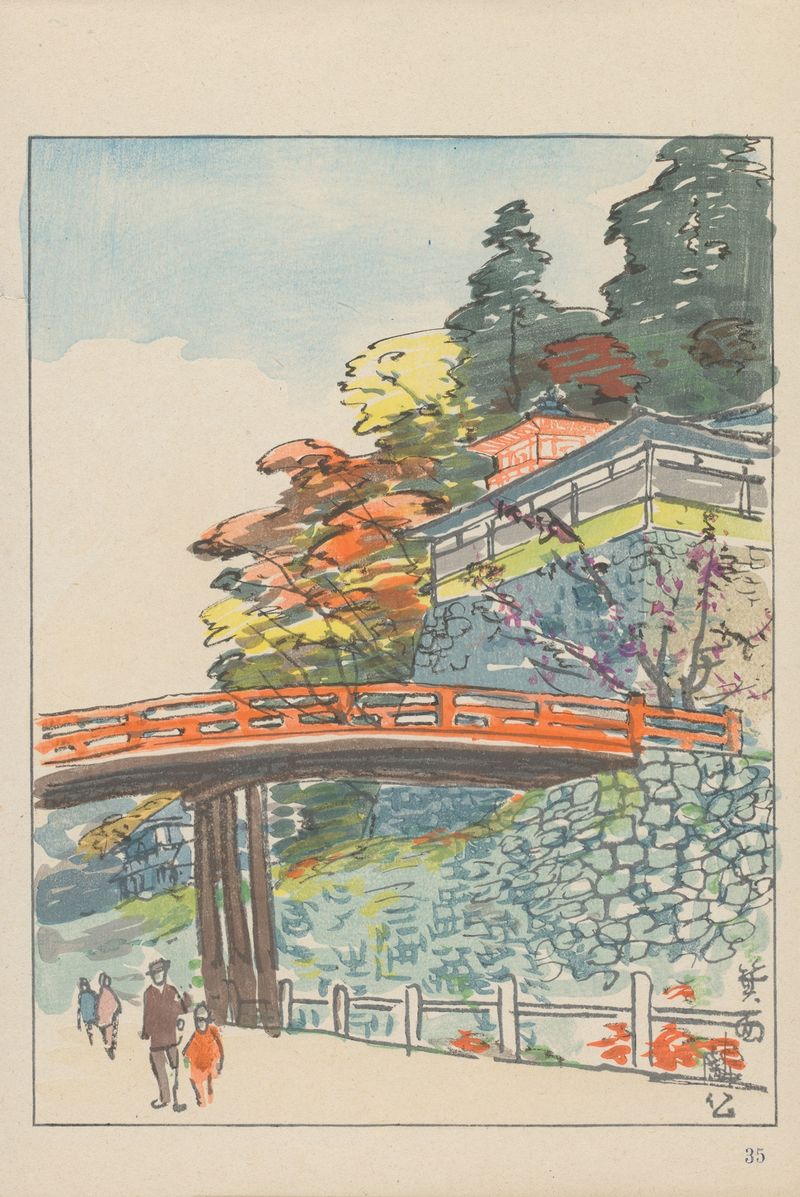
Minoo, National Park
Akamatsu Rinsaku
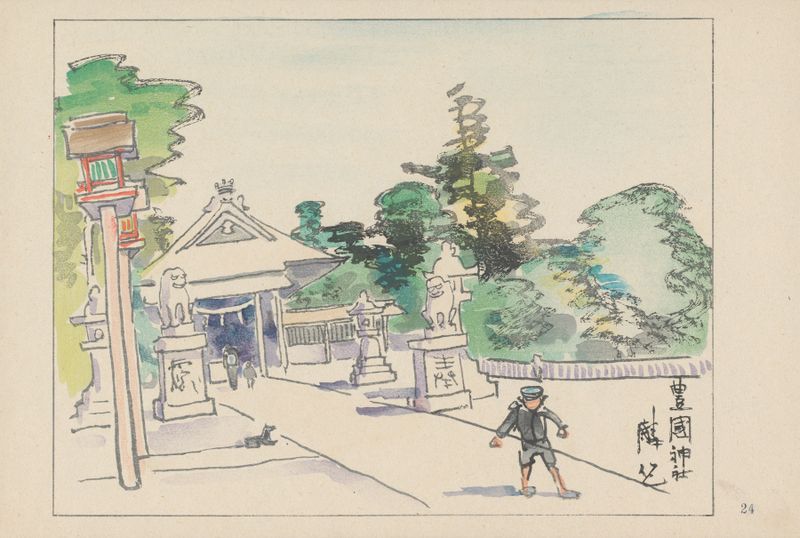
Toyokuni shrine dedicated to Toyotomi Hideyoshi
Akamatsu Rinsaku

Tsumura betsuin, the agency of Nishi-honganji
Akamatsu Rinsaku
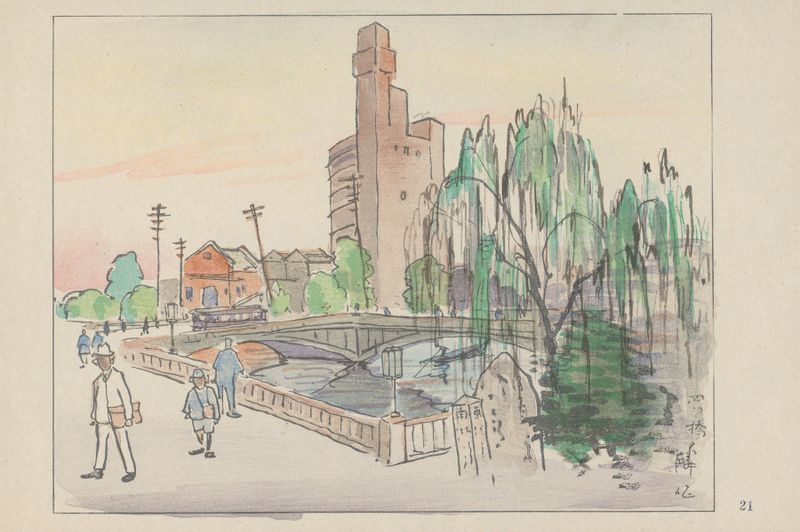
Yotsubashi, four joint bridges
Akamatsu Rinsaku
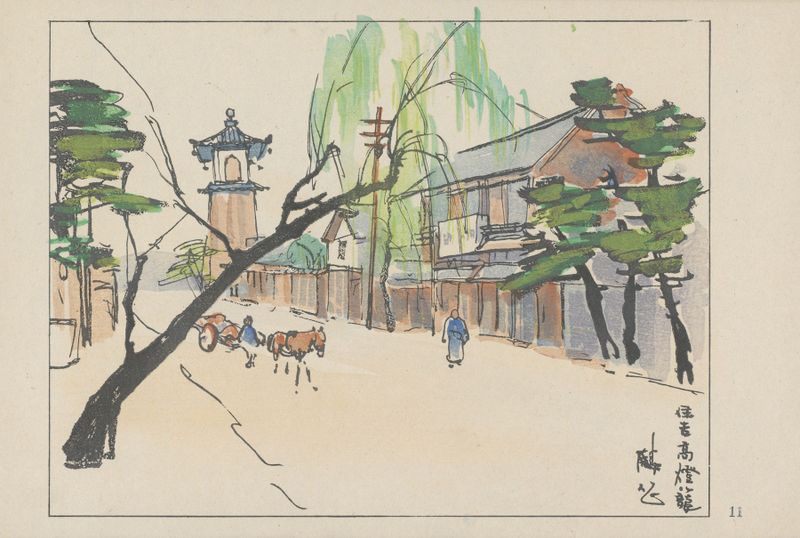
The high lanton at Sumiyoshi, a light house in older time
Akamatsu Rinsaku
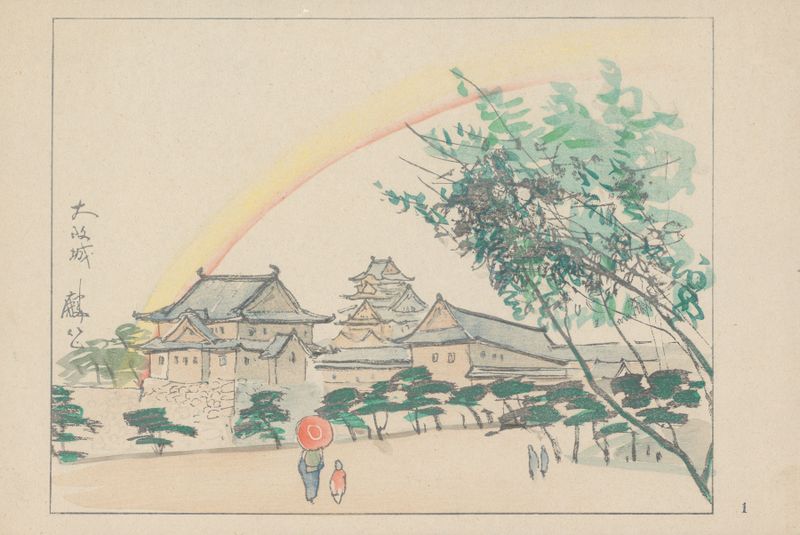
Osaka Castle, built by Toyotomi Hideyoshi in 1585 A.D
Akamatsu Rinsaku
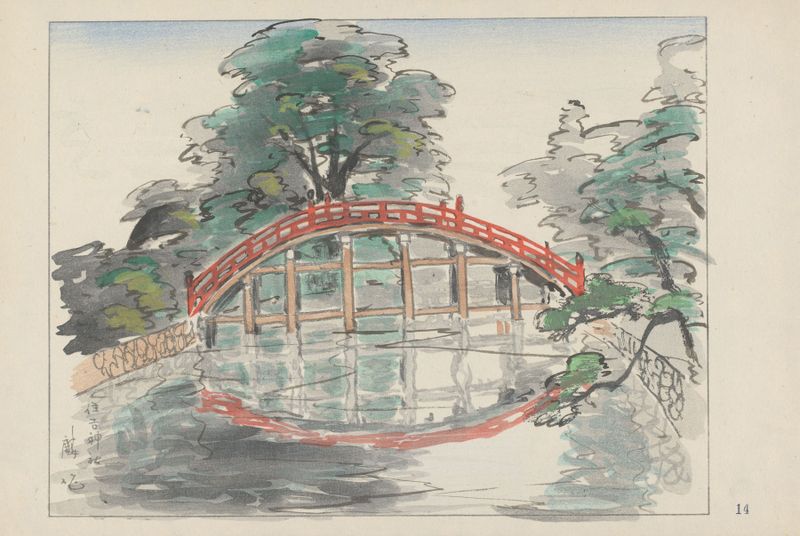
Sumiyoshi Shinto shrine
Akamatsu Rinsaku
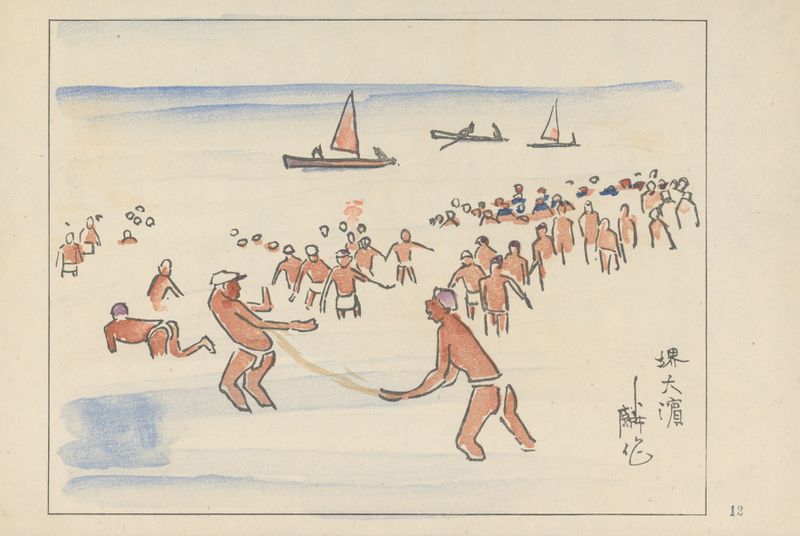
Sakai Ohama, swiming beach
Akamatsu Rinsaku

Kawaguchi, the estuary of Yodo river
Akamatsu Rinsaku





