
The Crooked Stoop (Old Tom’s Chop House), from ‘Scenes of Old New York’. — History & Facts
Where does light end, and longing begin? In The Crooked Stoop (Old Tom’s Chop House), a delicate dance unfolds between the warm glow of a setting sun and the shadows that stretch across the cobblestones of a bygone New York. Look to the left at the sun-drenched stoop, where the light gently caresses the weathered steps, inviting passersby into an unseen world within the building's embrace. The composition draws your eye along the diagonal lines of the stoop, leading to the intricately detailed façade that reflects the era’s architectural charm. Notice the rich palette of warm ochers and soft browns, which contrast with the deeper hues of the shadows, creating an emotional tension that hints at stories waiting to be uncovered. Reflect on how the juxtaposition of light and shadow speaks to the lives lived in this modest space.
The crooked angle of the stoop suggests both the passage of time and the weight of everyday existence, evoking a sense of nostalgia. The absence of figures amplifies the whispering silence, allowing the viewer to imagine the laughter, conversations, and heartaches that once filled the air. Each detail, from the chipped paint to the textured stone, encapsulates the resilience of life in a bustling city and the echoes of memories long past. Created in 1870, the artwork captures a moment in Henry Farrer’s life as he navigated the artistic landscape of New York, a city teeming with opportunity and transformation.
At this time, he was exploring the interplay of light and shadow, reflecting an era where realism began to intertwine with the romanticism of urban life. As Farrer painted, he became part of a larger movement that sought to imbue everyday scenes with deeper significance and emotional resonance, marking a pivotal point in American art.
More Artworks by Henry Farrer
Browse all →
St. Paul’s Chapel, New York, from ‘Scenes of Old New York’
Henry Farrer

Evening, New York Harbor
Henry Farrer
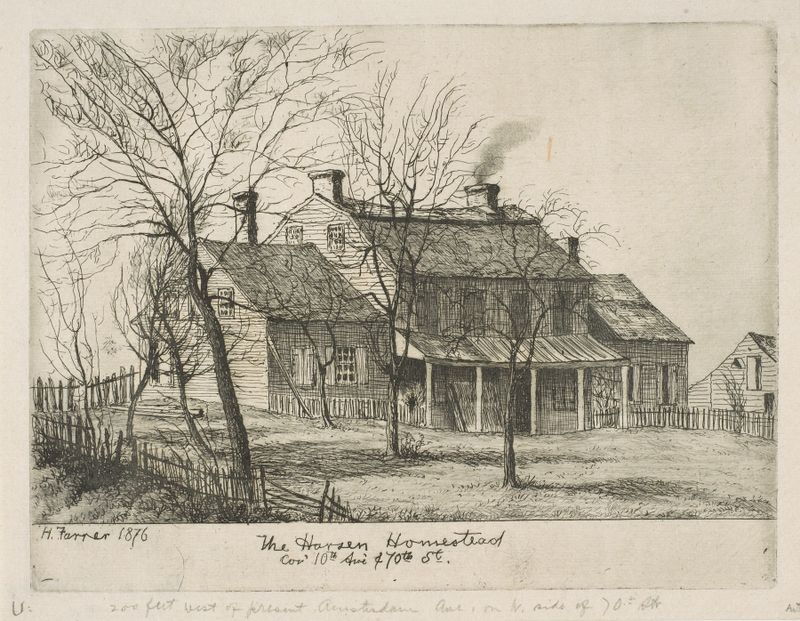
The Harsen Homestead, Corner of 10th Avenue and 70th Street, from ‘Scenes of Old New York’
Henry Farrer

Old House, Corner of Peck Slip and Water Street, from ‘Scenes of Old New York’
Henry Farrer
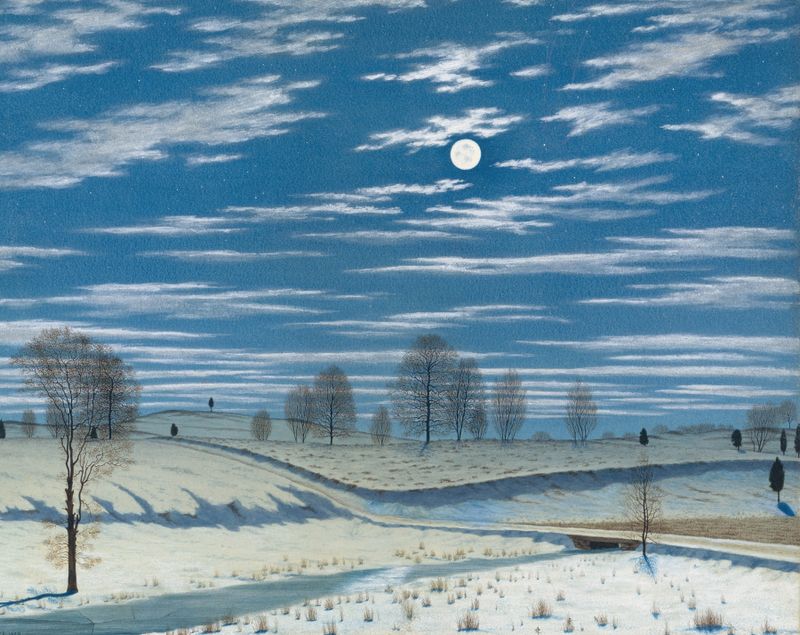
Winter Scene in Moonlight
Henry Farrer

A Powder Magazine in Central Park, from ‘Scenes of Old New York’.
Henry Farrer

The Old Revenue Office, Whitehall, from ‘Scenes of Old New York’
Henry Farrer
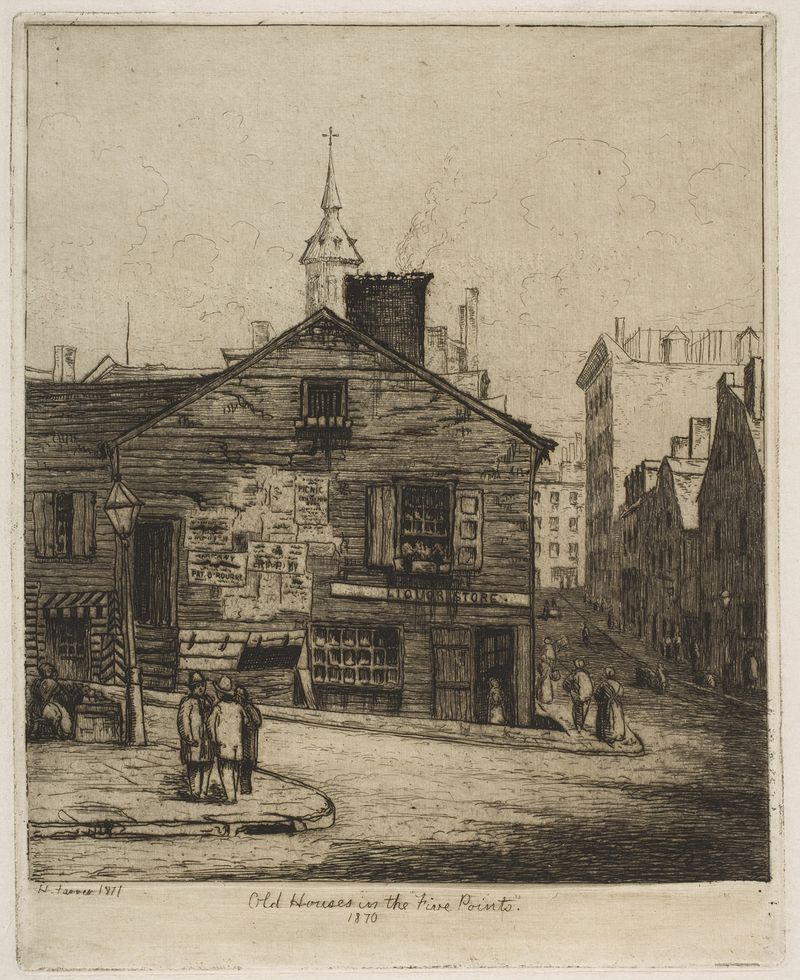
Old Houses in the ‘Five Points’, 1870, from ‘Scenes of Old New York’.
Henry Farrer

City and Sunset
Henry Farrer
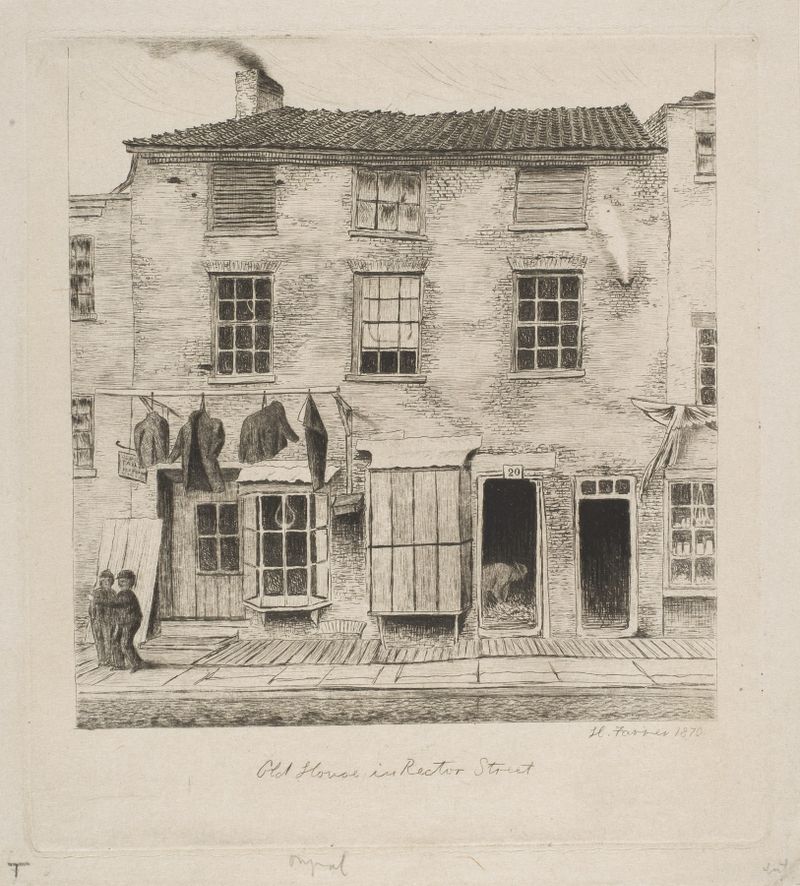
Old House in Rector Street, from ‘Scenes of Old New York’.
Henry Farrer
More Architecture Art
Browse all →
The statue of Liberty
Frédéric Auguste Bartholdi

View of Houses in Delft, Known as ‘The Little Street’
Johannes Vermeer

View of Houses in Delft, Known as ‘The Little Street’
Johannes Vermeer

The Cathedral in Rouen. The portal, Grey Weather
Claude Monet

The yellow house
Vincent van Gogh

The Church in Auvers-sur-Oise, View from the Chevet
Vincent van Gogh