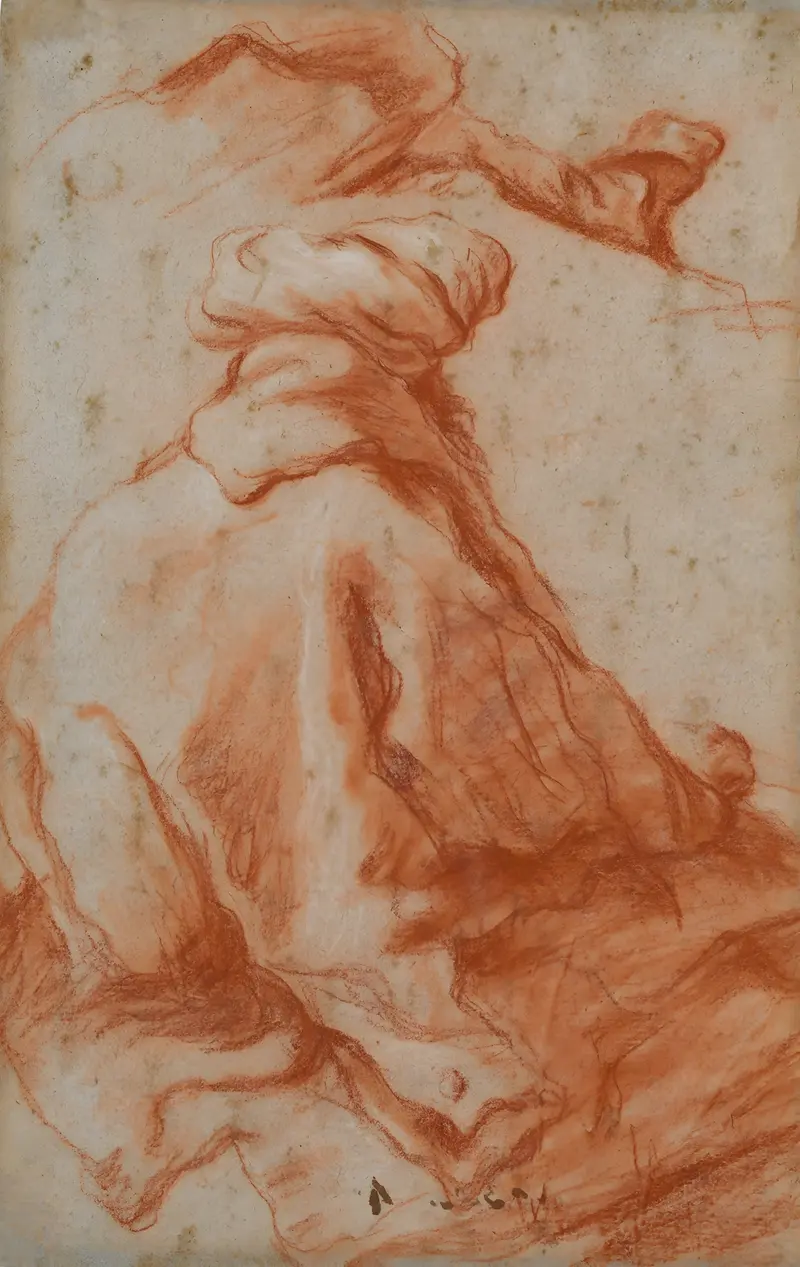
The Crucifixion — History & Facts
In The Crucifixion, Giambattista Tiepolo presents a dramatic scene filled with vibrant colors. The figures of Christ and the surrounding characters are depicted with expressive gestures and emotions. The background features a turbulent sky, enhancing the overall sense of drama.
Rich reds, deep blues, and golden highlights draw the viewer's attention to the central figures. This painting is executed in oil on canvas, showcasing Tiepolo's skill in blending colors and creating depth. The use of light and shadow adds a three-dimensional quality to the figures. The composition is dynamic, with diagonal lines leading the eye across the canvas.
Tiepolo's characteristic Rococo style is evident in the ornate details and fluid forms. Giambattista Tiepolo was a prominent Italian painter of the 18th century, known for his grand frescoes and religious works. The Crucifixion reflects his ability to convey emotion and movement through color and composition. An interesting fact about this work is that it was created during a time when Tiepolo was at the height of his career, showcasing his mastery of the Rococo style.