The Day is Done — History & Facts
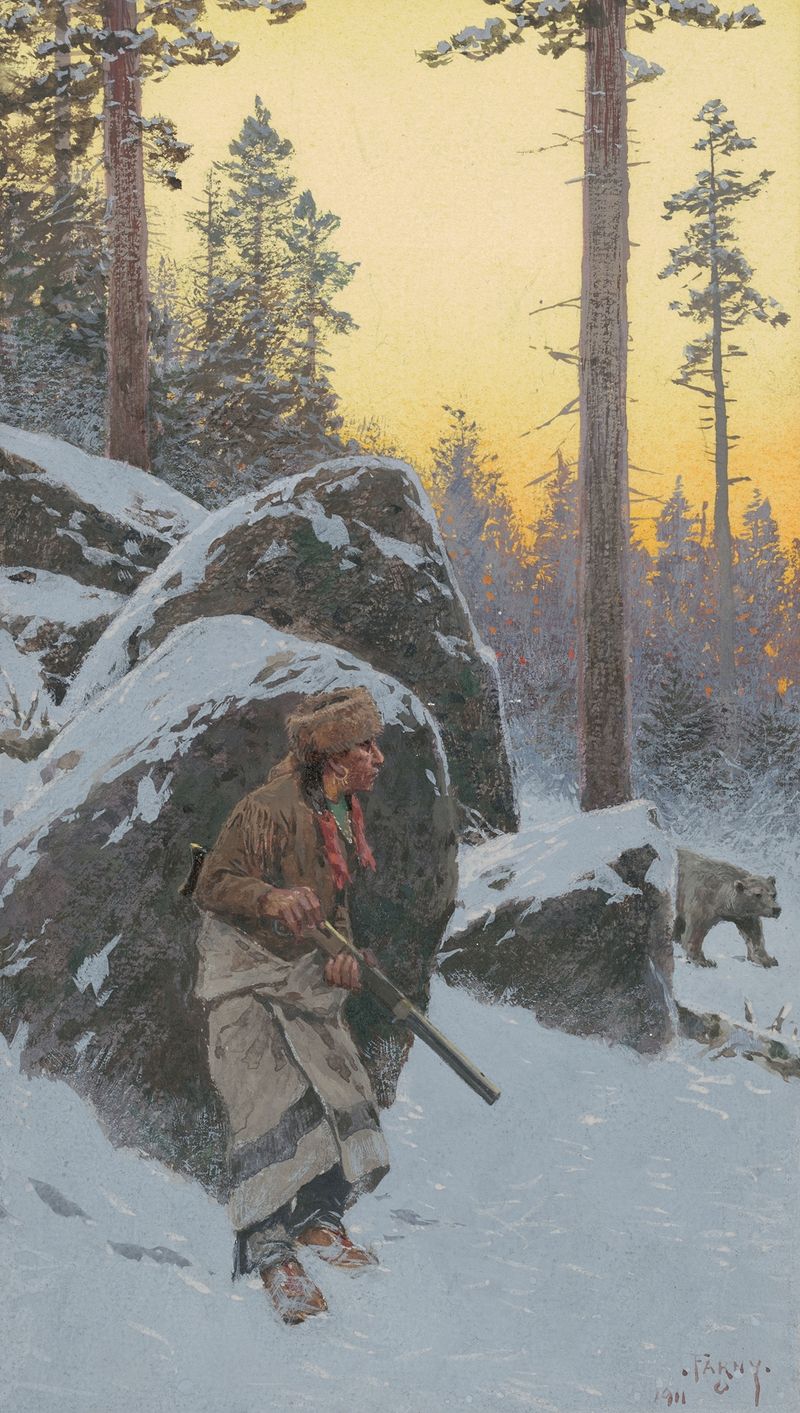
The canvas doesn’t lie — it simply waits. Each brushstroke holds a dream suspended in time, inviting the viewer to dive into the depths of its quiet narrative. Look to the center of the composition, where the soft hues of dusk blend seamlessly into the silhouettes of a distant landscape. The gentle gradient of blues and purples evokes the encroaching night, while the warm, amber glow of a single lantern hints at the presence of humanity, alone yet connected to the greater cosmos.
The bold strokes and the rich textures create an almost tactile sensation, drawing the eye outward to the surrounding wilderness that appears to breathe alongside the figures. Notice the way the figures stand, their bodies slightly turned away, as if caught in a moment of reflection or contemplation. The contrast between the warmth of their glow and the cool, enveloping shadows signifies both comfort and solitude, suggesting a longing for connection amidst the vastness of nature. The dreamy quality of the scene reveals a tension between the fleeting moments of daylight and the inevitable embrace of night, a reminder of life's ephemeral nature. In 1911, Henry Farny painted this work during a period of personal exploration, seeking solace in the themes of nature and spirituality.
Living in the vibrant cultural landscape of America, he was influenced by the currents of realism and the increasing fascination with the natural world. Farny’s experiences and observations layered themselves into this artwork, giving voice to both his inner world and the collective consciousness of a society caught in transition.