Wyoming Territory — History & Facts
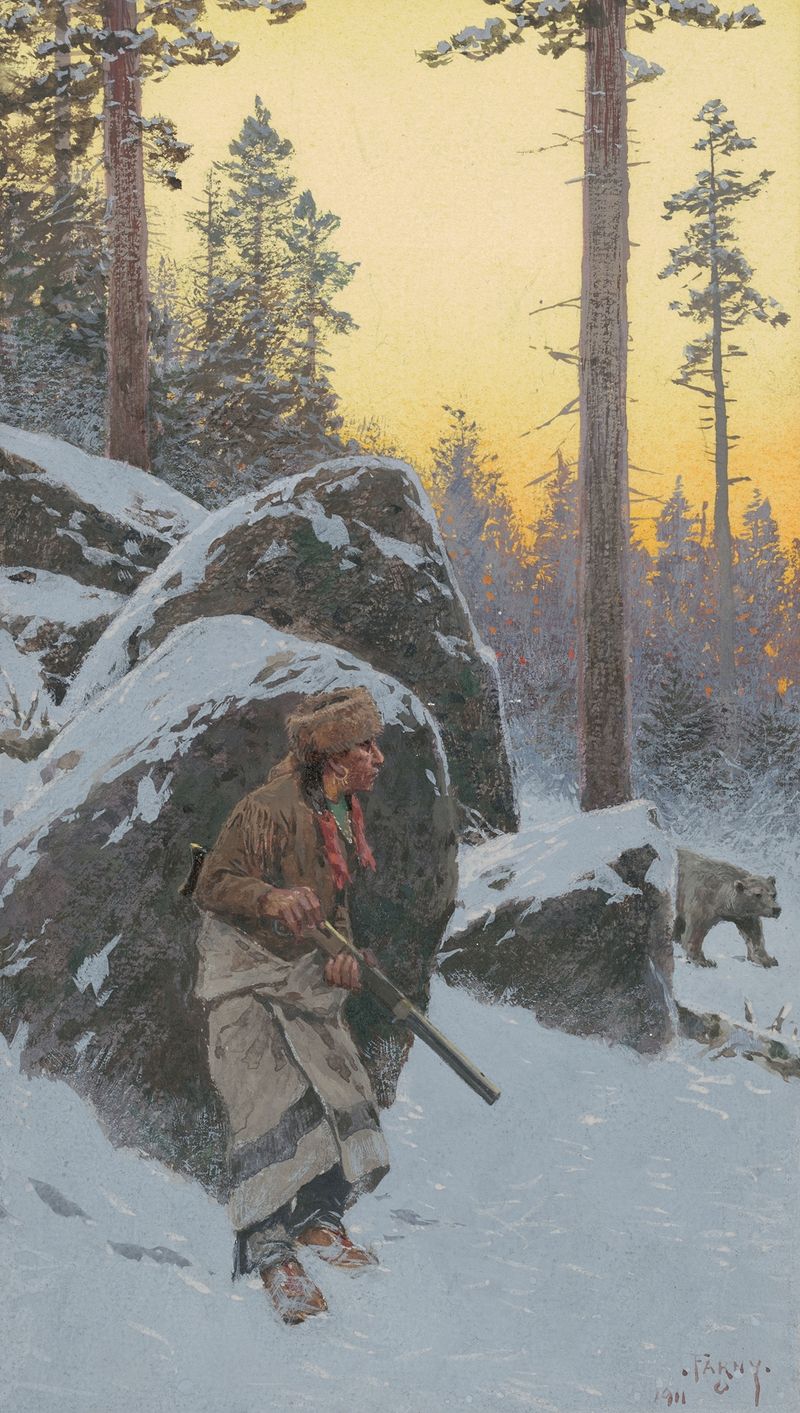
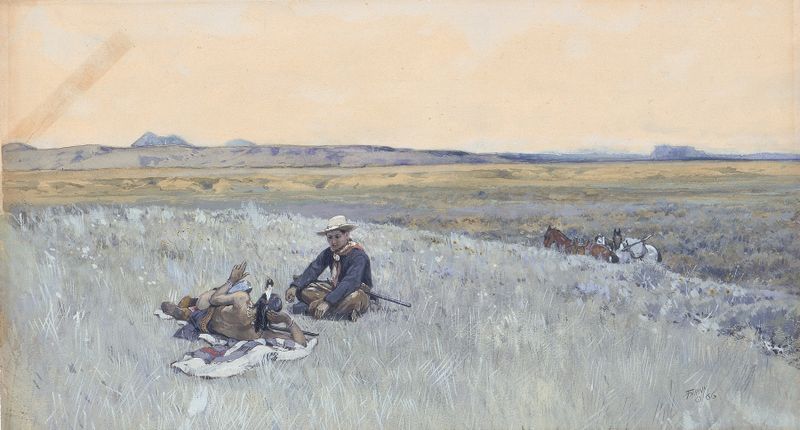
The vastness of the American West evokes a profound sense of awe, as time and nature weave together in a tapestry of existence. Focus on the rich, earthy hues that dominate the canvas, where warm browns and deep greens blend seamlessly, capturing the rugged terrain of the Wyoming Territory. The sweeping sky, painted in soft blues, hints at an expansive horizon, while wispy clouds drift lazily above. Look closely at the delicate brushwork that shapes the distant mountains, portraying a sense of majesty and timelessness, inviting the viewer to journey beyond the canvas. In the foreground, a solitary figure stands near a tranquil river, his posture reflecting a contemplative spirit.
The juxtaposition of man against the grandeur of nature speaks to the tension between humanity and the wilderness. This solitary presence, while small, is imbued with significance, embodying the struggle to find identity within an untamed land. The interplay of light and shadow further emphasizes the emotional depth, revealing individual stories etched into the landscape. Henry Farny painted this work during a time of burgeoning interest in the American frontier, likely in the late 19th century.
Living in a period marked by the expansion of the railroad and the mythologizing of the West, Farny sought to capture the essence of this evolving landscape. His experiences among Native American tribes and the vast, unspoiled territories enriched his art, allowing him to reflect on the beauty and perils of a vanishing world.