
The departure of the Bucintoro — History & Facts
Is this a mirror — or a memory? A transformation unfolds in a moment suspended between reality and the reverie of remembrance, where the past dances with the present in delicate harmony. Focus on the central figures, elegantly poised aboard the ornate Bucintoro. The vessel, draped in rich blues and golds, cuts through waves that ripple with reflections of both sky and emotion. Look closely at the interplay of light upon the water, where every glimmer seems to whisper forgotten tales of Venice's maritime splendor.
The painter’s meticulous brushstrokes breathe life into the scene, creating a fluidity that draws the viewer’s gaze across the canvas. Beyond the immediate grandeur, the painting’s details hint at deeper truths. The figures wear expressions that oscillate between joy and melancholy, revealing the bittersweet nature of farewells. Notice the contrast between the vibrancy of the ship and the more muted colors of the background, suggesting that while some embark on journeys, others remain tethered to the shore — a poignant reflection on separation and desire.
The waves, alive with movement, juxtapose the stillness of the departing souls, embodying the tension of transition. Guglielmo Da Re created this work during an era of shifting artistic styles in Venice, likely in the late 18th century. The city was undergoing profound changes, both socially and politically, with the decline of the Republic looming. As an artist of this time, Da Re engaged with the themes of nostalgia and transformation, capturing the spirit of an age in flux, where tradition clashed with the winds of modernity.
More Artworks by Guglielmo Da Re
Browse all →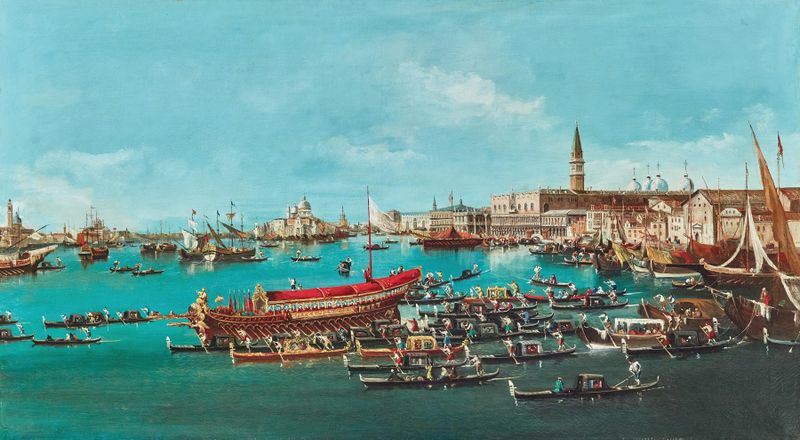
More Historical Art
Browse all →
The Night Watch Militia Company of District II under the Command of Captain Frans Banninck Cocq
Rembrandt van Rijn

Lincoln Memorial
Henry Bacon

The Third of May 1808
Francisco de Goya

Isaac and Rebecca, Known as ‘The Jewish Bride’
Rembrandt van Rijn

The Charge of the Mamelukes (1814)
Francisco de Goya

De vier ruiters van de apocalyps
Albrecht Dürer