
The Dogana — History & Facts
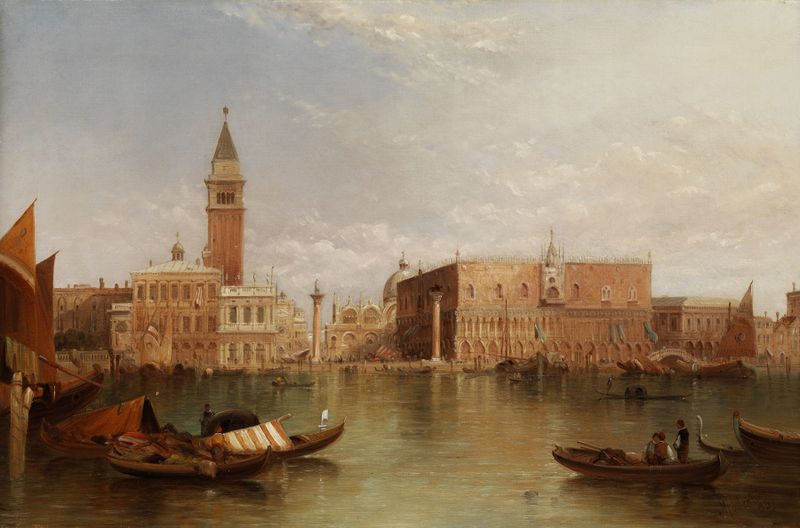
In the delicate play of light and shadow, the heart of this piece unfolds, beckoning us to look deeper into its quiet depths. Each brushstroke captures a moment suspended in time, inviting a conversation between the seen and unseen, between presence and absence. Look to the center of the canvas, where the Dogana, or customs house, stands proudly against a backdrop of shimmering water. Notice how the soft, golden light bathes the building, imbuing it with a sense of warmth and allure.
The artist employs a palette of muted blues and ochres to create a serene atmosphere, while the wispy clouds reflect delicate hues across the water’s surface. This interaction of colors invites viewers to explore further, revealing layers of texture and emotion. Beneath the tranquil surface lies a deeper tension; the shadows cast by the Dogana whisper of stories untold. They suggest the weight of history and the burden of those who traverse these waters, searching for freedom or solace.
The juxtaposition of light and shadow becomes a metaphor for the complexities of human experience, hinting at both hope and uncertainty. Each element within the composition speaks to the passage of time, urging reflection on the fleeting nature of existence. Created during a period of transition in the art world, this work emerged from the brush of Alfred Pollentine, an artist known for his fascination with light and landscape. While the exact date remains uncertain, it is believed to have been painted in the late 19th century, a time when the Impressionist movement was redefining perspectives and techniques.
Pollentine's approach reflects both his admiration for the nuances of nature and the broader artistic shifts of his era, marking a significant moment in the evolution of landscape painting.
More Artworks by Alfred Pollentine
Browse all →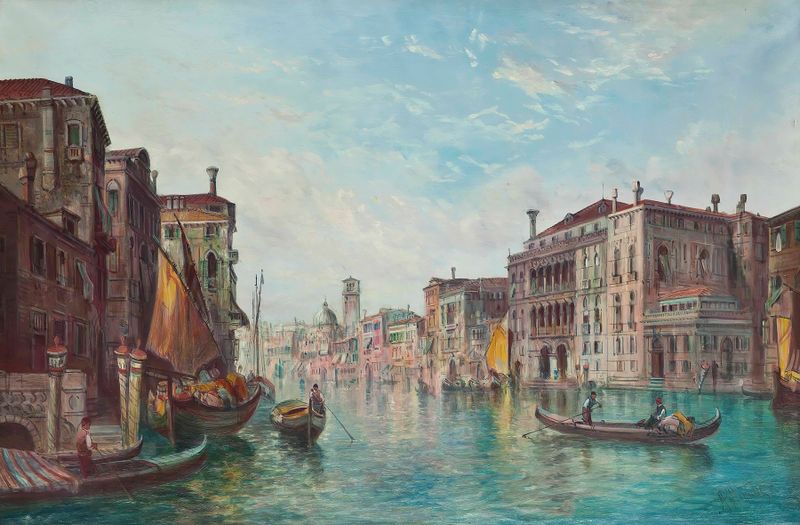
More Architecture Art
Browse all →
The statue of Liberty
Frédéric Auguste Bartholdi

View of Houses in Delft, Known as ‘The Little Street’
Johannes Vermeer

View of Houses in Delft, Known as ‘The Little Street’
Johannes Vermeer

The Cathedral in Rouen. The portal, Grey Weather
Claude Monet

The yellow house
Vincent van Gogh

The Church in Auvers-sur-Oise, View from the Chevet
Vincent van Gogh