Ansicht von Venedig — History & Facts
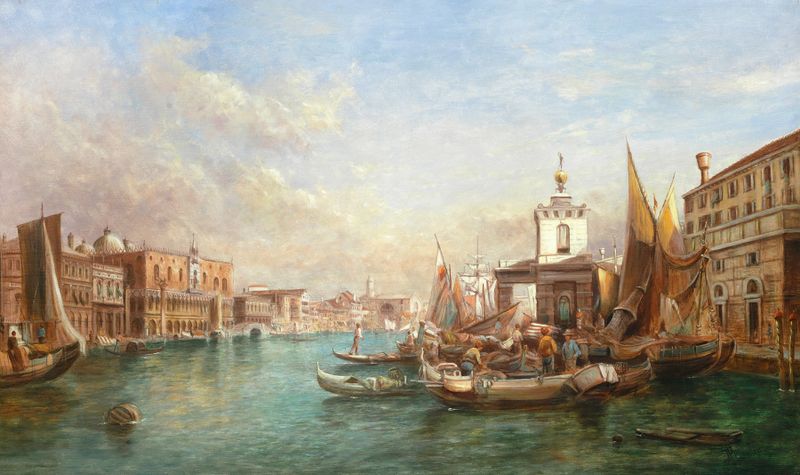
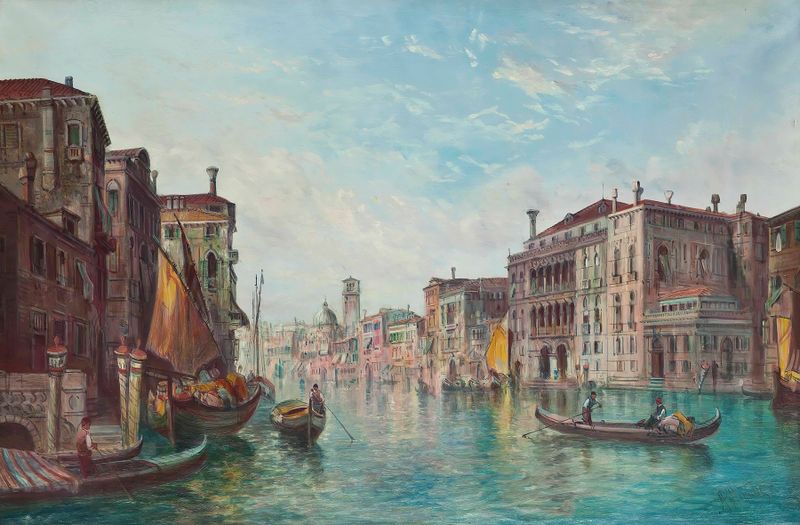
Did the painter know this moment would outlive them? In the shimmering expanse of water, vibrant hues blend seamlessly into one another, capturing the essence of Venice — a city both timeless and ephemeral. Look to the left where a solitary gondola glides gracefully across the canal, its dark shape contrasting starkly with the luminous reflections dancing on the water's surface. Notice how the artist uses varying shades of blues and greens, interspersed with the warm sun-kissed yellows of the sunlit architecture. The brushwork is fluid and lively, suggesting movement, inviting your gaze to wander throughout the canvas.
The careful composition balances the grandeur of the buildings with the delicate ripples of the water, creating a harmonious interplay between stillness and life. In the background, the languid warmth of the afternoon light evokes a sense of nostalgia, while the fleeting nature of the scene hints at deeper truths — the transience of beauty and the inevitability of time. The gondola's serene journey could signify a passage of life, an invitation to contemplate what remains constant amidst change. The juxtaposition of the vibrant foreground against the softly fading horizon reflects the artist's understanding of Venice as both a majestic spectacle and a place deeply rooted in history, echoing a yearning for permanence. In 1885, Pollentine painted this scene during a period of exploration within the artistic community, often influenced by the Impressionists and their pursuit of capturing light and moment.
Living in England yet enamored with continental landscapes, he sought to convey a truth that transcended his own time. This city, alive with history and culture, became a vessel for his artistic expression, allowing viewers to glimpse a moment that feels both familiar and eternally captivating.