
The Doge’s Palace and Grand Canal, Venice — History & Facts
In the serene embrace of Venice, time flows like the shimmering waters of the Grand Canal, echoing a deep-seated longing for moments both captured and lost. Look to the center of the canvas where the majestic Doge’s Palace rises proudly against the soft glow of the sunset. The interplay of warm golds and cool blues invites your eye to dance along the rippling surface of the water, reflecting the opulence of Venetian architecture. Notice how the artist masterfully employs light—casting long shadows that hint at a world both vibrant and ephemeral.
The gentle strokes breathe life into the scene, each detailing the intricate designs of the palace while also evoking the quietude of an evening unfurling. Within this seemingly idyllic vista lies a profound emotional tension. The tranquil waters mirror an unfulfilled yearning, a longing for connection amidst the grandeur. The contrast between the ethereal light and the solid structure of the palace speaks to the fragility of memory and the inevitable passage of time.
The boats gently bobbing on the canal suggest movement and travel, yet their stillness hints at a moment of pause, prompting the viewer to reflect on their own place within the flow of history. Giovanni Grubacs created this piece during a time when Venice was a cultural beacon, flourishing with artistic innovation yet burdened by political strife. The exact date remains uncertain, but it is believed to be during the late 19th to early 20th centuries, a period when artists sought to capture the essence of their surroundings. Grubacs’ work stands as a testament to the delicate balance between beauty and transience, mirroring the artist’s own journey through a rapidly changing world.
More Artworks by Giovanni Grubacs
Browse all →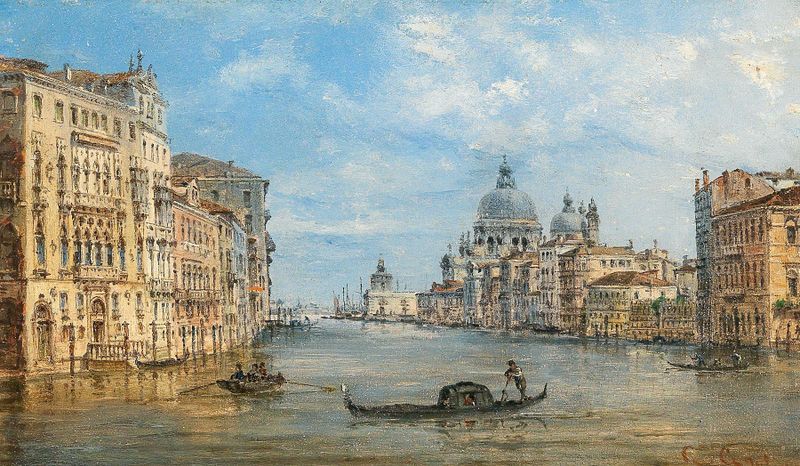
Venice, a view of the Grand Canal
Giovanni Grubacs
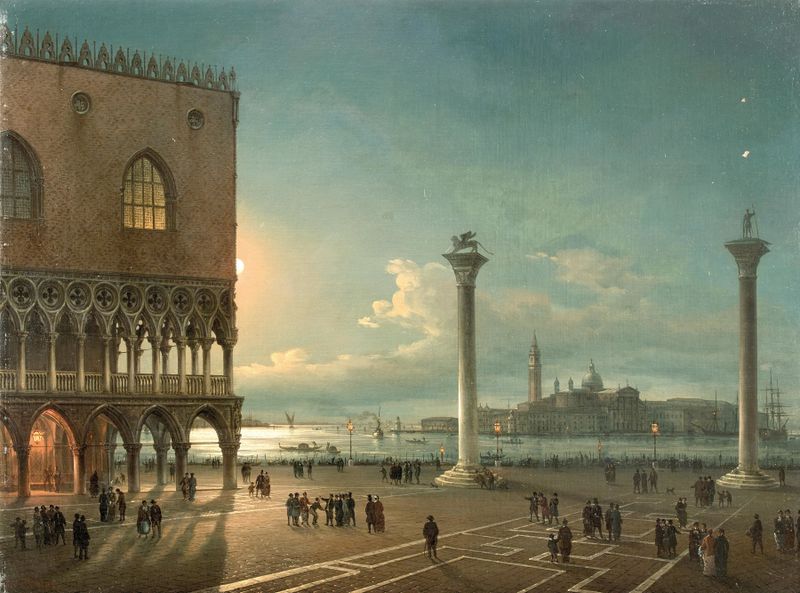
The Piazzetta di San Marco in moonlight, Venice
Giovanni Grubacs
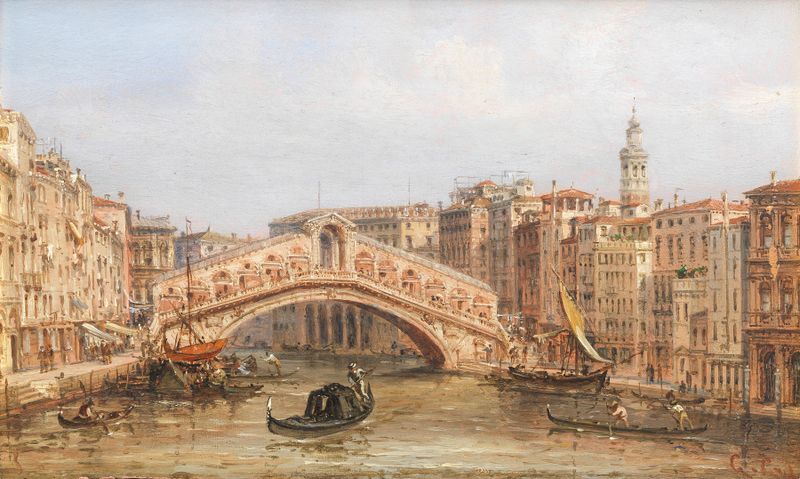
The Rialto Bridge
Giovanni Grubacs
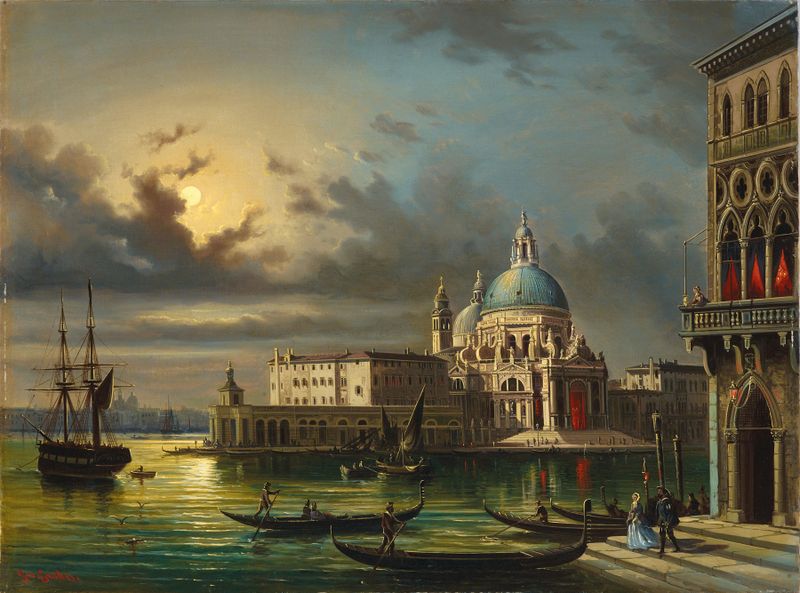
The Punta della Dogana and Santa Maria della Salute, Venice in moonlight
Giovanni Grubacs
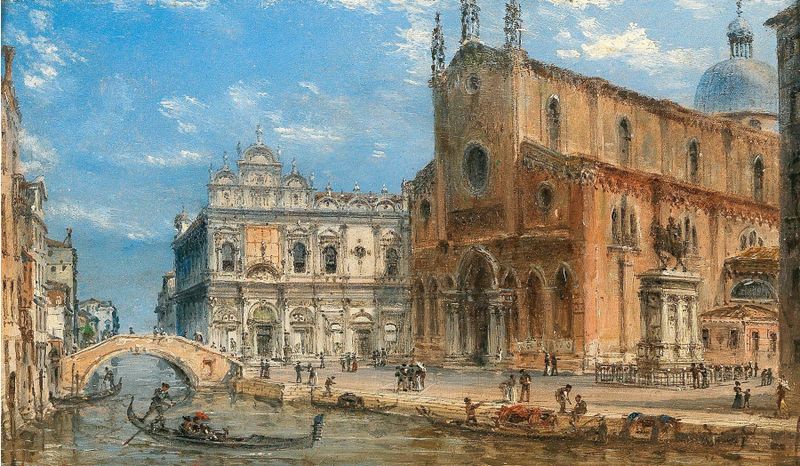
Venice, a view of San Zanipolo with the Colleoni equestrian monument
Giovanni Grubacs
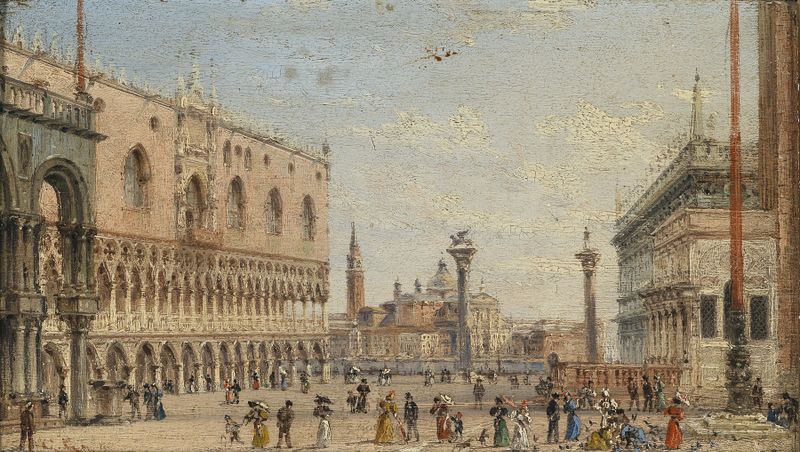
Venedig Piazza San Marco
Giovanni Grubacs
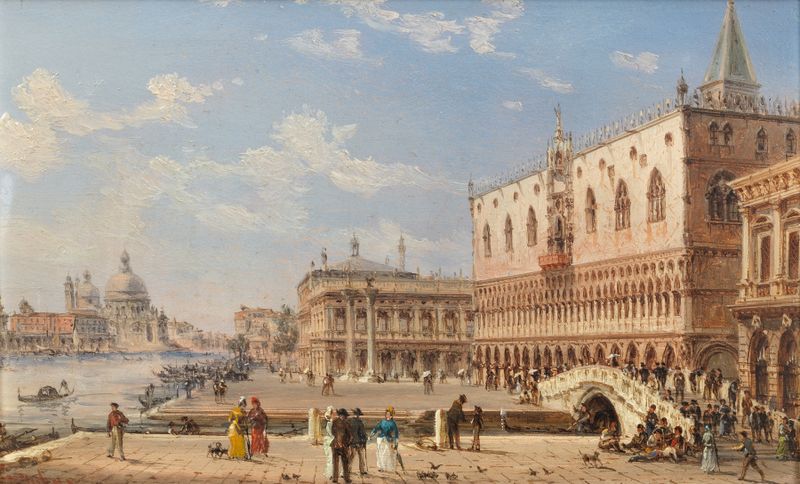
Doge’s Palace with the Ponte della Paglia
Giovanni Grubacs
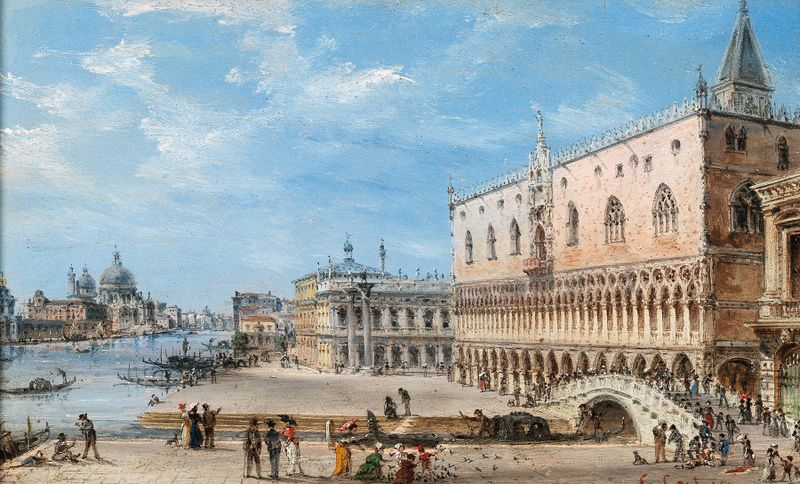
Riva degli Schiavoni
Giovanni Grubacs
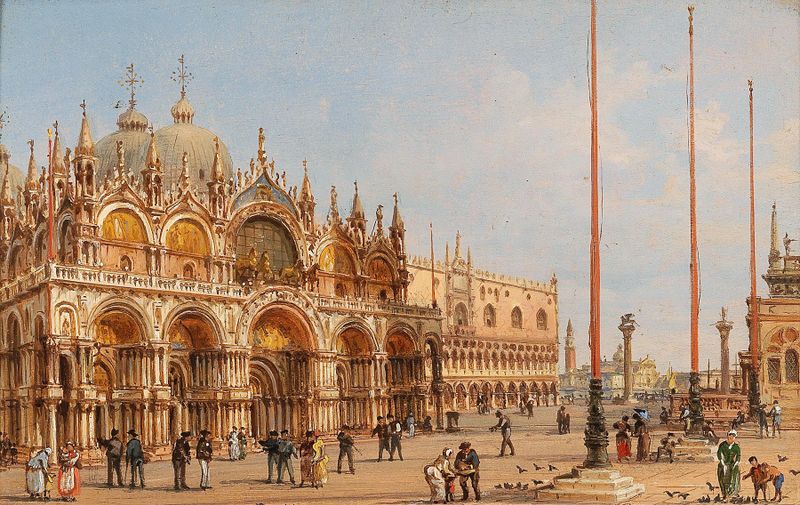
A View Of St Mark’s Basilica And A View Of St Mark’s Square
Giovanni Grubacs
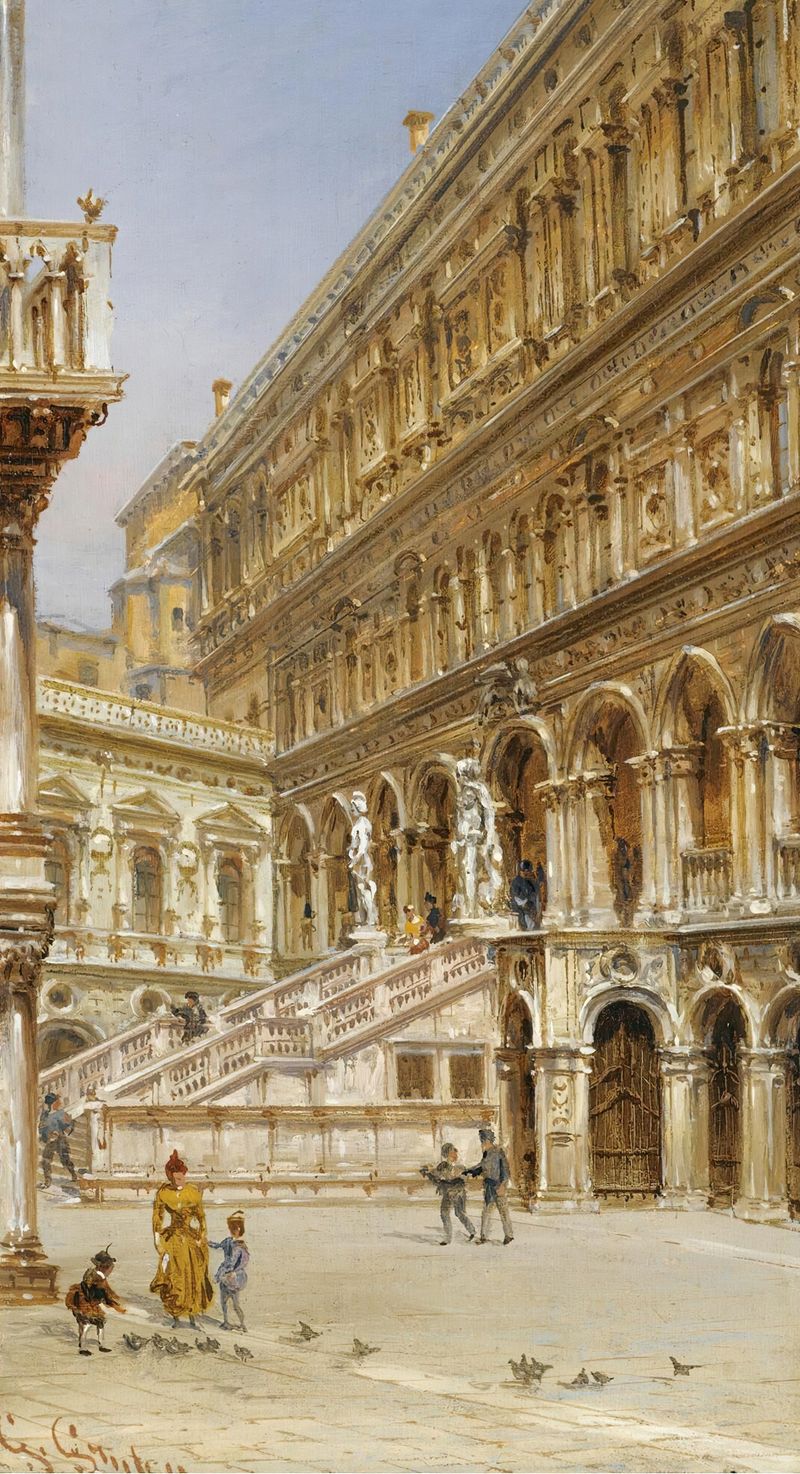
The Giants’ Staircase In The Courtyard Of The Doge’s Palace
Giovanni Grubacs
More Architecture Art
Browse all →
The statue of Liberty
Frédéric Auguste Bartholdi

View of Houses in Delft, Known as ‘The Little Street’
Johannes Vermeer

View of Houses in Delft, Known as ‘The Little Street’
Johannes Vermeer

The Cathedral in Rouen. The portal, Grey Weather
Claude Monet

The yellow house
Vincent van Gogh

The Church in Auvers-sur-Oise, View from the Chevet
Vincent van Gogh