
The Doge’S Palace And Santa Maria Della Salute — History & Facts
Can paint confess what words never could? The brush strokes of The Doge’s Palace And Santa Maria Della Salute whisper secrets of the past, hinting at loyalty and betrayal against a backdrop of majestic Venetian architecture. Look to the left at the imposing silhouette of the Doge's Palace, its ornate details emerging from the warm, golden sunlight. Notice how the light dances on the water, reflecting the ethereal architecture of Santa Maria della Salute, mirroring the splendor and fragility of power. The soft blues and warm ochres create a juxtaposition of tranquility and tension, inviting contemplation of the dichotomy between the city's beauty and its storied history. Delve deeper into the subtle contrasts; the vibrant color palette draws attention, yet it is the shadowy figures in the foreground that speak volumes of unvoiced emotions.
They seem to be lingering in the threshold of two worlds, caught between reverence and remorse, as if the echoes of past betrayals linger in the cool Venetian breeze. Each brushstroke captures an essence of time: moments of celebration intertwined with the undercurrents of political intrigue. Federico del Campo painted this piece in 1898, during a time when Venice was undergoing a complex transformation, grappling with its identity. The artist, influenced by both Romanticism and the growing symbolism in art, sought to immortalize the city's architectural grandeur, while also infusing it with an emotional depth that reflects the turbulence of his era.
More Artworks by Federico del Campo
Browse all →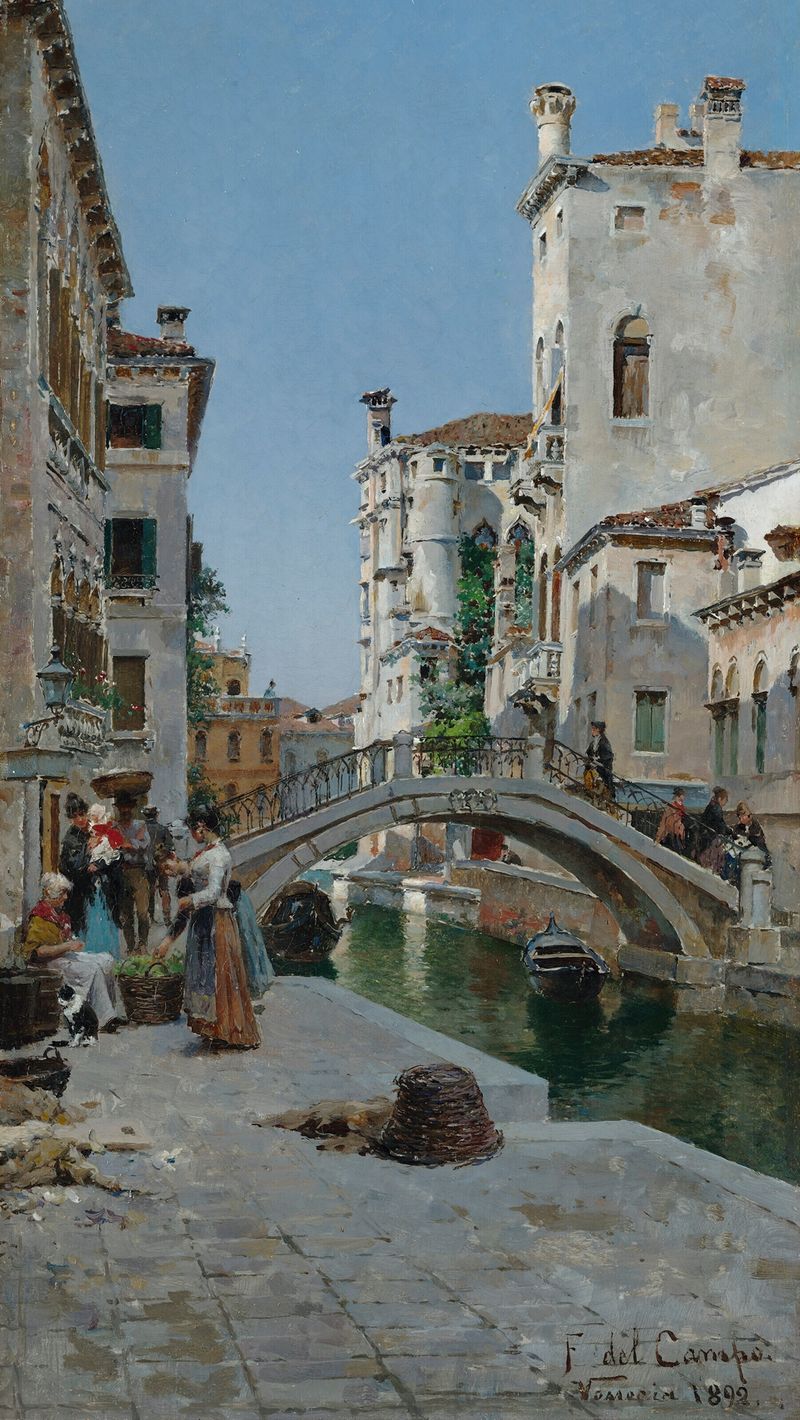
View of Venice
Federico del Campo
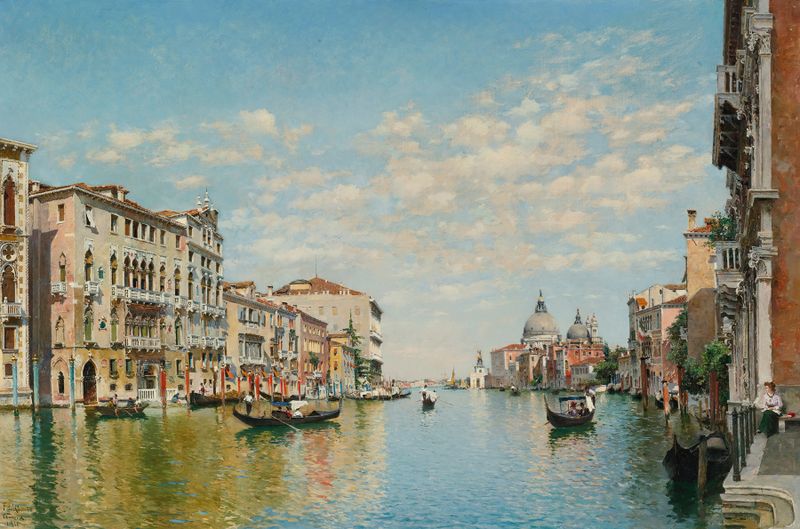
Gondoliers On The Grand Canal, Venice
Federico del Campo
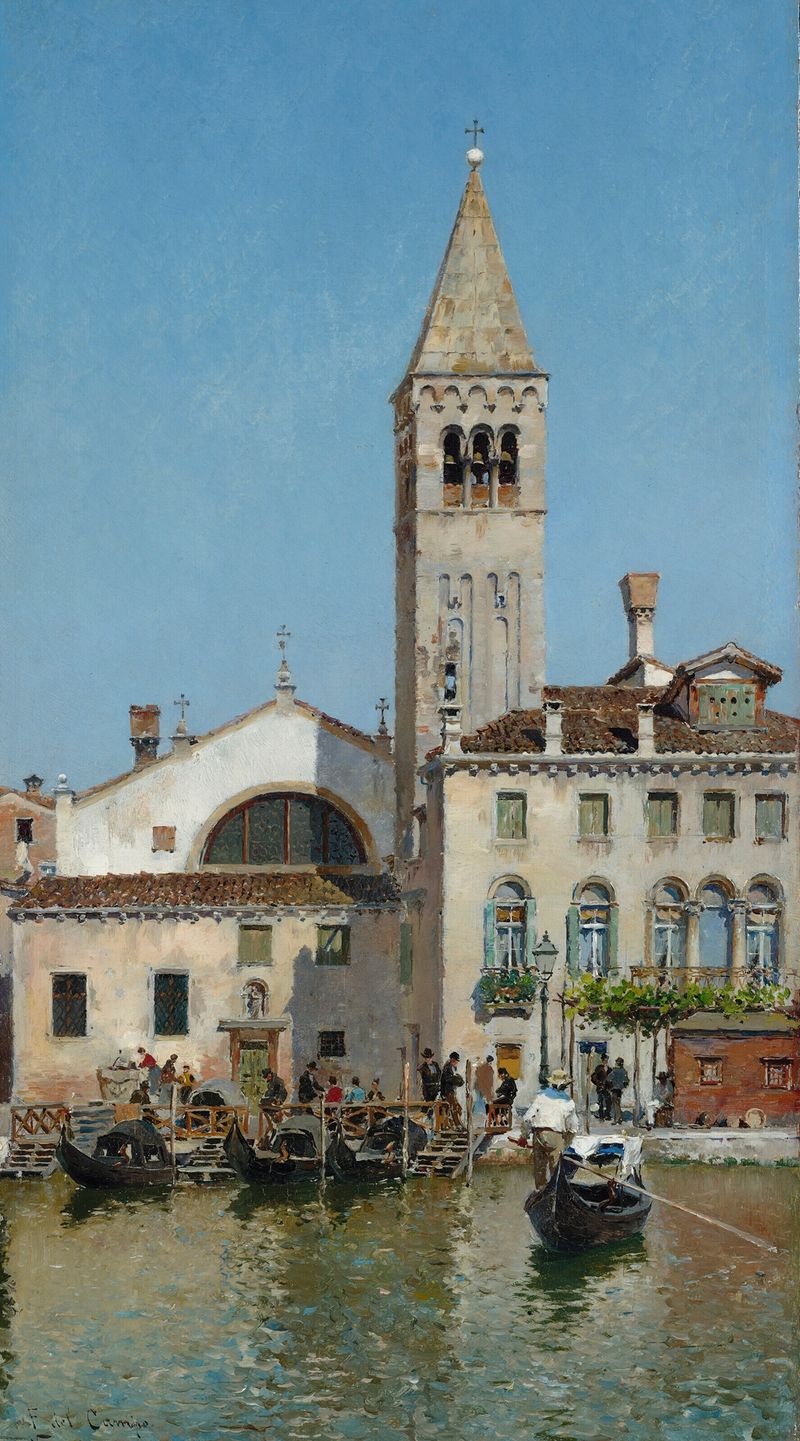
View of Venice
Federico del Campo
View of Venice
Federico del Campo
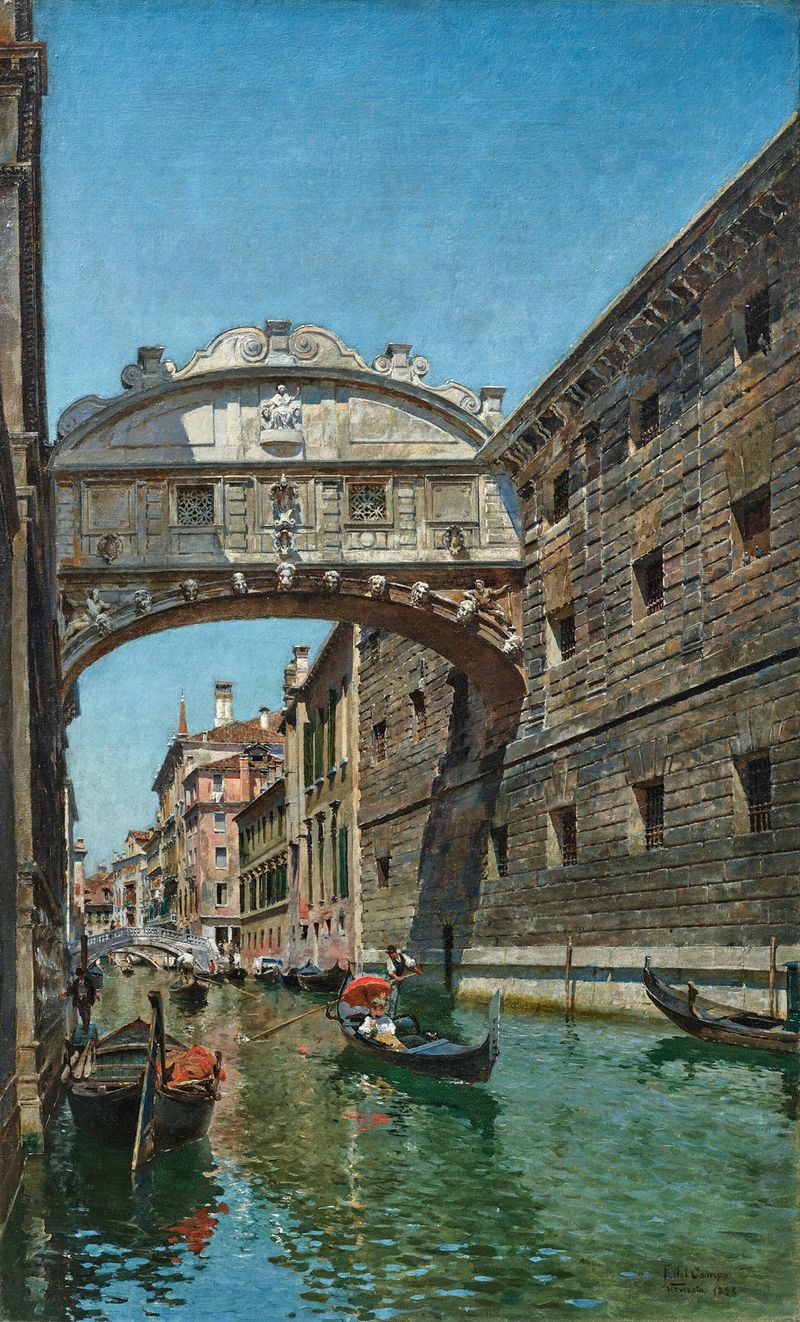
Il Ponte dei Sospiri
Federico del Campo
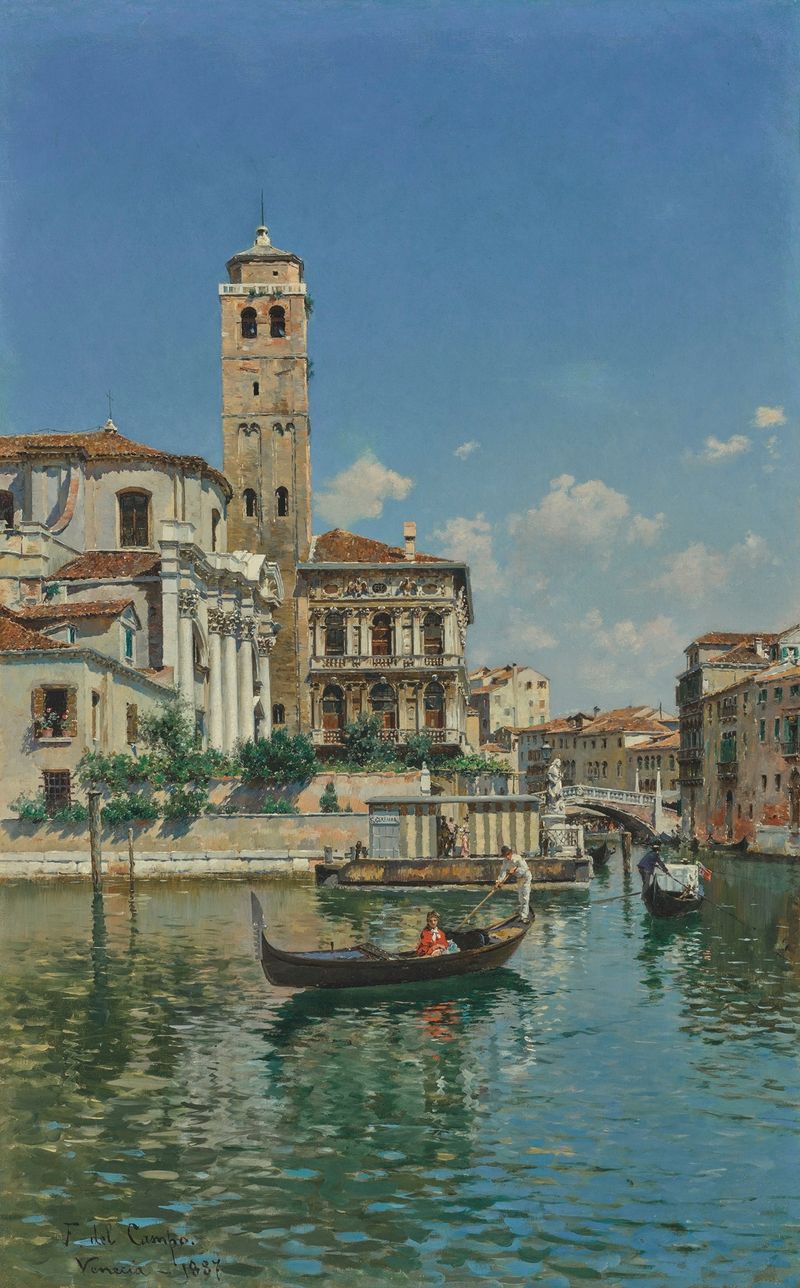
The Palazzo Labia, Venice
Federico del Campo
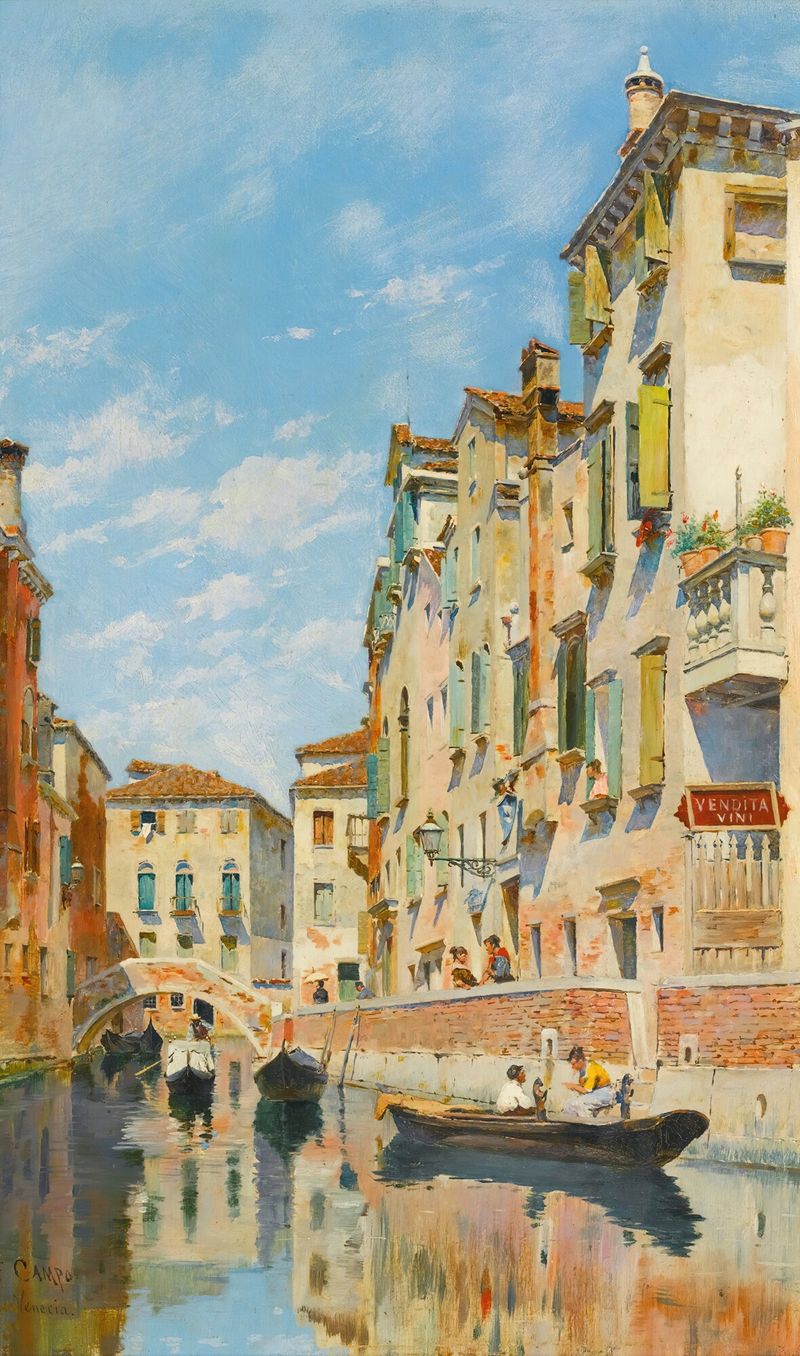
Gondolas On A Venetian Canal
Federico del Campo
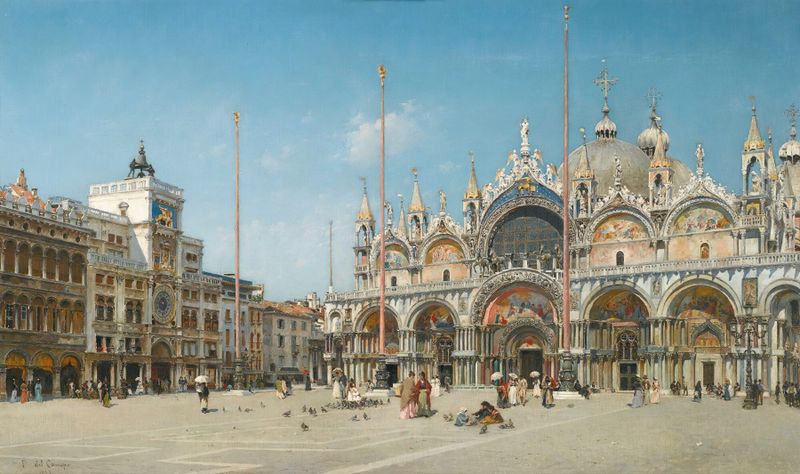
Saint Mark’s Square, Venice
Federico del Campo
Tintoretto’s House, Venice
Federico del Campo
View of Venice
Federico del Campo
More Architecture Art
Browse all →
The statue of Liberty
Frédéric Auguste Bartholdi

View of Houses in Delft, Known as ‘The Little Street’
Johannes Vermeer

View of Houses in Delft, Known as ‘The Little Street’
Johannes Vermeer

The Cathedral in Rouen. The portal, Grey Weather
Claude Monet

The yellow house
Vincent van Gogh

The Church in Auvers-sur-Oise, View from the Chevet
Vincent van Gogh