The First Tavern — History & Facts
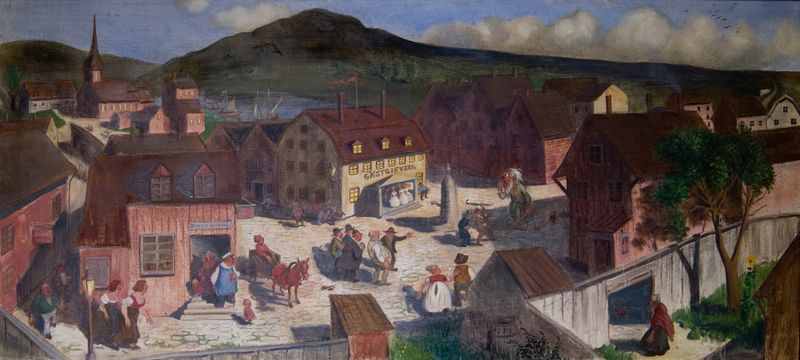
Could a single brushstroke hold eternity? In The First Tavern, the weight of longing hangs heavy in the air, beckoning viewers to explore the depths of human experience captured in oil and color. Focus on the vibrant hues of deep blues and warm ochres that collide at the edges of this intimate gathering. The figures are drawn in a fluid yet distinct manner, inviting your gaze to linger on their faces, where expressions of joy and melancholy coexist. Notice how the flickering light dances over the wooden bar, illuminating the textures of the aged tables and the glint of glassware, creating a world that feels both lively and steeped in nostalgia. The juxtaposition of light and shadow serves as a metaphor for the human condition, revealing an undercurrent of desire and remembrance amidst the convivial atmosphere.
The patrons, seemingly engaged in lively conversation, also echo a profound sense of yearning, perhaps for connection or lost time. Each detail, from the tilted chairs to the empty spaces between figures, tells a story of relationships forged and fractured, leaving a lingering impression of what might have been. In 1906, amidst a burgeoning artistic community in Sweden, the painter created this piece during a transformative period. Arosenius was exploring themes of everyday life while grappling with the strains of personal loss and existential inquiry, a reflection of the changing tides in art that sought to blend reality with emotional depth.
This work encapsulates both his artistic evolution and the collective longing of a society searching for meaning in the mundane.