
The flight into Egypt: a sketch: St Joseph — History & Facts
Who listens when art speaks of silence? In Rembrandt's sketch, a profound emptiness resonates, evoking the quietude of a journey undertaken with heavy hearts. Look closely at Saint Joseph, whose weary figure commands attention at the center of the composition. The gentle strokes of charcoal delineate his worn face, which is softened by the flickering light, creating a sense of vulnerability amidst the surrounding shadows. Notice how the subtle contrasts between dark and light enhance the emotional weight of the moment, drawing you into the intimate space of contemplation.
The sparse details, marked by a fluid yet deliberate touch, invite the viewer to focus on the profound gravity of his task. As you explore the edges of the sketch, the void surrounding Joseph amplifies his solitude, suggesting both the physical distance from home and the emotional burden of his sacred duty. The absence of elaborate backgrounds or distracting elements highlights the tension between the sacred and the mundane; it is in this simplicity that one can feel the depth of care, responsibility, and foreboding that accompany his journey. Every line whispers of the trials ahead, encapsulating the paradox of hope intertwined with despair. Created around 1628, this sketch reflects a pivotal moment in the artist's career, as he sought to convey human emotion with an unprecedented depth.
At this time, Rembrandt was exploring the use of light and shadow, which would later define his masterpieces. With a burgeoning reputation in Amsterdam, he was beginning to delve into biblical themes, utilizing everyday characters to illuminate the extraordinary within the ordinary.
More Artworks by Rembrandt van Rijn
Browse all →
The Night Watch Militia Company of District II under the Command of Captain Frans Banninck Cocq
Rembrandt van Rijn

The Return of the Prodigal Son
Rembrandt van Rijn

The Hundred Guilder Print: the figures leaning on the wall in the centre left
Rembrandt van Rijn

The Hundred Guilder Print: the central piece with Christ preaching, the plate arched
Rembrandt van Rijn

Isaac and Rebecca, Known as ‘The Jewish Bride’
Rembrandt van Rijn
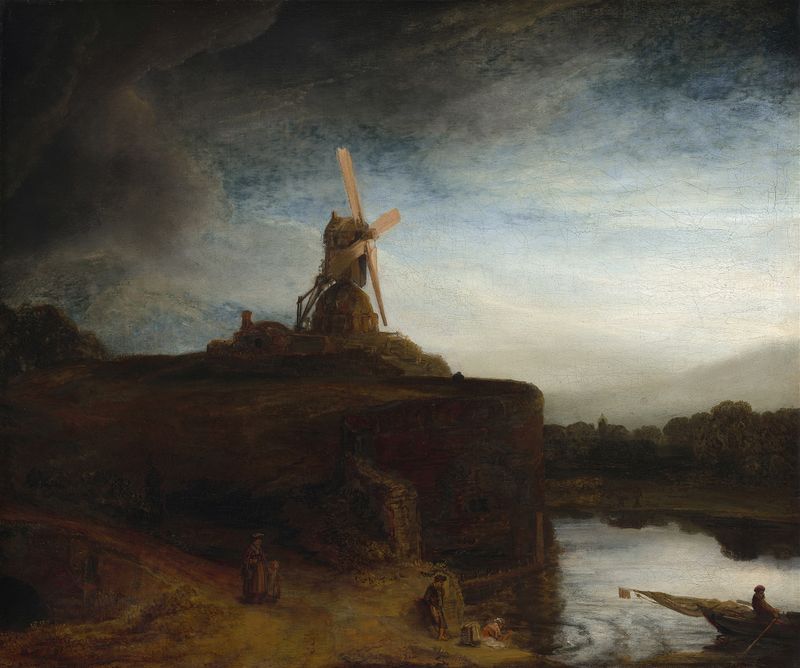
The Mill
Rembrandt van Rijn

The Sampling Officials of the Amsterdam Drapers’ Guild, Known as ‘The Syndics’
Rembrandt van Rijn

The return of the prodigal son
Rembrandt van Rijn
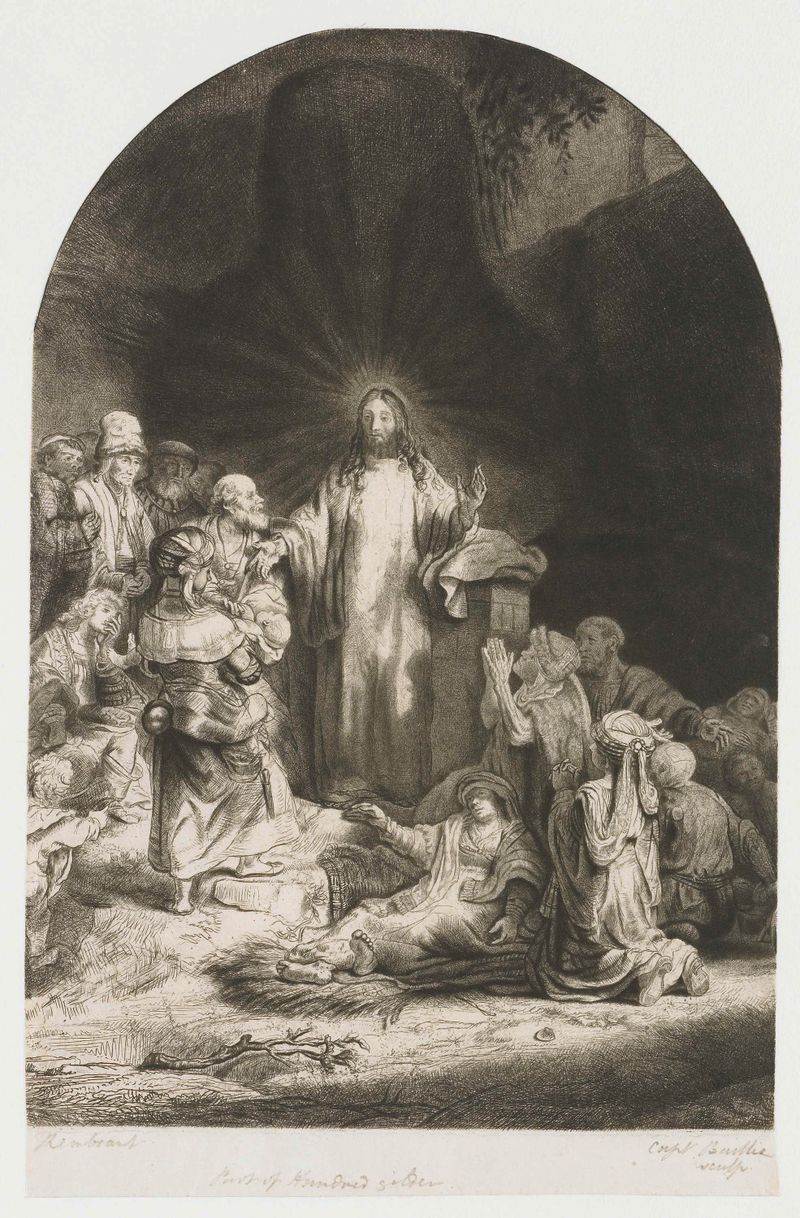
The Hundred Guilder Print: the central piece with Christ preaching, the plate arched
Rembrandt van Rijn

The Hundred Guilder Print: the man seen on the back in the lower left corner
Rembrandt van Rijn
More Religious Art
Browse all →The Return of the Prodigal Son
Rembrandt van Rijn

The Garden of Earthly Delights
El Bosco

Count Orgaz’ funeral
El Greco
The Hundred Guilder Print: the central piece with Christ preaching, the plate arched
Rembrandt van Rijn

The Descent from the Cross
Rogier van der Weyden
The return of the prodigal son
Rembrandt van Rijn