
The flight into Egypt: altered plate from Seghers — History & Facts
What if beauty was never meant to be finished? In the delicate balance of light and shadow, The Flight into Egypt invites us to ponder the transient journey of its subjects, forever caught between the known and the unknown. Look to the left at the tender embrace between the Virgin and Child, their figures softly illuminated by a warm glow that seems to emanate from somewhere beyond the canvas. The gentle lines of the drapery create a harmonious flow, guiding the viewer's gaze to the expressive faces, filled with both hope and trepidation. The muted earth tones underscore the gravity of their flight while the ethereal light encapsulates their profound intimacy, contrasting beautifully with the darker, more foreboding landscape that looms behind. Within this serene moment lies a tension between movement and stillness.
The fragile balance between safety and danger is expertly captured as the weary travelers embark on their uncertain path. The enigmatic figure of Joseph, partially shaded, serves as a reminder of the burden of protection he bears, while the distant horizon hints at the challenges that lie ahead. Each brushstroke reveals a deeper narrative, rich with emotional resonance and cultural significance. The artist created this piece around 1653, during a period when he was navigating personal struggles, including financial difficulties and the loss of loved ones.
Working in Amsterdam, Rembrandt's innovative techniques and exploration of light positioned him at the forefront of the Baroque movement, even as he faced the harsh realities of life. This artwork, an altered plate from the original print, reflects his pursuit of balance between the intimate and the expansive, showcasing his distinctive ability to capture the human spirit amidst adversity.
More Artworks by Rembrandt van Rijn
Browse all →
The Night Watch Militia Company of District II under the Command of Captain Frans Banninck Cocq
Rembrandt van Rijn

The Return of the Prodigal Son
Rembrandt van Rijn

The Hundred Guilder Print: the figures leaning on the wall in the centre left
Rembrandt van Rijn

The Hundred Guilder Print: the central piece with Christ preaching, the plate arched
Rembrandt van Rijn

Isaac and Rebecca, Known as ‘The Jewish Bride’
Rembrandt van Rijn
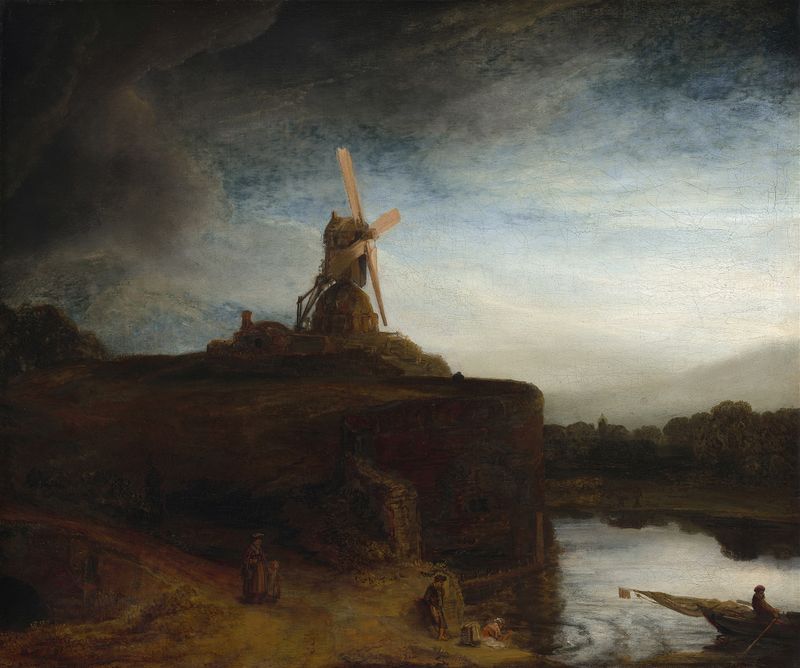
The Mill
Rembrandt van Rijn

The Sampling Officials of the Amsterdam Drapers’ Guild, Known as ‘The Syndics’
Rembrandt van Rijn

The return of the prodigal son
Rembrandt van Rijn
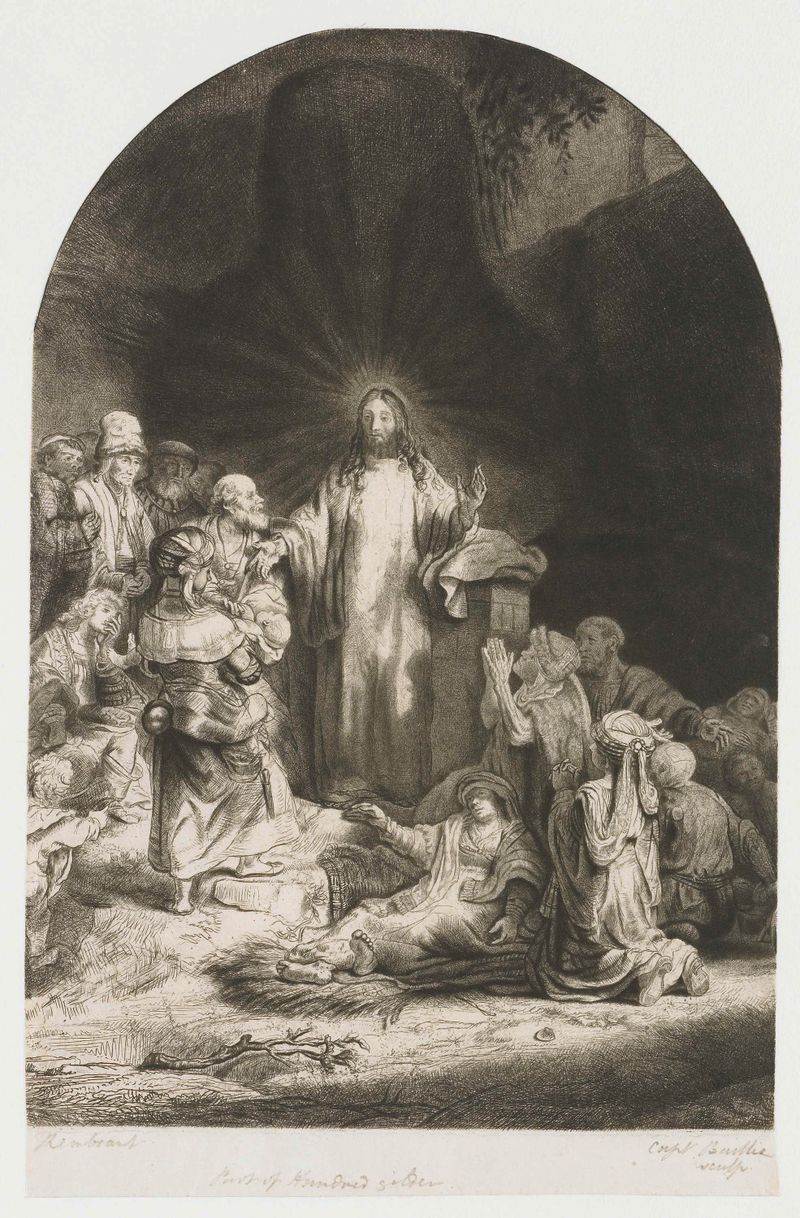
The Hundred Guilder Print: the central piece with Christ preaching, the plate arched
Rembrandt van Rijn

The Hundred Guilder Print: the man seen on the back in the lower left corner
Rembrandt van Rijn
More Religious Art
Browse all →The Return of the Prodigal Son
Rembrandt van Rijn

The Garden of Earthly Delights
El Bosco

Count Orgaz’ funeral
El Greco
The Hundred Guilder Print: the central piece with Christ preaching, the plate arched
Rembrandt van Rijn

The Descent from the Cross
Rogier van der Weyden
The return of the prodigal son
Rembrandt van Rijn