
The Fountain — History & Facts
Art reveals the soul when the world turns away. In the delicate dance of water and stone, The Fountain whispers of rebirth and renewal, beckoning us to witness the intricate interplay of nature and artistry. Look to the center where the fountain's basin glimmers under the warm light, capturing reflections that pulse like a heartbeat. The soft curves of the marble create a gentle contrast with the cascading water, while vibrant greenery encircles the scene, urging our eyes to roam.
Intricate carvings decorate the base, showcasing figures that seem to breathe alongside the water, reminding us of the life-giving essence that this masterpiece embodies. Yet, it is in the details that deeper meanings emerge. The water, a symbol of purification, flows freely, suggesting an unending cycle of life, while the surrounding flora hints at nature's resilience. The juxtaposition of the cold stone against the fluid water evokes a tension between permanence and transience—between the unyielding structure of the fountain and the fleeting moment of each droplet.
This duality captures the essence of existence, echoing themes of growth and renewal in the face of adversity. In the 18th century, amid an era rich with artistic exploration, the French School produced The Fountain during a time when artists were increasingly inspired by classical themes and nature's beauty. This piece reflects the shifting tides of enlightenment, as the world embraced notions of rebirth and transformation, both in art and society. It stands as a testament to the evolving dialogue between man, nature, and the creative spirit.
More Artworks by French School
Browse all →
Architectural Landscape with Belisarius Receiving Alms
French School
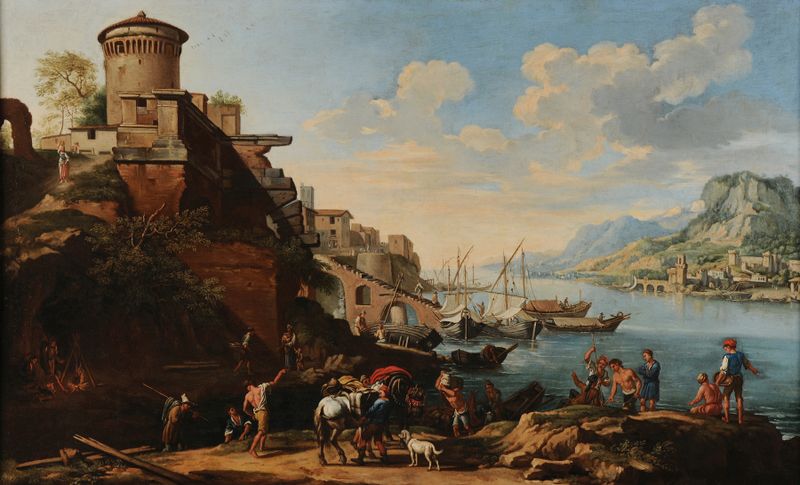
Paysage
French School

The Ponte Salario with Laundresses
French School

Still Life with Eggs and a Leg of Mutton
French School

The Carousal (Scene from Faust?)
French School

The Cave Of Neptune At Tivoli
French School

Portrait of a Lady
French School

A river landscape with figures by ruins
French School
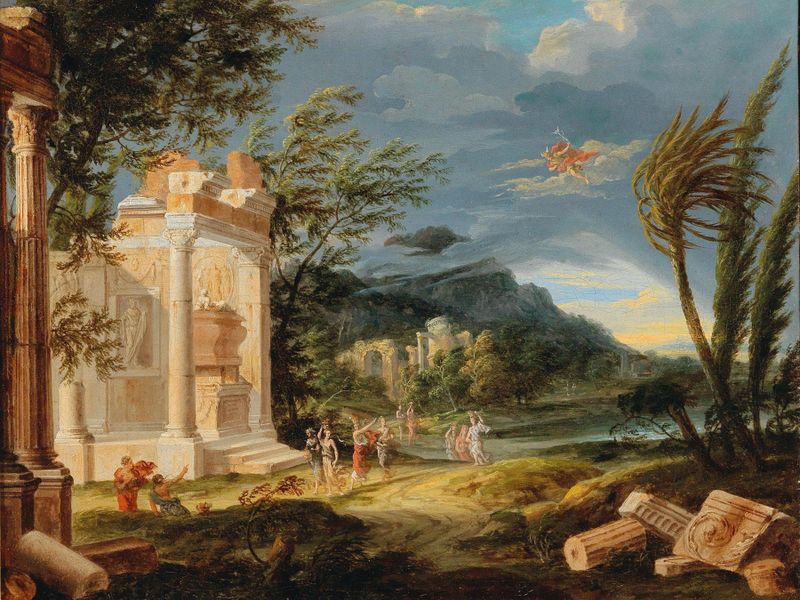
Stormy Landscape with figures and Hermes
French School

Portrait of an Artist
French School





