
The French Army Encamped before Tournai — History & Facts
A city rises on the horizon, its towers and spires catching the last golden light, while the foreground is alive with the bustle of an army at rest. The eye is drawn first to the glowing cloud that dominates the sky, then down to the neat rows of tents, and finally to the scattered figures and horses that animate the shadowed foreground. A lone rider, his back to us, surveys the camp as if inviting us to step into his boots and witness the preparations for what history will decide.
The palette is warm but subdued, the drama of war exchanged for the tense quiet of anticipation, as if the world is holding its breath. Works like this by Adam Frans van der Meulen were the visual chronicles of a Europe in flux, painted for courts and commanders who wanted their victories—and their power—made visible. In the late seventeenth century, such panoramic battle scenes were both propaganda and record, blending topographical accuracy with theatrical staging. The Royal Collection’s example, dated between 1667 and 1690, belongs to a moment when the boundaries of nations were drawn and redrawn by siege and negotiation.
History has kept few traces of the individual lives beneath these tents, but the painting endures as a window onto a world where the fate of cities was decided in fields like this one. Look again at the distant city walls, and imagine the stories waiting behind them.
More Artworks by Adam Frans van der Meulen
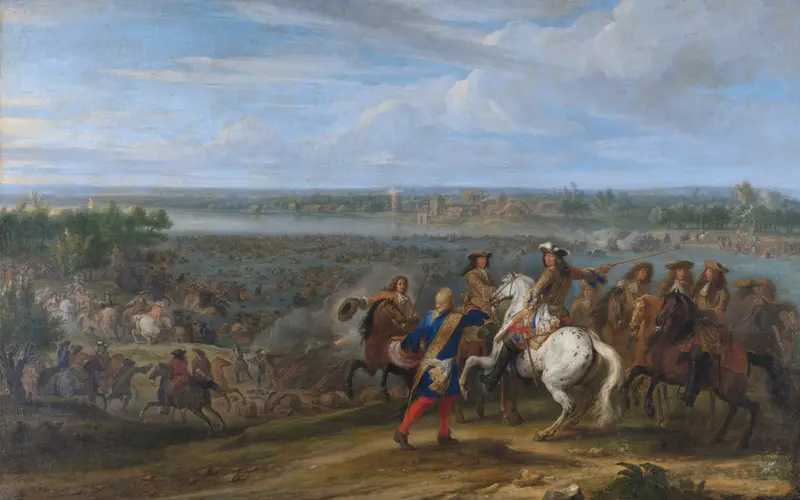
Louis XIV Crossing into the Netherlands at Lobith
Adam Frans van der Meulen
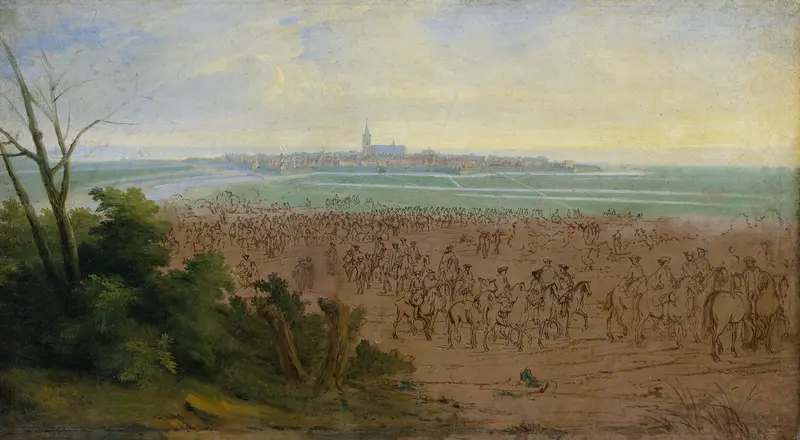
The Troops of Louis XIV before Naarden, 20 July 1672
Adam Frans van der Meulen
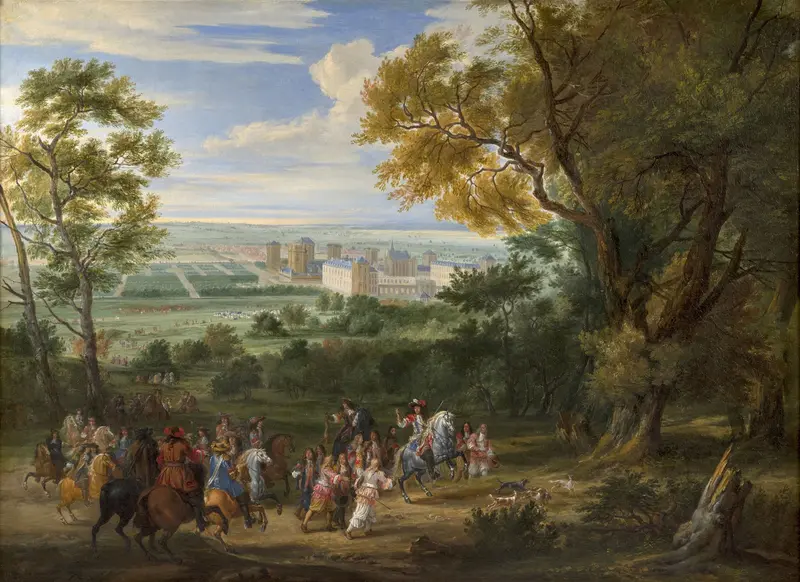
View of the château de Vincennes or The Departure of Louis XIV for the hunt
Adam Frans van der Meulen

A battle scene
Adam Frans van der Meulen
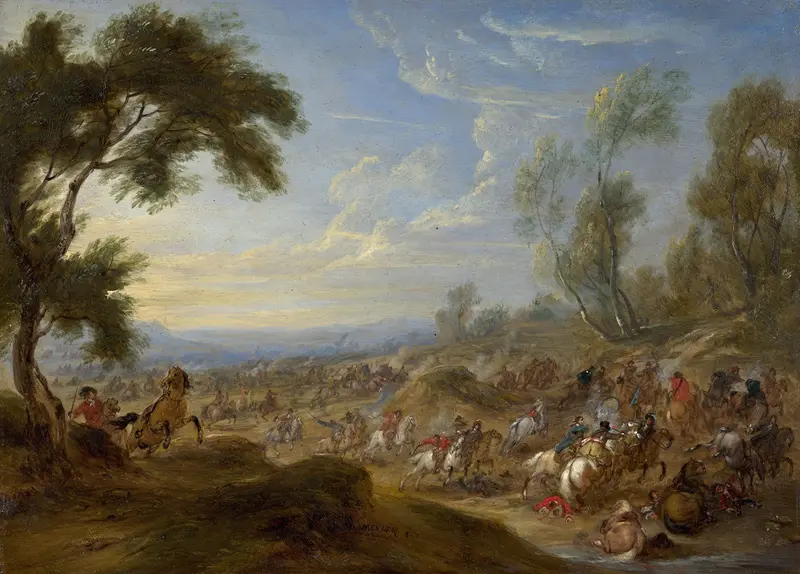
A cavalry charge
Adam Frans van der Meulen
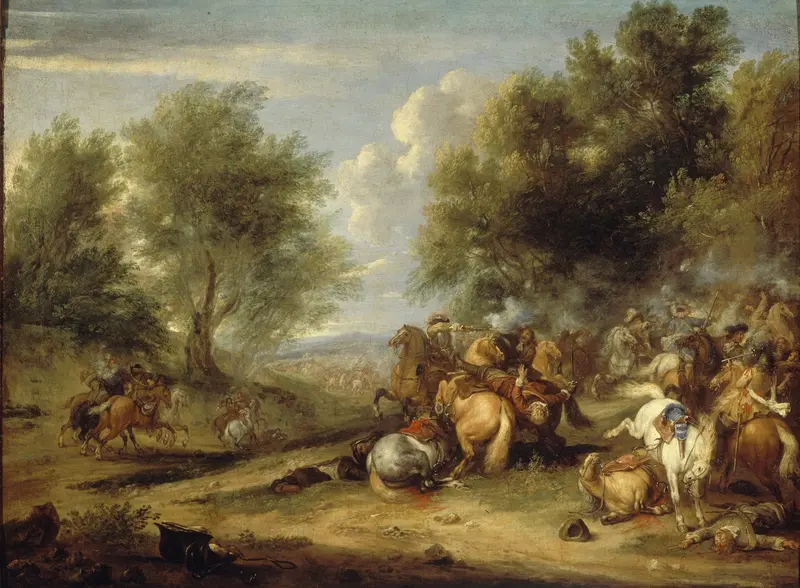
Choc de cavalerie ou Combat de cavalerie
Adam Frans van der Meulen
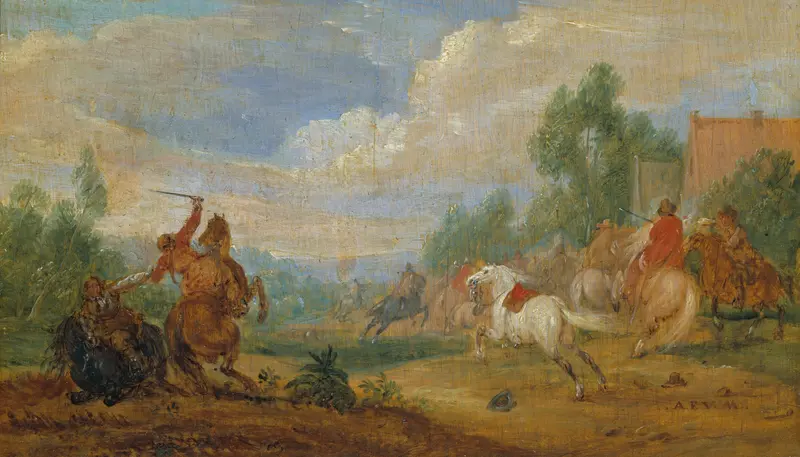
Cavalry Skirmish
Adam Frans van der Meulen
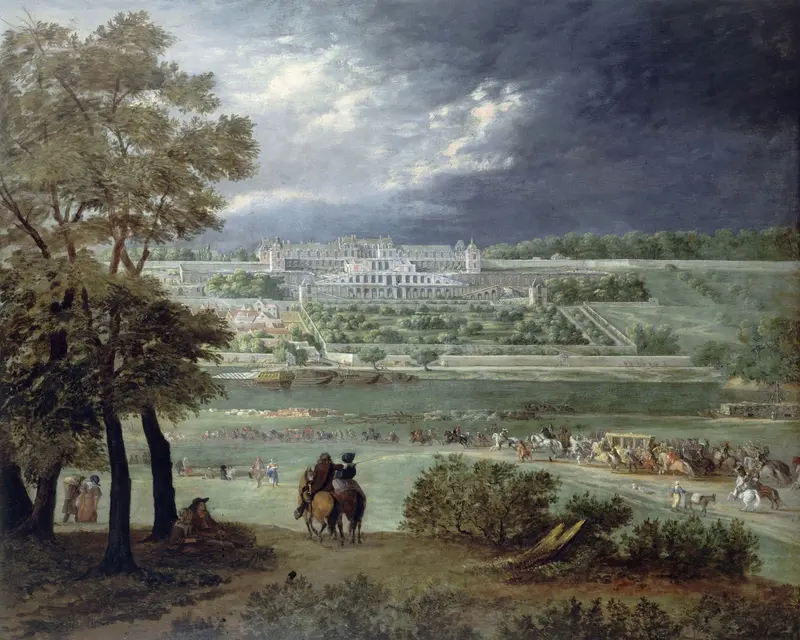
Le Château Neuf de Saint-Germain-en-Laye et les jardins, vus de la rive droite de la Seine
Adam Frans van der Meulen
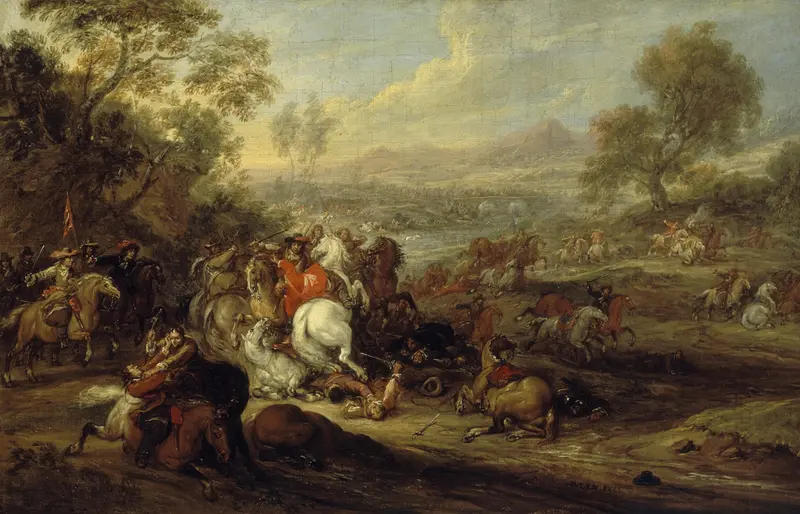
Choc de cavalerie ou Combat de cavalerie
Adam Frans van der Meulen
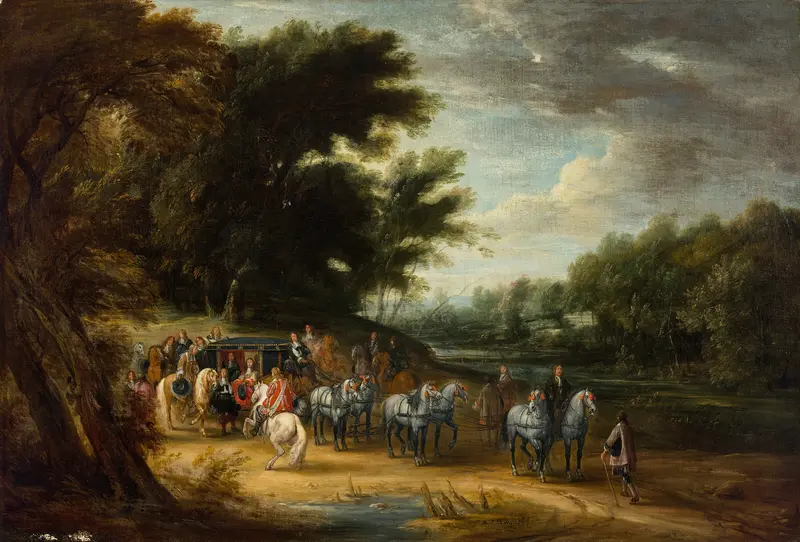
A nobleman in a state coach at rest escorted by his men and horses, with a gentleman on a white horse approaching and landscape beyond
Adam Frans van der Meulen





