
The Funeral of Marie Therese, Queen of France, 10 August — History & Facts
A river of people and horses pours across the canvas, all eyes drawn to the dark, angular catafalque at the center—a procession so vast it seems to swallow the landscape. The painter, Adam Frans van der Meulen, orchestrates a spectacle of movement and solemnity, the crowd’s density and the distant city skyline amplifying the significance of the moment. The foreground teems with mounted guards and onlookers, their gestures urgent yet contained, while the somber pall of the funeral carriage cuts a stark path through the throng.
The sky, heavy with clouds but slashed by a shaft of light, seems to pause above the city’s church spires, as if the heavens themselves are marking the passage. Works like this, created in the late seventeenth century, were often commissioned to commemorate state events and royal ceremonies, serving both as records and as displays of power and order. Van der Meulen was known for his ability to marshal great crowds and military pageantry into coherent, dramatic scenes—skills highly prized at the courts of Europe. This painting, now in the Royal Collection and dated between 1683 and 1690, stands as a testament to that era’s fascination with grandeur and ritual.
History has kept few traces of the specific hands and patrons behind many such works, but the sweep and detail here invite us to step closer, to find our place among the multitude witnessing the end of a queen.
More Artworks by Adam Frans van der Meulen
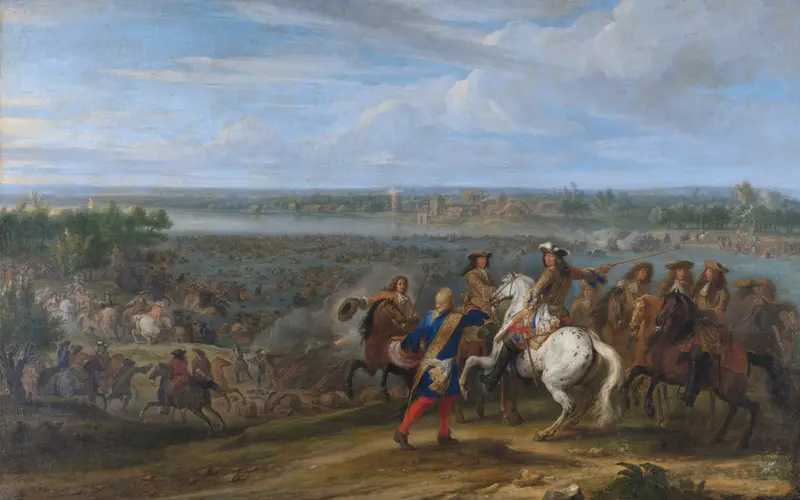
Louis XIV Crossing into the Netherlands at Lobith
Adam Frans van der Meulen
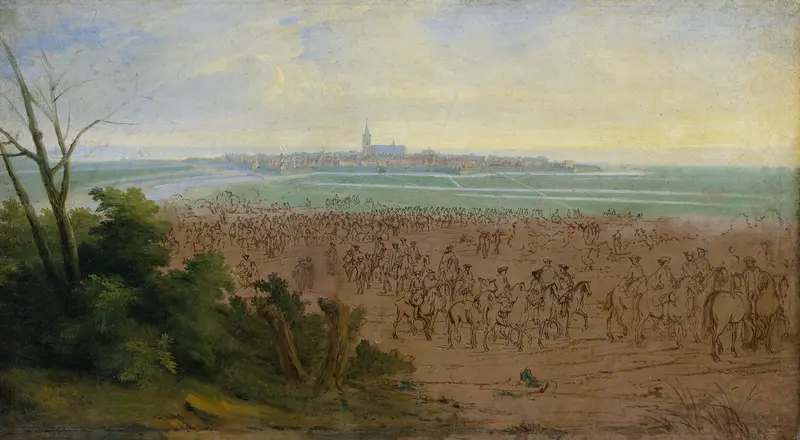
The Troops of Louis XIV before Naarden, 20 July 1672
Adam Frans van der Meulen
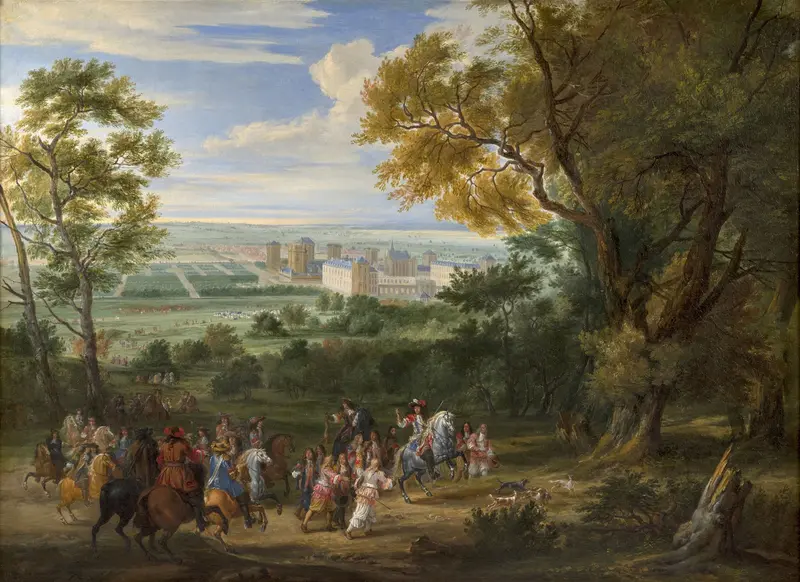
View of the château de Vincennes or The Departure of Louis XIV for the hunt
Adam Frans van der Meulen

A battle scene
Adam Frans van der Meulen
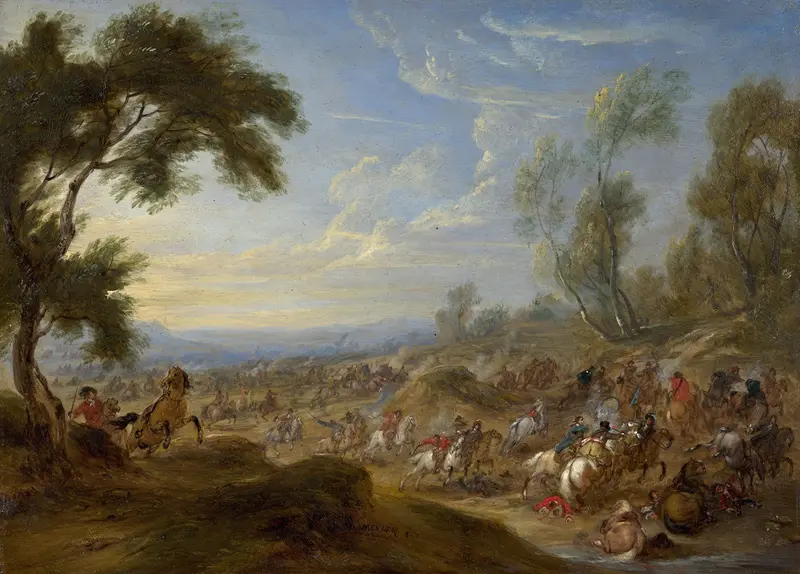
A cavalry charge
Adam Frans van der Meulen
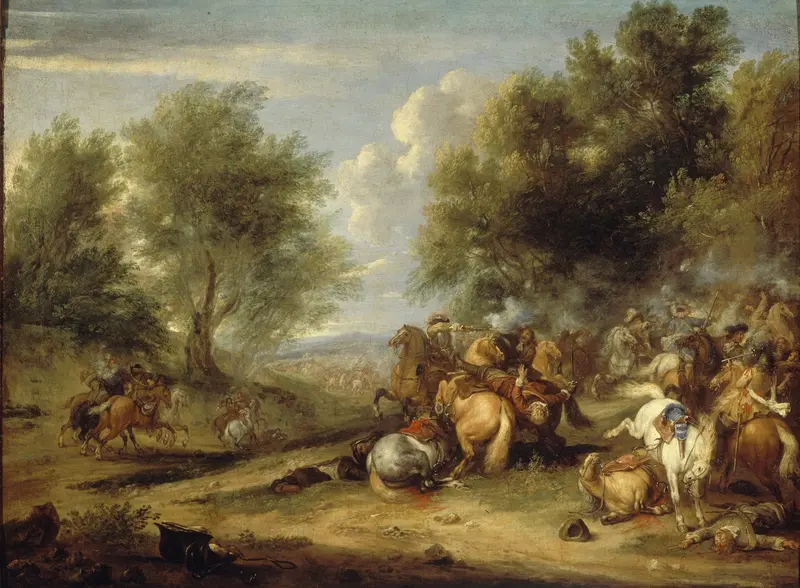
Choc de cavalerie ou Combat de cavalerie
Adam Frans van der Meulen
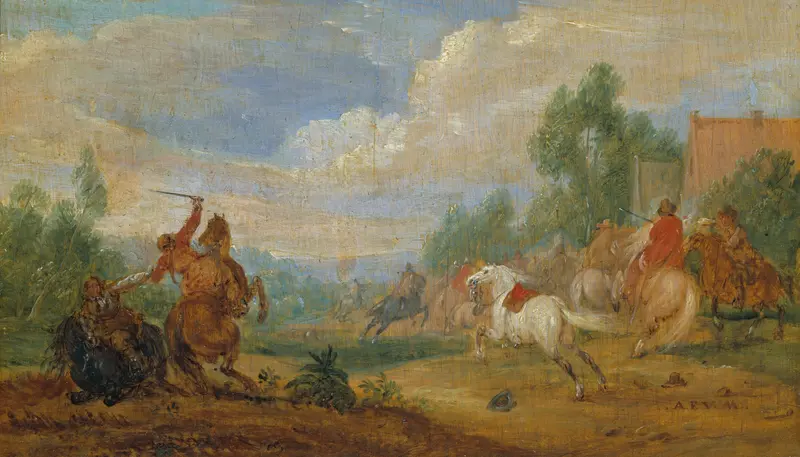
Cavalry Skirmish
Adam Frans van der Meulen
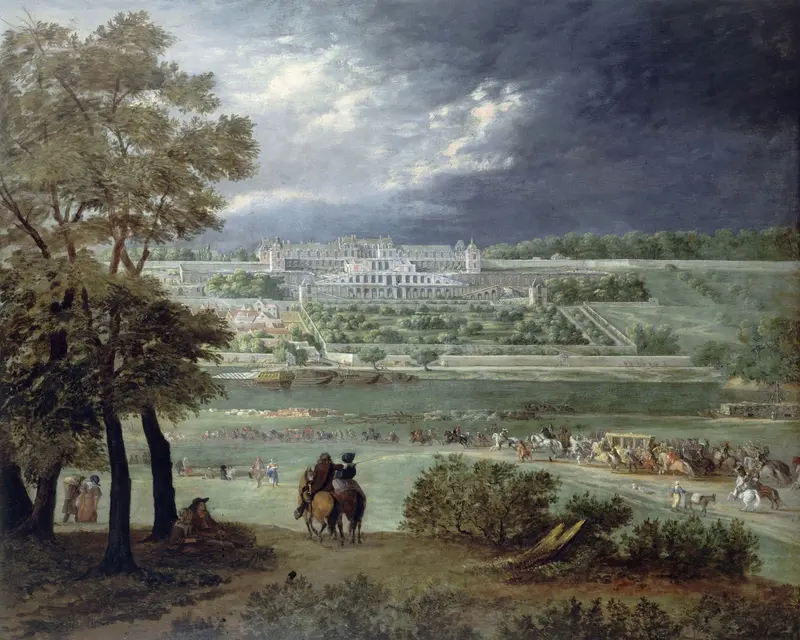
Le Château Neuf de Saint-Germain-en-Laye et les jardins, vus de la rive droite de la Seine
Adam Frans van der Meulen
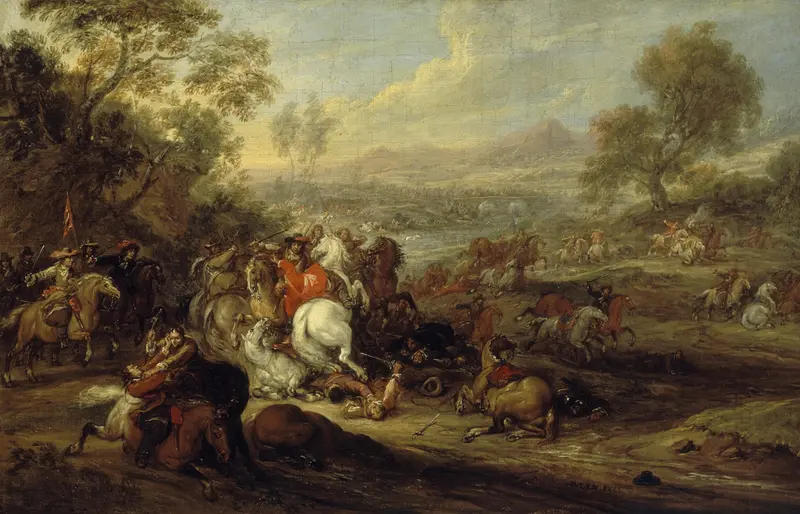
Choc de cavalerie ou Combat de cavalerie
Adam Frans van der Meulen
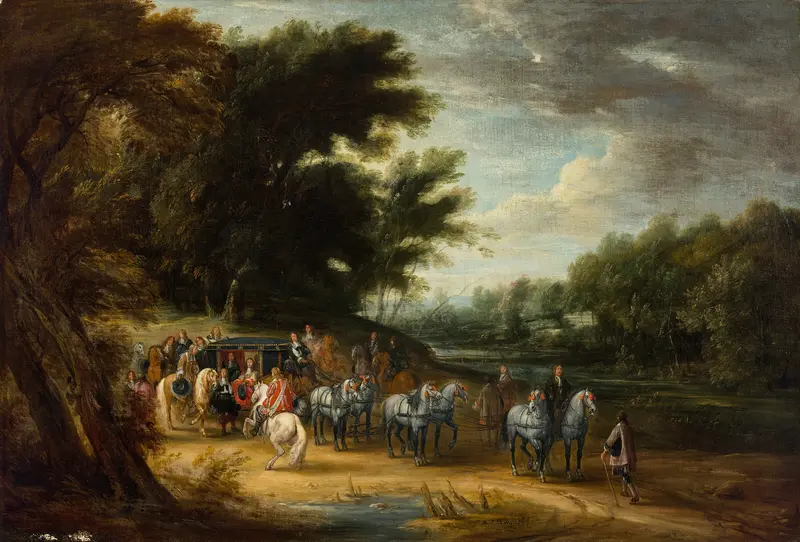
A nobleman in a state coach at rest escorted by his men and horses, with a gentleman on a white horse approaching and landscape beyond
Adam Frans van der Meulen





