
The Great Exhibition of 1851 — History & Facts
Who listens when art speaks of silence? In the midst of bustling crowds and vibrant displays, the stillness of the moment holds a power that transcends mere observation, awakening the soul to deeper truths. Look to the center of the composition, where the grand Crystal Palace rises majestically, glinting with light. The artist captures the architectural marvel not just in its physical form but as an emblem of human ambition and innovation. Notice how delicate strokes delineate the intricate glass panels, each reflecting the luminous atmosphere of the day while the surrounding figures blend into a haze of color.
This layering of detail guides the viewer's eye outward, encouraging exploration of the vibrant scene that pulses around this centerpiece. Beneath the lively façade lies an artistic commentary on industrial progress and its implications. The juxtaposition of human figures, some awed and others engrossed in conversation, speaks to the varied responses to change—wonder, curiosity, and perhaps apprehension. Subtle gestures and facial expressions reveal personal experiences amid the collective experience, suggesting a silent dialogue between the past and future.
It’s a moment suspended in time, capturing the tension between tradition and progress that permeated this era. The artist created this work during a period marked by the rise of the Industrial Revolution in Britain. Working in the mid-19th century, he witnessed the societal shifts and technological advancements that the Great Exhibition epitomized. This event became a showcase of innovation, and for Harding, it was a chance to reflect on the beauty and complexity of a rapidly evolving world through his art.
More Artworks by James Duffield Harding
Browse all →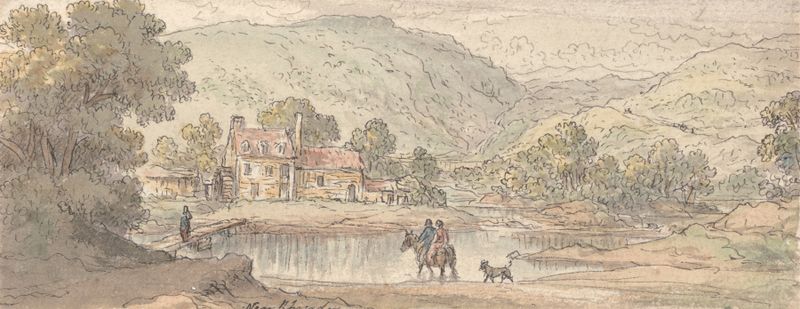
Fording the Stream in a Mountain Valley
James Duffield Harding
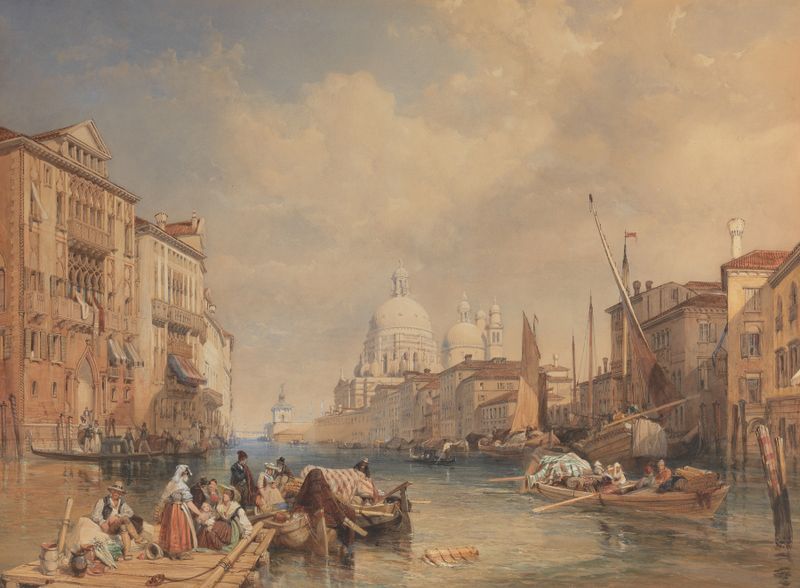
The Grand Canal, Venice
James Duffield Harding
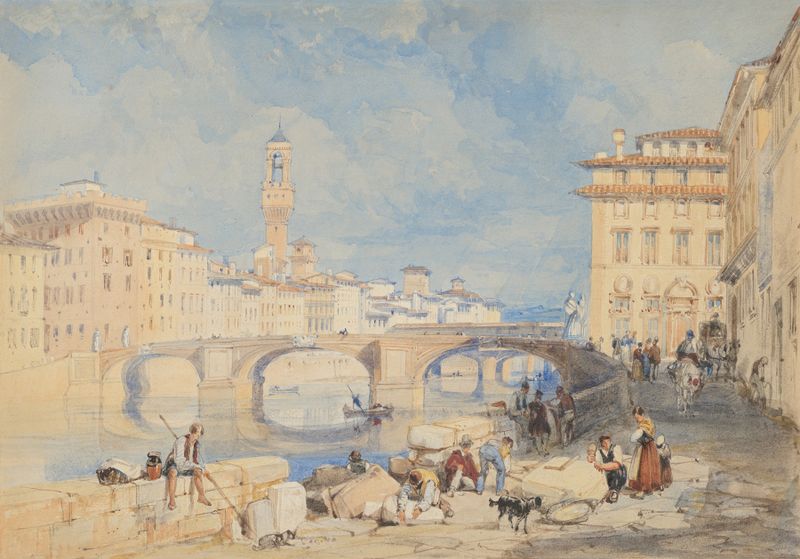
Ponte Santa Trinità, Florence
James Duffield Harding
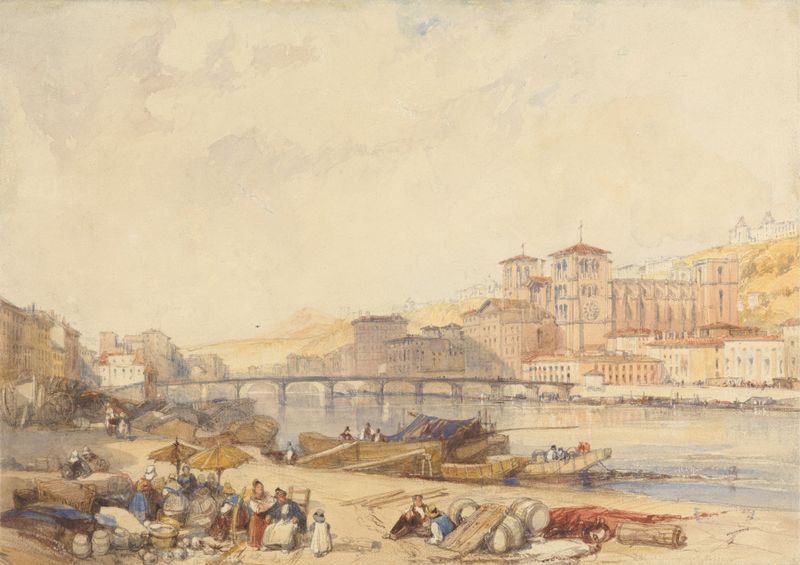
Lyons from Quayside on the Rhone
James Duffield Harding
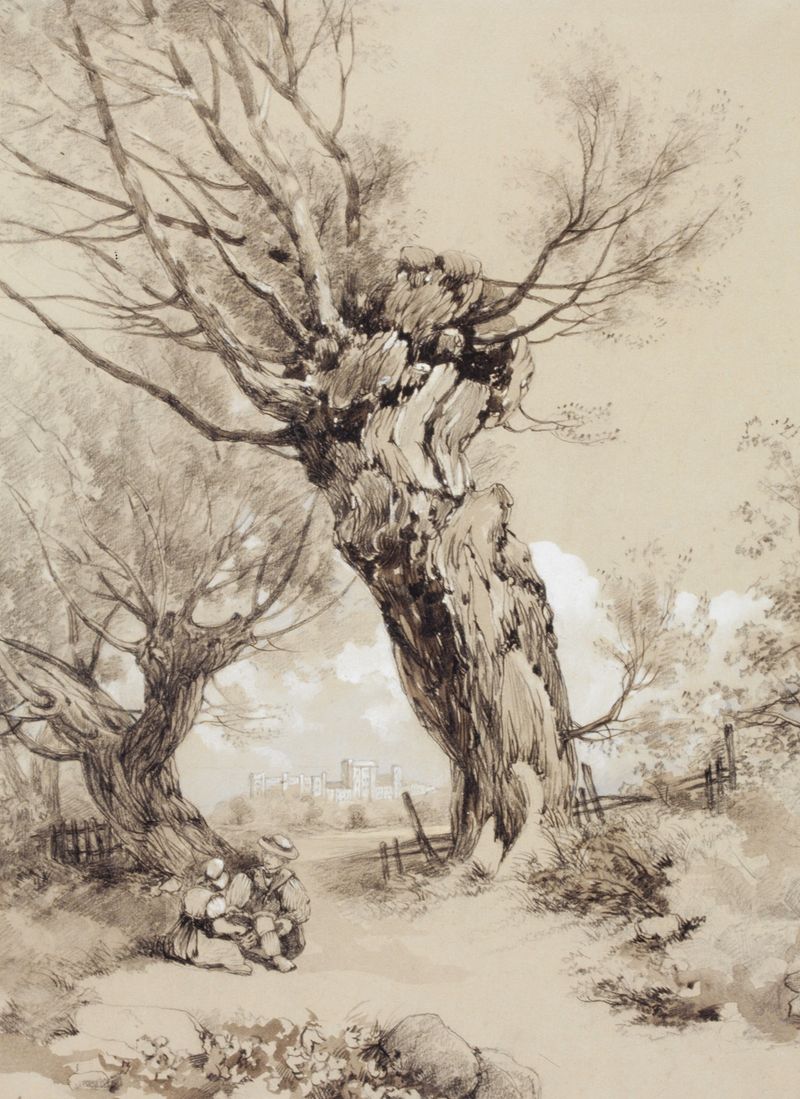
Landscape with Figures under Pollarded Trees
James Duffield Harding
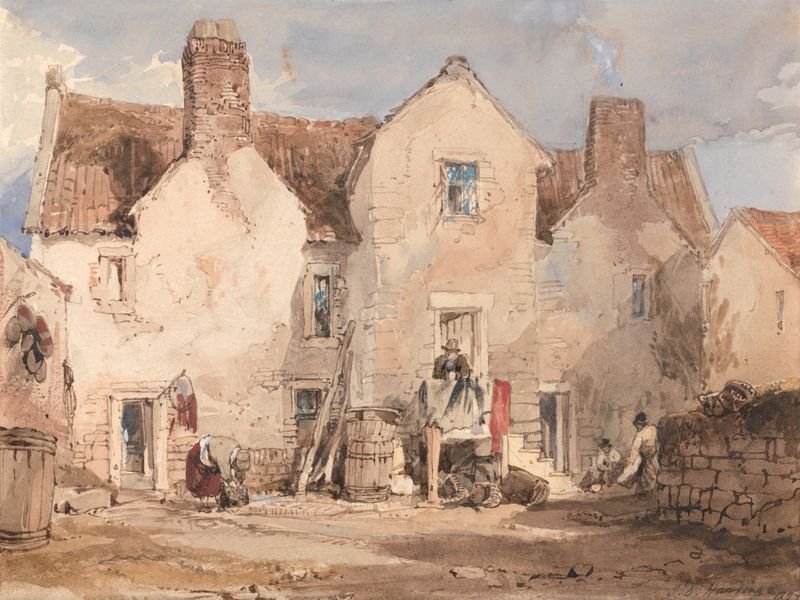
Fishermen’s Houses at Sculcoats near Hull, Yorkshire
James Duffield Harding
More Architecture Art
Browse all →
The statue of Liberty
Frédéric Auguste Bartholdi

View of Houses in Delft, Known as ‘The Little Street’
Johannes Vermeer

View of Houses in Delft, Known as ‘The Little Street’
Johannes Vermeer

The Cathedral in Rouen. The portal, Grey Weather
Claude Monet

The yellow house
Vincent van Gogh

The Church in Auvers-sur-Oise, View from the Chevet
Vincent van Gogh