The Great Hall at Frederiksborg Castle during the Reign of Christian IV — History & Facts
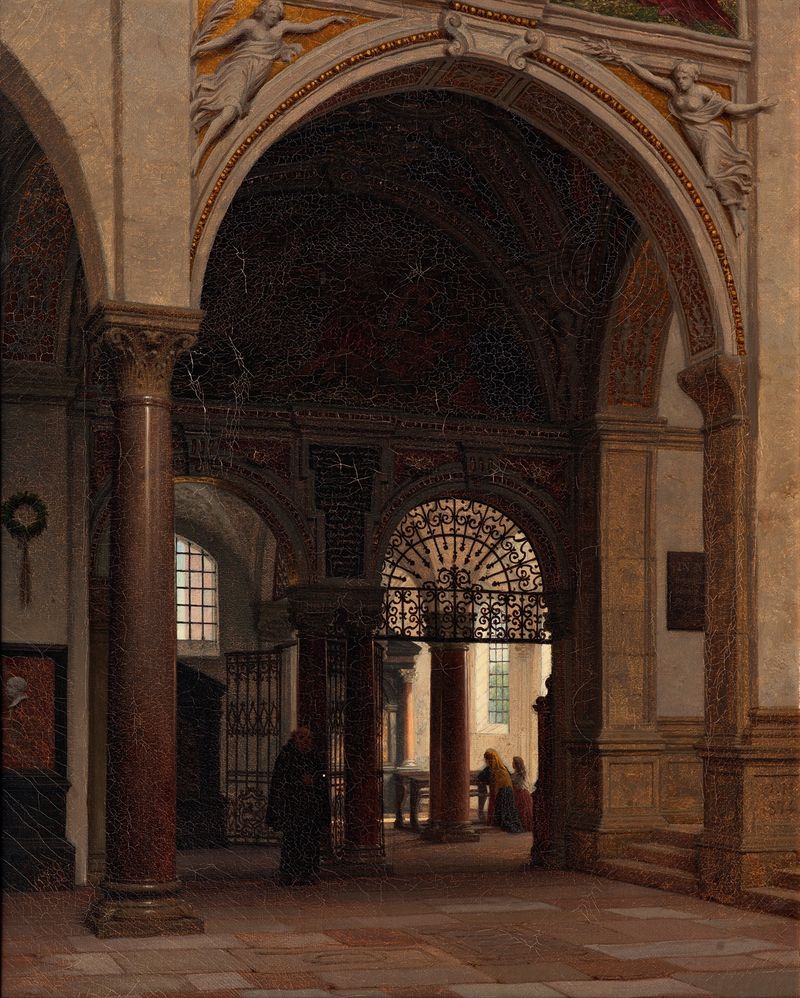
In the grandeur of a castle, the elegance of a moment captures a history often overshadowed by fear and uncertainty. The opulence of the great hall stands in stark contrast to the heart's unease, inviting us to explore the delicate interplay between beauty and anxiety. Focus on the sweeping lines of the architecture that cradle the space, guiding your gaze toward the intricate details of the gilded moldings and the shimmering chandelier above. The color palette, a blend of warm golds and deep reds, evokes a sense of regal confidence, yet feels weighed down by an undercurrent of tension.
Notice how the shadows linger in the corners, hinting at stories untold and emotions unexpressed, inviting the viewer to linger in the pause between past glories and present fears. Within this splendid scene lies an exploration of duality. The imposing strength of the castle walls speaks of power and permanence, yet the empty spaces whisper of isolation and dread. Each figure, although dressed in finery, carries the weight of expectation, embodying the fragile balance between the splendor of their surroundings and the lurking fears of their reign.
Perhaps it is the fear of losing such grandeur, or the anxiety of living under the specter of political turmoil, which imbues the hall with a haunting resonance. In 1859, the artist crafted this piece amidst a shifting landscape of European art, where romanticism was giving way to realism. Hansen found himself in a Denmark grappling with its own identity, drawing upon both historical and contemporary influences. As he immortalized the great hall at Frederiksborg, he did so with a keen awareness of the tensions of his time, creating a visual narrative that resonates with the fear and ambition of a nation in flux.