The Haywain — History & Facts
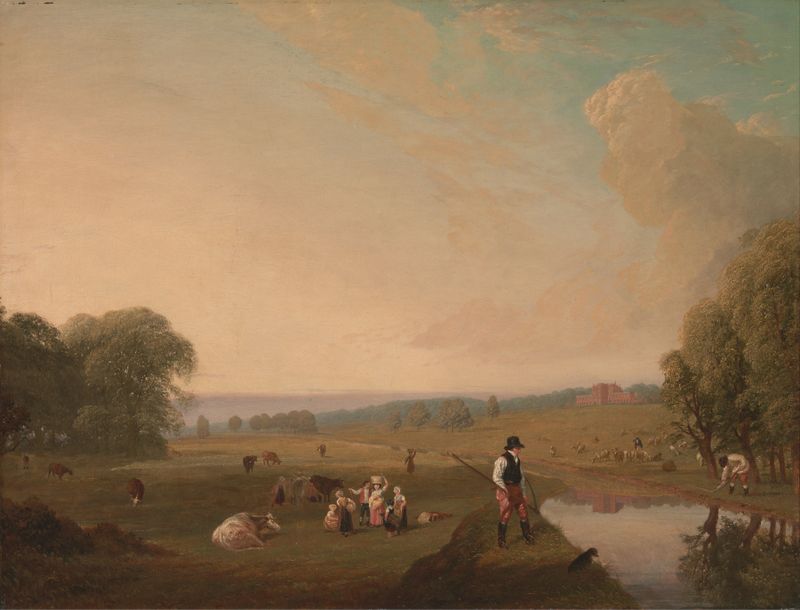
When did color learn to lie? The spectrum of hues invites us to question the authenticity of our perceptions, revealing layers of serenity beneath their vibrant surface. Look to the flowing river in the foreground, where the delicate, shimmering blues reflect the sky's embrace. Notice how the muted greens and browns of the haywain ground the scene in a pastoral calmness, evoking a sense of nostalgia. The gentle brushwork captures the effortless movement of the water and the soft rustle of grass, inviting the viewer to step into this tranquil world. Yet, a closer inspection unveils an emotional tension.
The figures tending to the haywain display a harmony of labor, yet their silent expressions hint at an unspoken burden, a longing for respite. The serene landscape may conceal the weight of toil, suggesting that beauty and hardship often intertwine in life's quiet moments. The contrast between the idyllic setting and the hints of struggle invites reflection on what lies beneath the surface of appearances. Created during a period of transition in British art, the work embodies the shift towards romanticism, a time when artists sought to capture the essence of the natural world infused with emotion.
Though the exact date of this piece remains uncertain, Chalon painted in a milieu that valued pastoral scenes, drawing inspiration from the English countryside and its inherent beauty, while also subtly critiquing the simplicity of rural life.