
The Horse-Fight at Hlidarendi — History & Facts
The eye is drawn first to the rearing horses, their bodies locked in a struggle that commands the attention of the entire assembly. Light slices across the foreground, catching the tense muscles of man and beast alike, and casting the crowd behind into a shadowy amphitheater. Faces are intent, some anxious, others eager, as if every spectator is invested in the outcome.
The vast, snow-capped mountain in the distance gives the scene a sense of scale and isolation, while the muted, cool palette heightens the tension and chill in the air. Every gesture—from the outstretched arms of the handlers to the poised stick of the judge—serves to heighten the drama at the painting’s center, making the viewer feel the weight of tradition and rivalry. Painted in the late nineteenth century, The Horse-Fight at Hlidarendi by August Malmström belongs to a period when artists across Scandinavia and northern Europe looked to their own sagas and folklore for inspiration. Such works were often commissioned or collected by national museums and cultural patrons eager to define and celebrate local identity.
The unknown date of this painting’s creation, and its current home in the Nationalmuseum, speak to the fragmentary survival of many such images—history has kept few traces of their original audiences or the specific events they recall. Yet the painting’s energy and the careful choreography of its figures invite us to imagine the world it comes from: one where communal gatherings, contests, and the harsh beauty of the landscape shaped both memory and myth. The mountain still waits in the background—silent, impassive, bearing witness to the spectacle below.
More Artworks by August Malmström

Tonttu
August Malmström
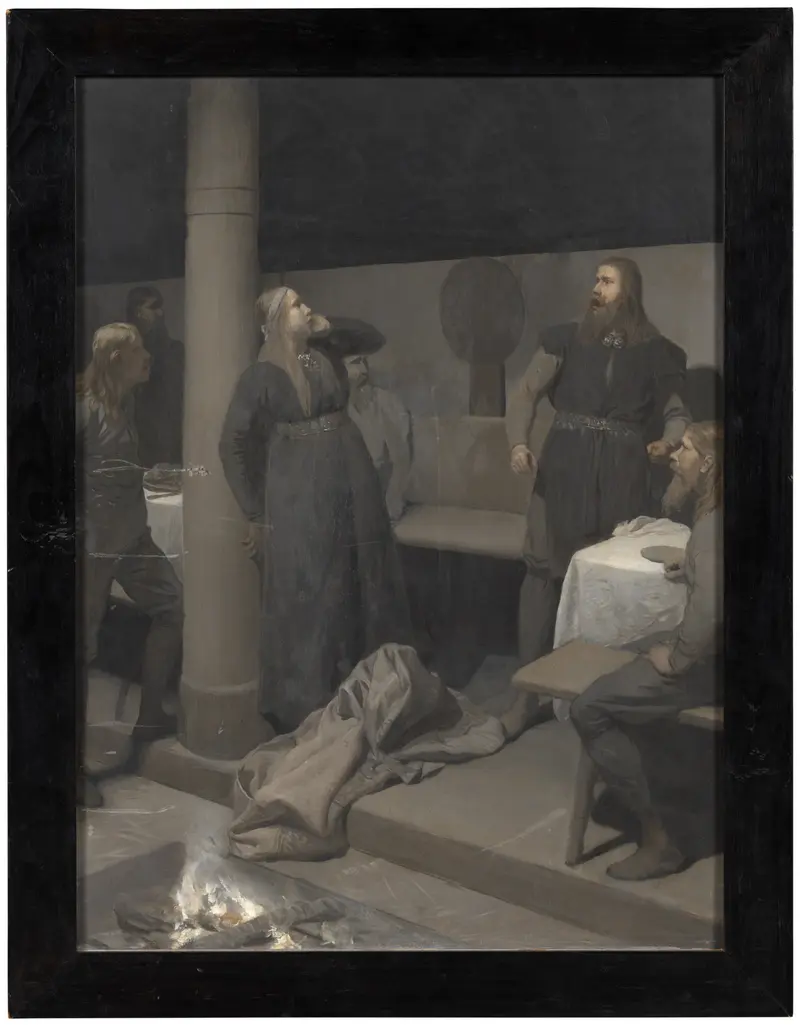
Hallgerd’s Slap
August Malmström
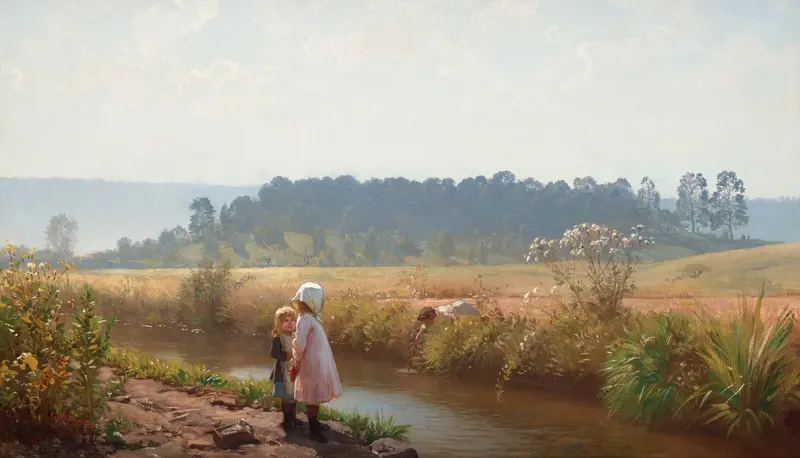
Children playing at the stream
August Malmström
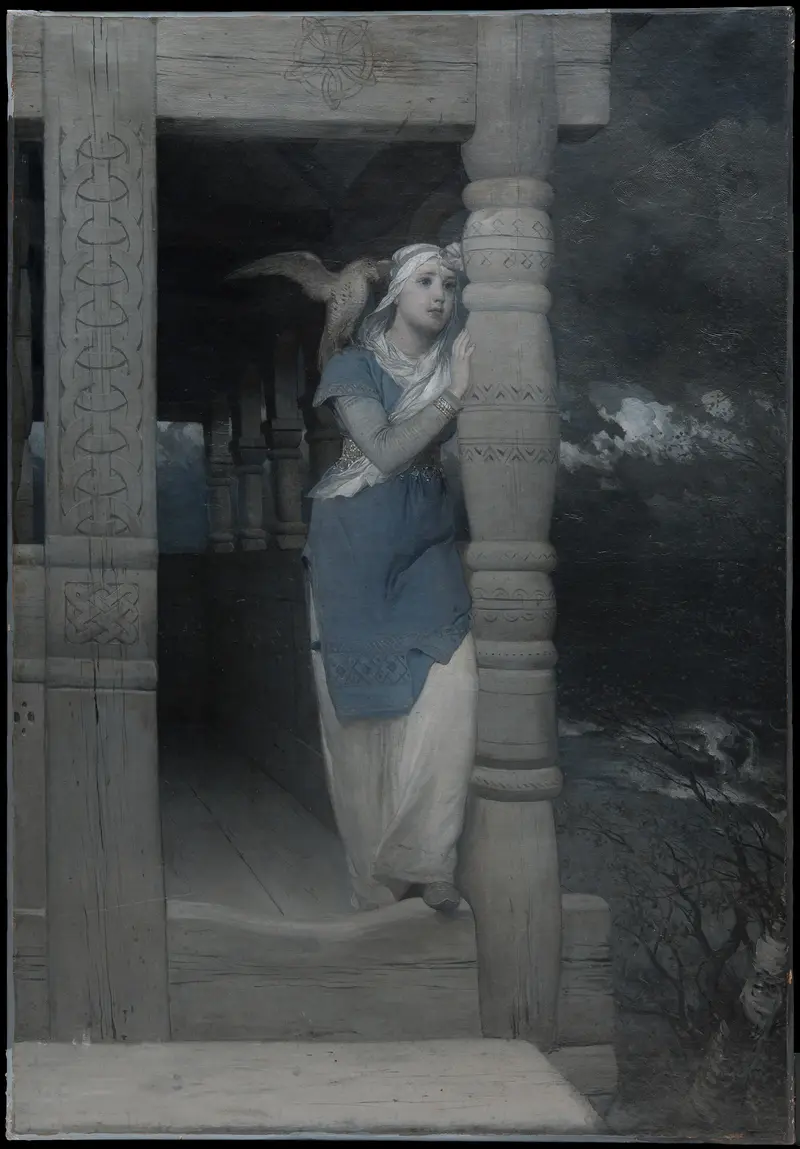
Ingeborg's Lament
August Malmström
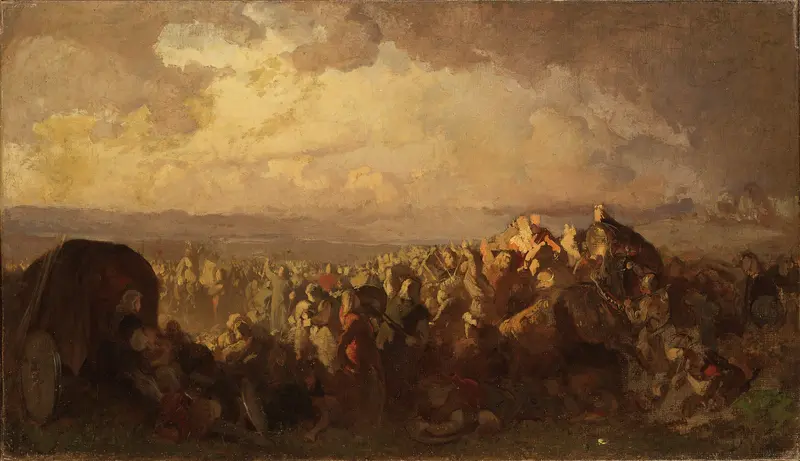
The Battle of Bråvalla. Study
August Malmström
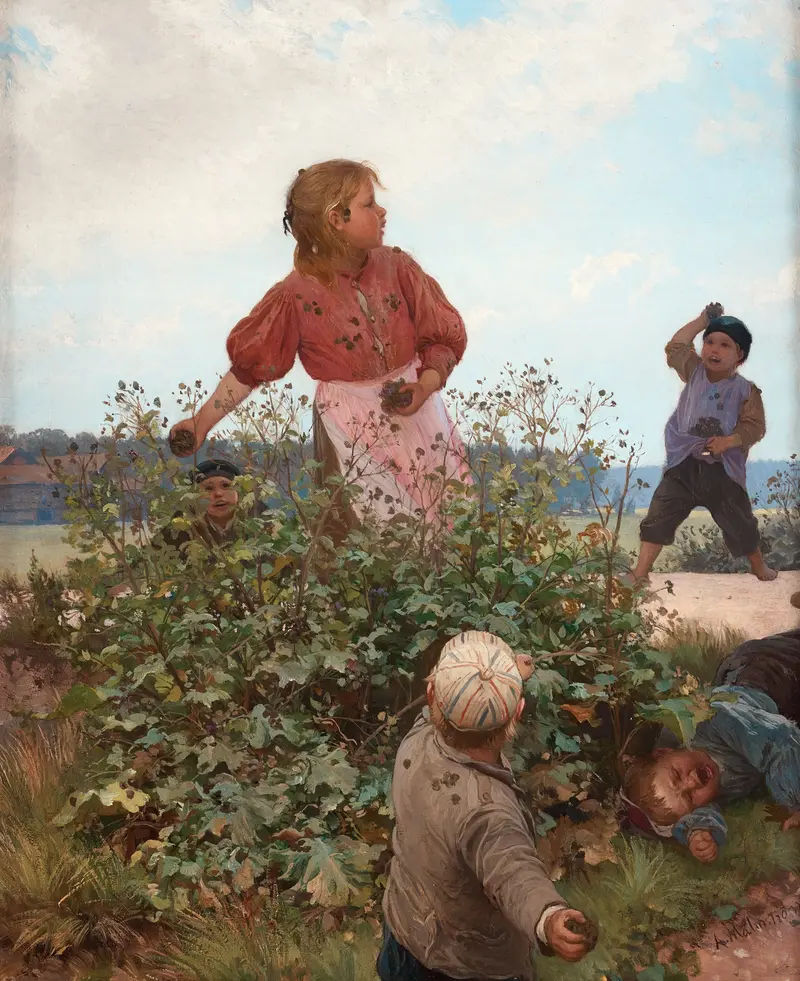
A modern Blenda
August Malmström
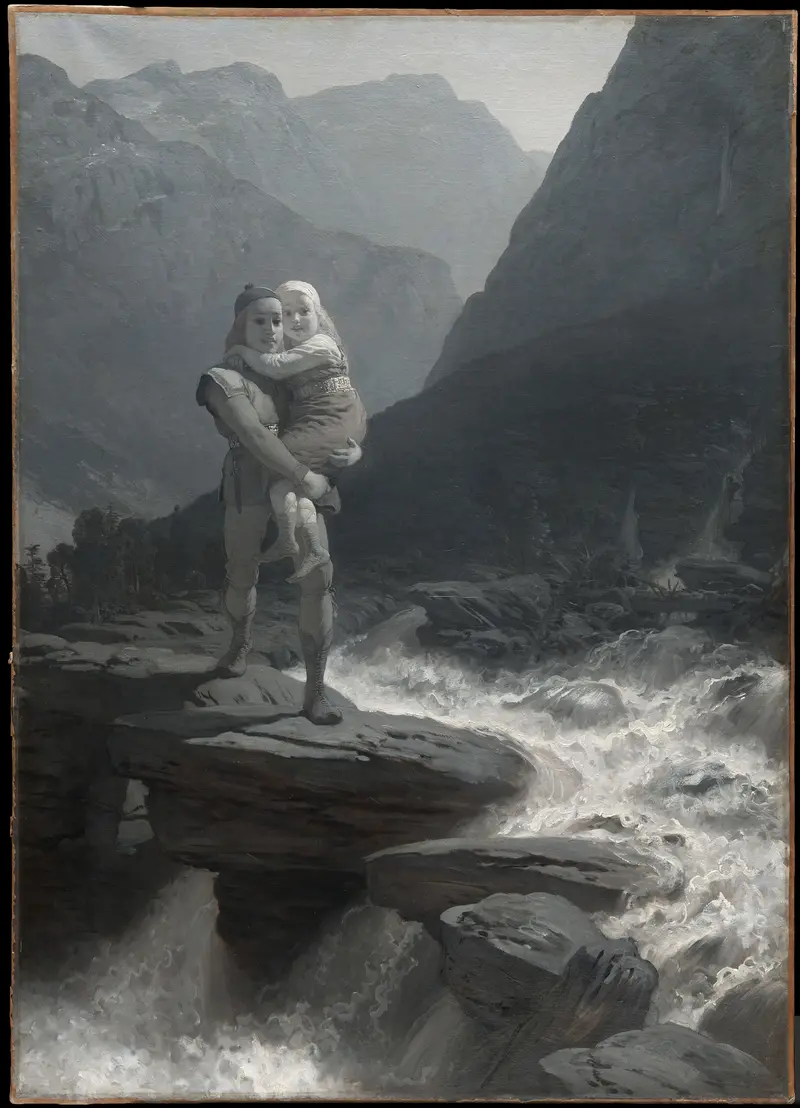
Frithiof and Ingeborg
August Malmström
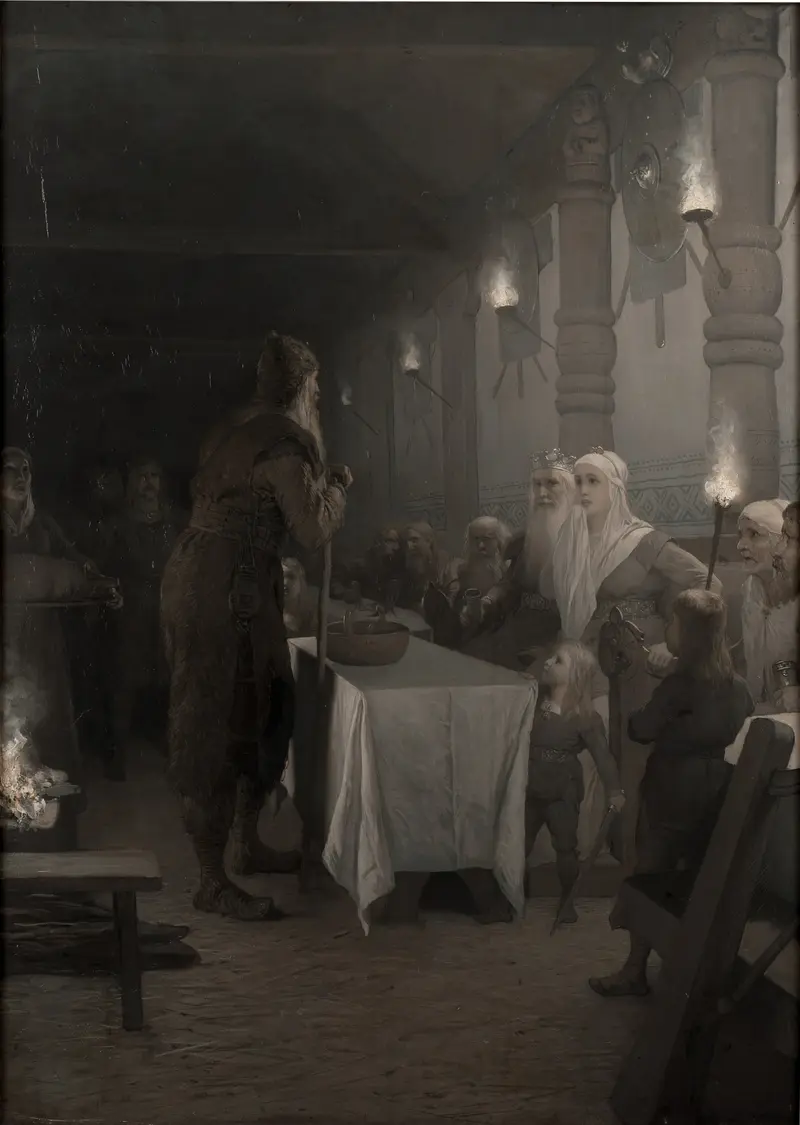
Frithiof kommer till Kung Ring (ur Frithiofs saga)
August Malmström
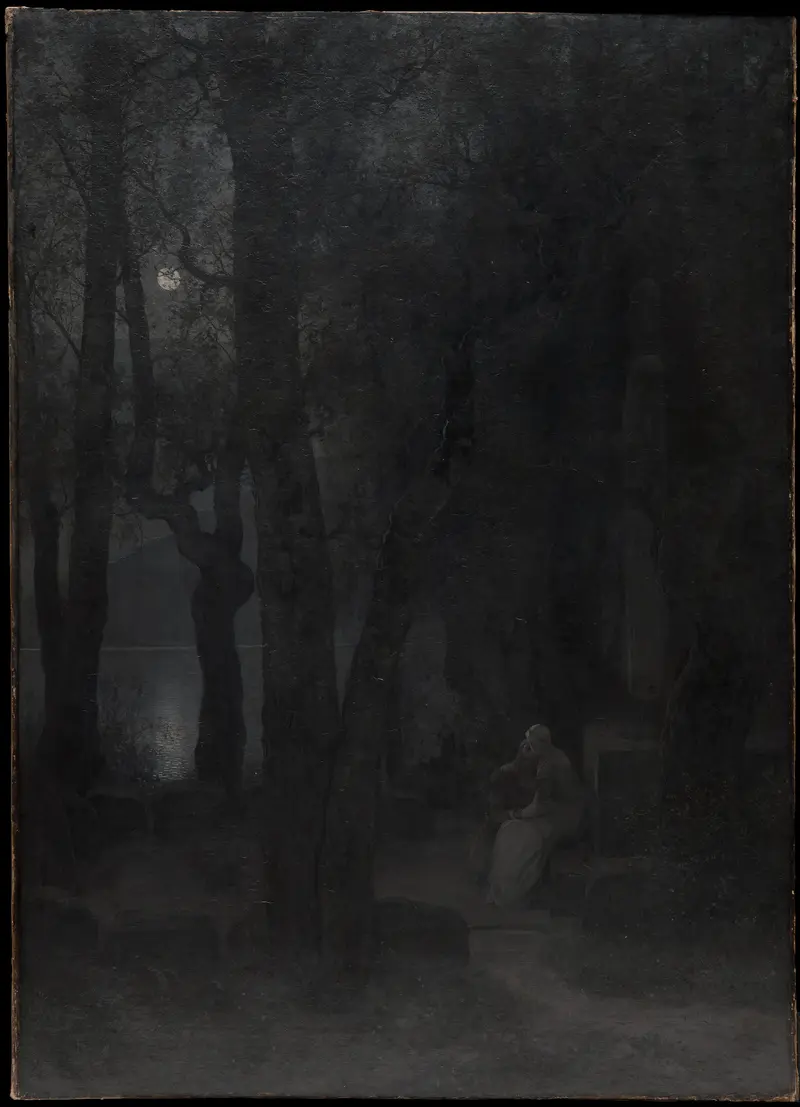
Frithiofs lycka (ur Frithiofs saga)
August Malmström
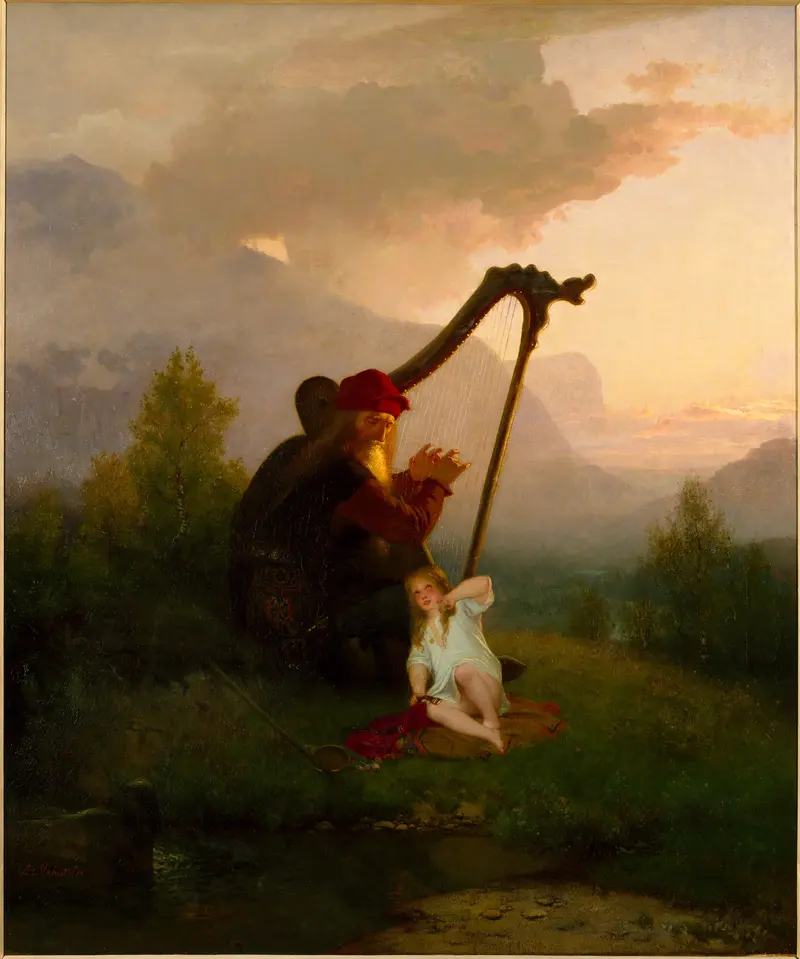
King Heimer and Aslög
August Malmström





