Tonttu — History & Facts
A bearded figure in a red cap, half-glimpsed in a pool of blue light, sits sharpening a sword that nearly dwarfs him. The eyes are drawn first to the blade, its edge catching the brightest highlight, then to the small, intent face—alert, almost wary, as if listening for a sound just out of frame. The rough textures of stone and the muted, earthy palette conjure the damp chill of a cave or cellar, while the soft, almost whimsical hat hints at something more than mere labor.
This is a moment of preparation, not battle: a pause in the hidden life of the tonttu, the Finnish house spirit, caught in the act of readying himself for duties unseen by human eyes. Works like this, by August Malmström, belong to a world where folklore and daily life intertwined, and where artists mined local legend for both humor and quiet drama. In nineteenth-century Scandinavia, such images were cherished for their blend of fantasy and realism, often commissioned as illustrations or cabinet pictures for the educated middle class eager to celebrate national tales. The tonttu—sometimes mischievous, sometimes fiercely protective—was a familiar figure in both oral tradition and the visual arts.
While little is recorded about the journey of this particular work, now held in the Finnish National Gallery, its appeal endures: the viewer is left peering into the shadows, wondering what task or adventure awaits just beyond the painted stone.
More Artworks by August Malmström
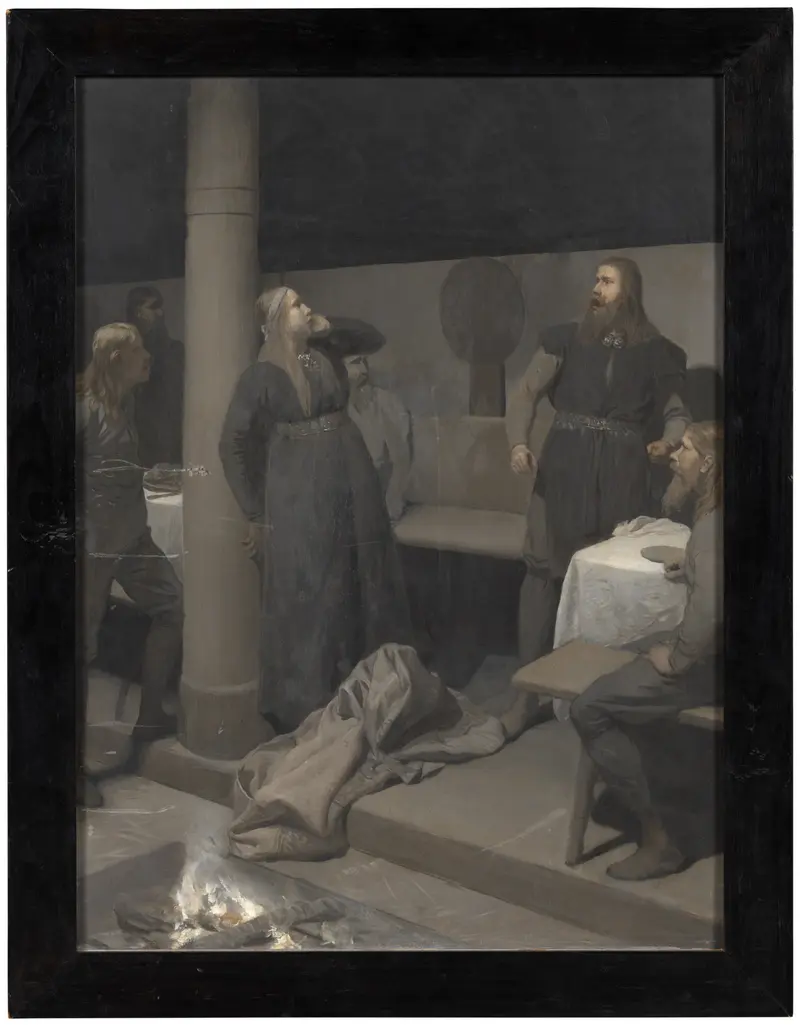
Hallgerd’s Slap
August Malmström
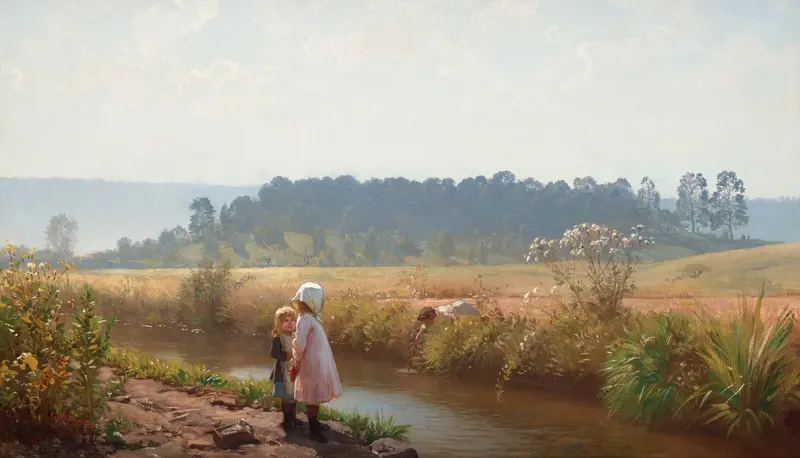
Children playing at the stream
August Malmström
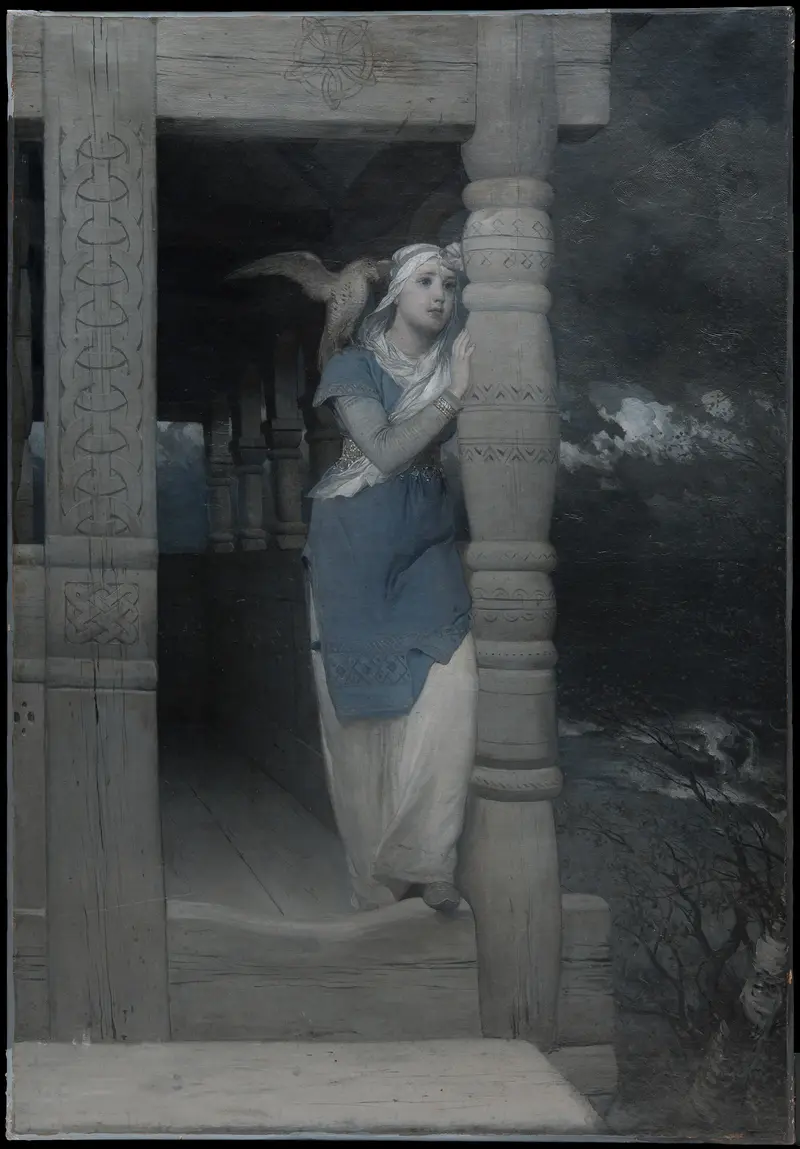
Ingeborg's Lament
August Malmström
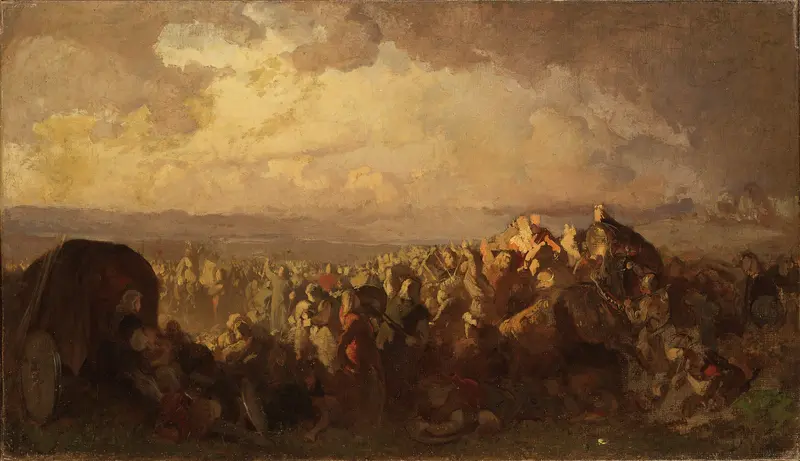
The Battle of Bråvalla. Study
August Malmström
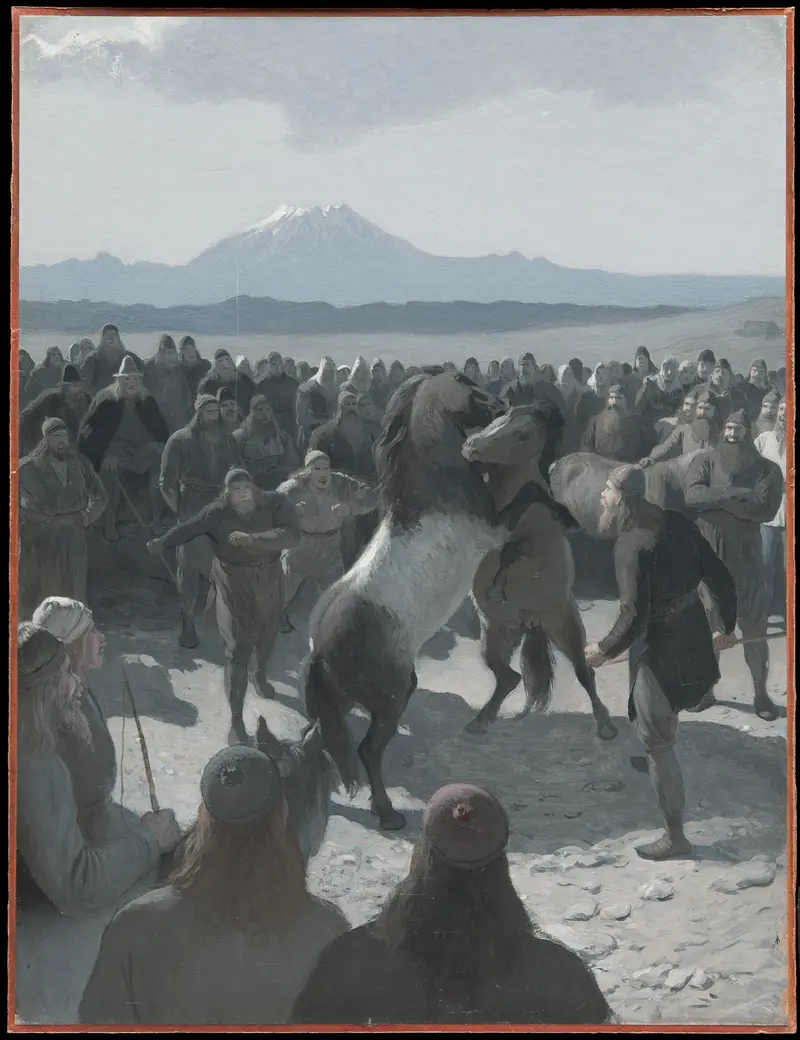
The Horse-Fight at Hlidarendi
August Malmström
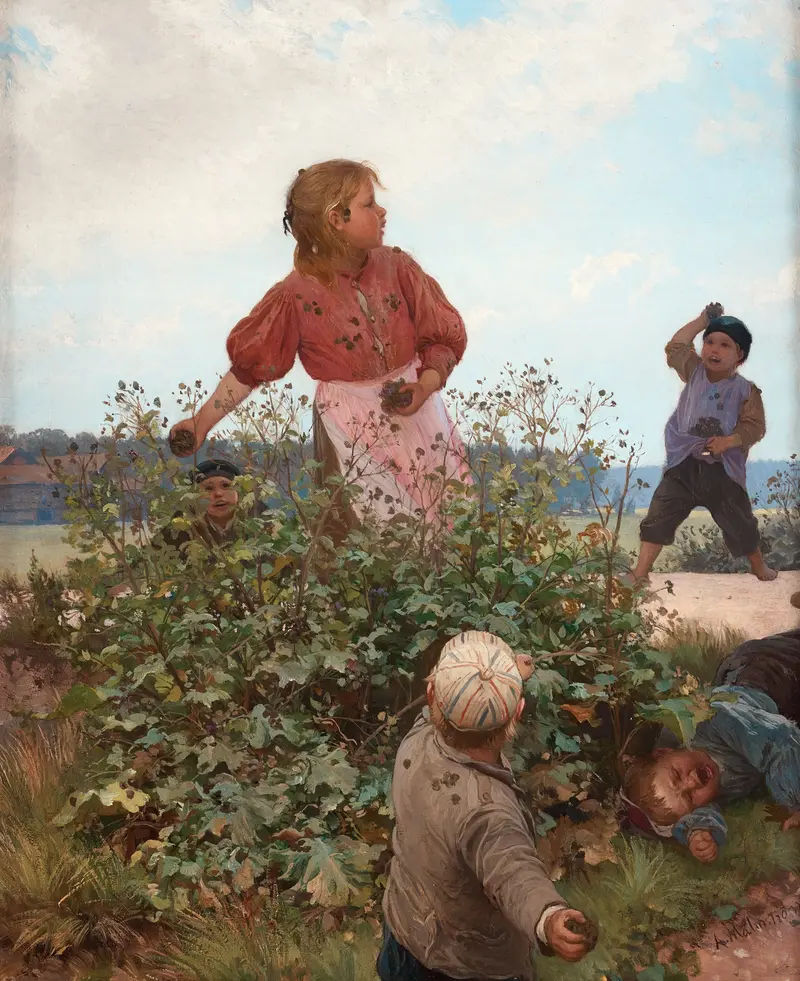
A modern Blenda
August Malmström
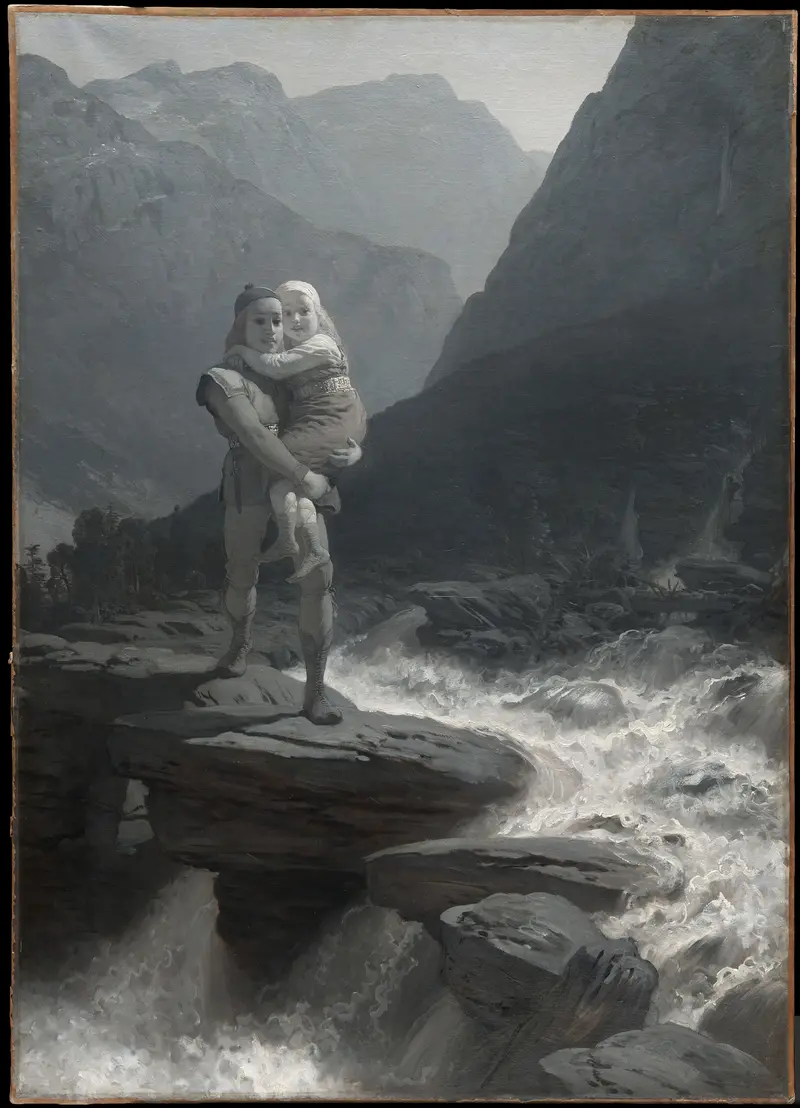
Frithiof and Ingeborg
August Malmström
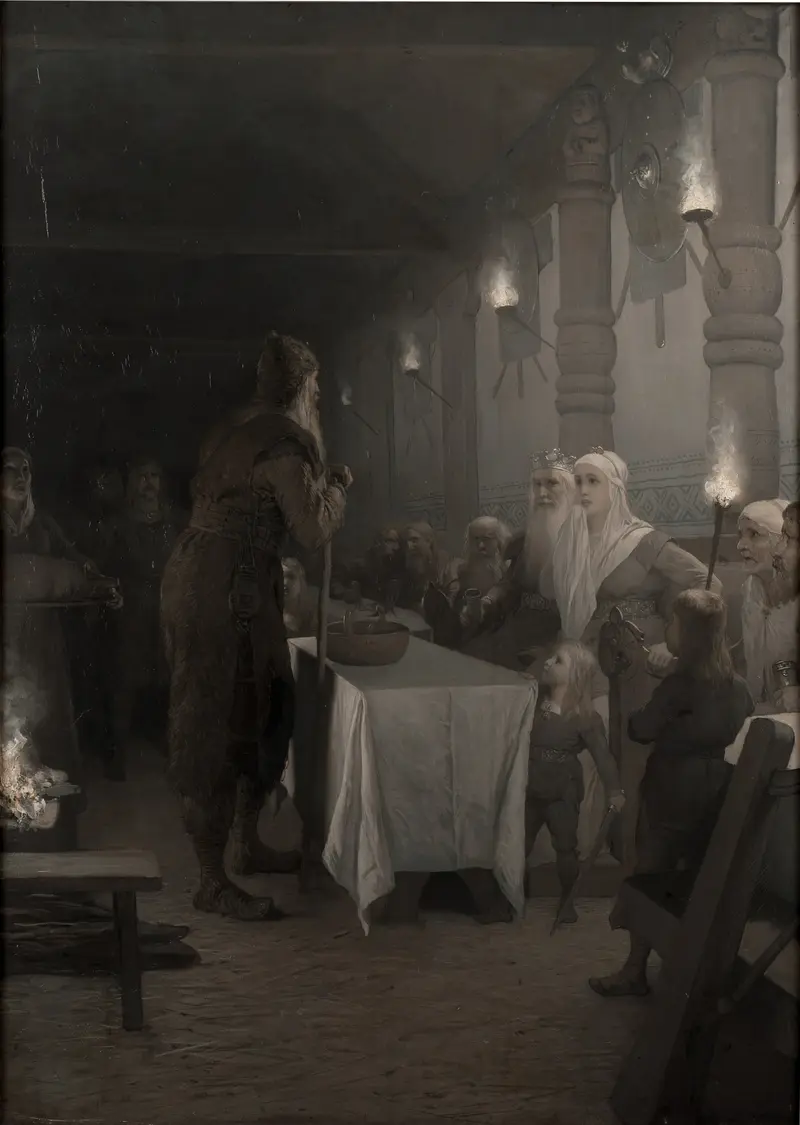
Frithiof kommer till Kung Ring (ur Frithiofs saga)
August Malmström
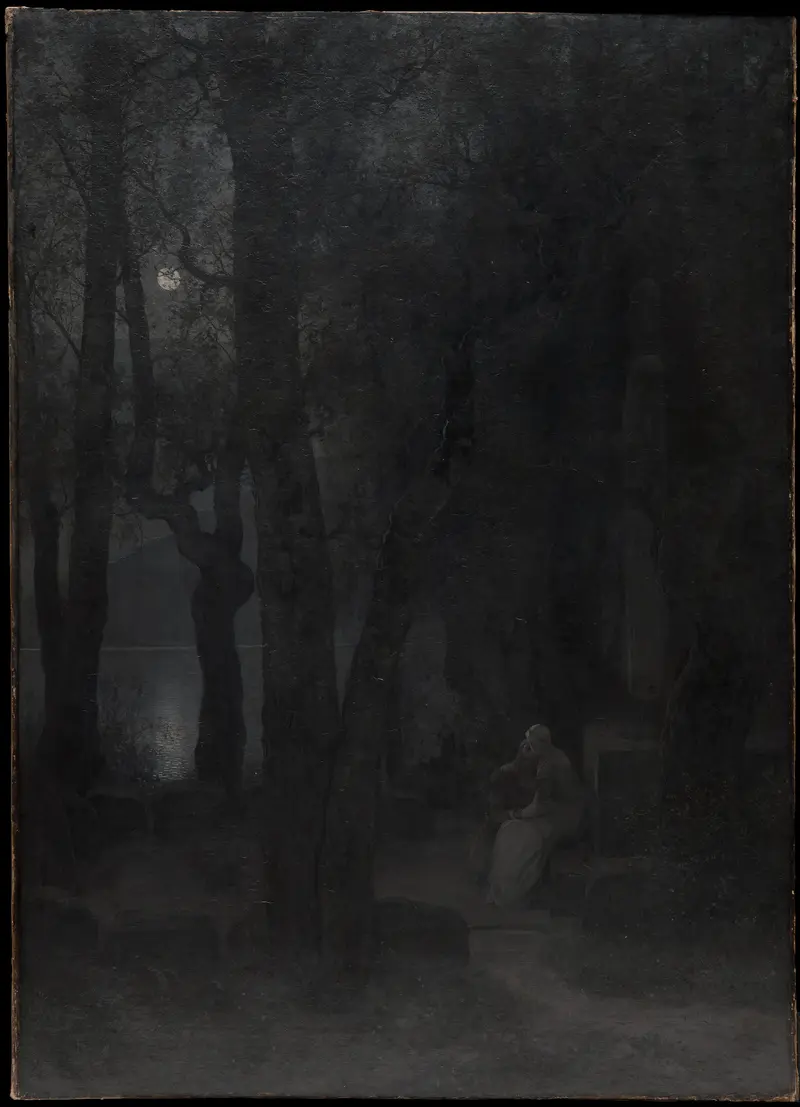
Frithiofs lycka (ur Frithiofs saga)
August Malmström
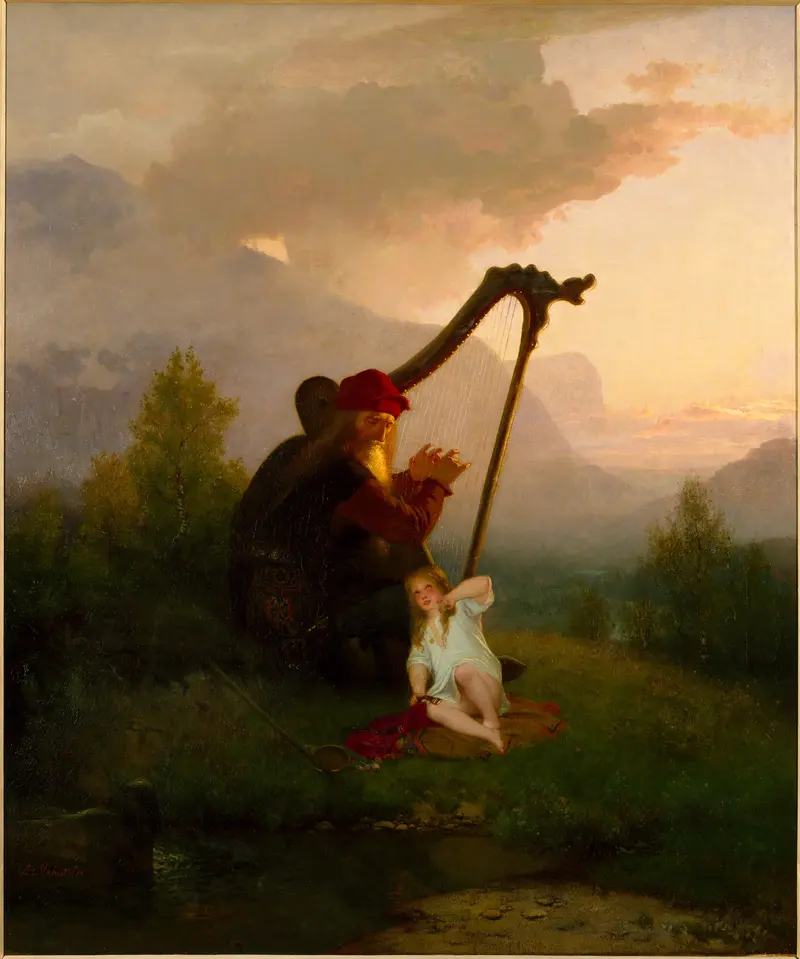
King Heimer and Aslög
August Malmström