
Children playing at the stream — History & Facts
What first draws the eye in Children playing at the stream is the hush of a summer morning, where two children stand at the water’s edge, their world paused in a moment of quiet conversation. The light falls gently on their faces, picking out the pale pink of a bonnet and the gold of a young girl’s hair, while the stream at their feet mirrors the sky’s calm expanse. Behind them, a third figure crouches low, intent on some private task, half-hidden by the grasses—reminding us that childhood is both a shared adventure and a private universe.
The landscape stretches out in layers of green and gold, with a distant blue ridge dissolving into the haze, inviting the viewer to linger over every detail: the wildflowers nodding in the foreground, the basket left on the rocks, the subtle play of sunlight on water. Works like this, created by August Malmström in the late nineteenth century, belong to a tradition that cherished the innocence and simplicity of rural life. In an era when industrialization was reshaping the cities of Sweden, artists turned to the countryside for scenes that spoke to a quieter, older rhythm. Paintings of children at play, especially by Scandinavian artists, were often commissioned for middle-class homes, offering a vision of pastoral harmony and the promise of gentler days.
This particular work, now in the Bukowskis collection and of unknown date, is a testament to that longing. History has kept few traces of its journey, but the scene itself endures—inviting us to step into the hush, and see the world as a child might, if only for a moment.
More Artworks by August Malmström

Tonttu
August Malmström
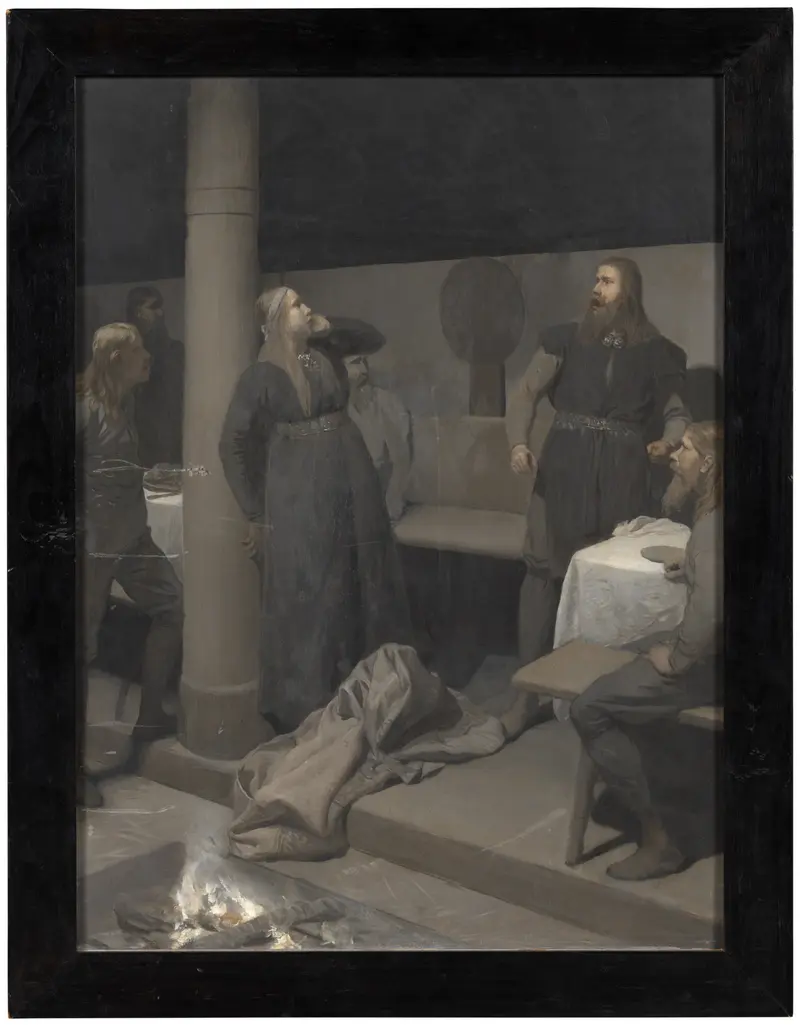
Hallgerd’s Slap
August Malmström
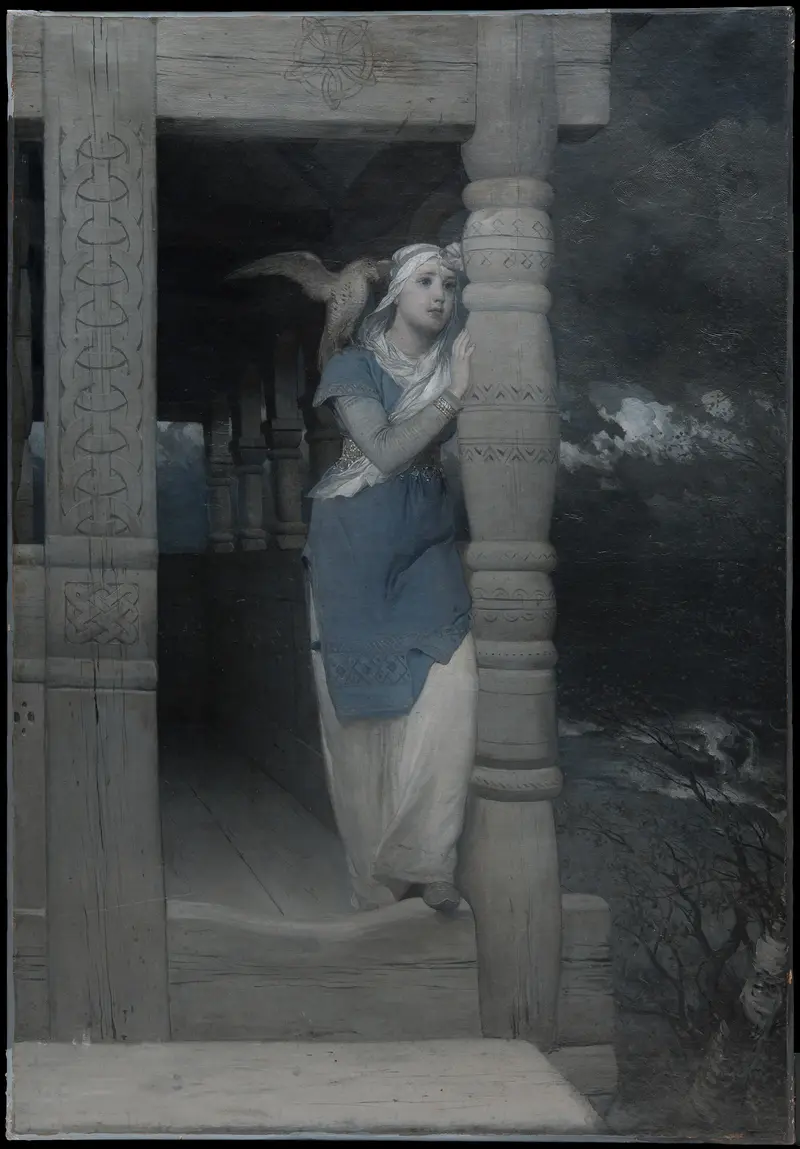
Ingeborg's Lament
August Malmström
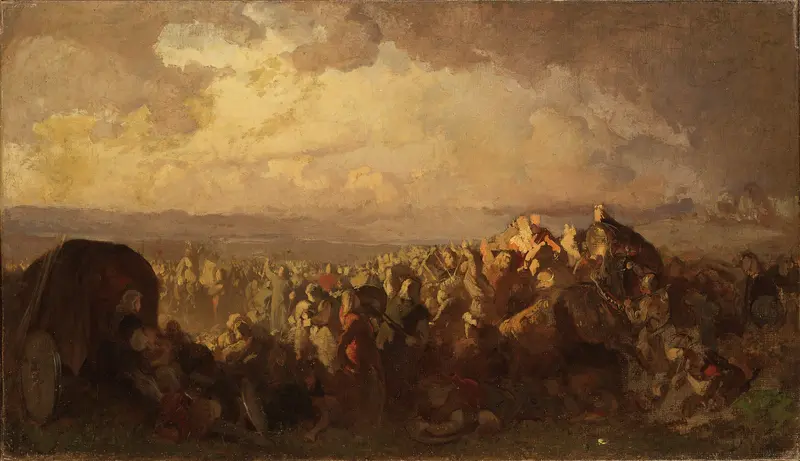
The Battle of Bråvalla. Study
August Malmström
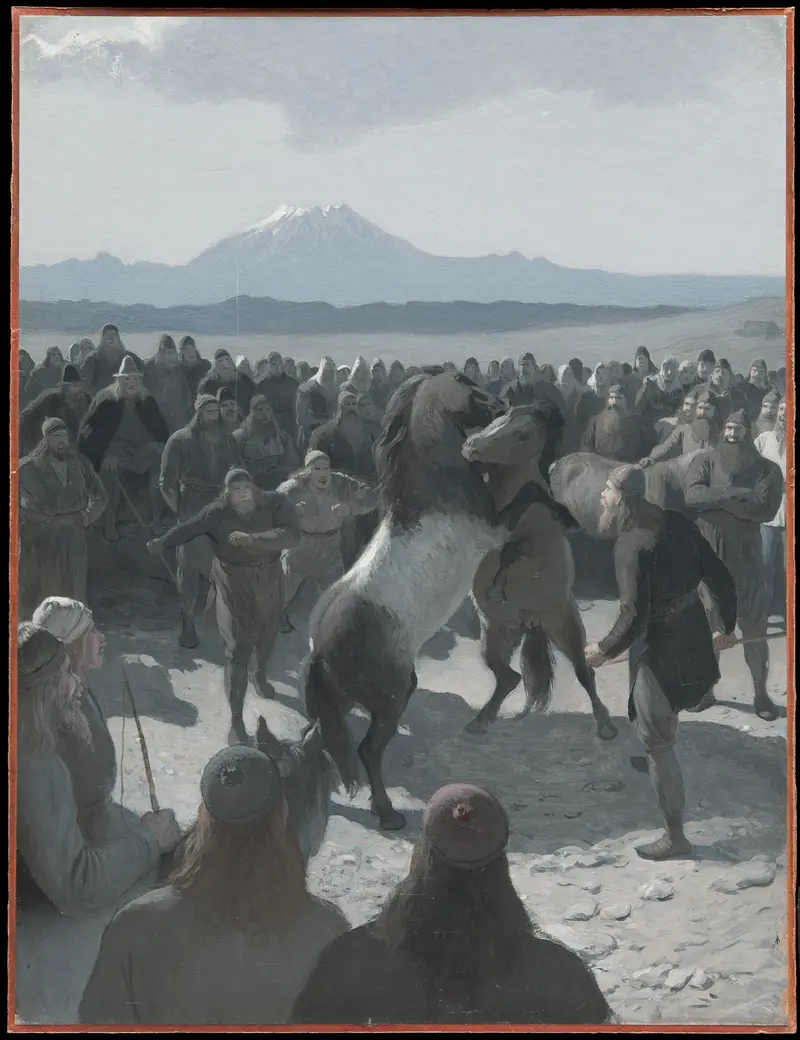
The Horse-Fight at Hlidarendi
August Malmström
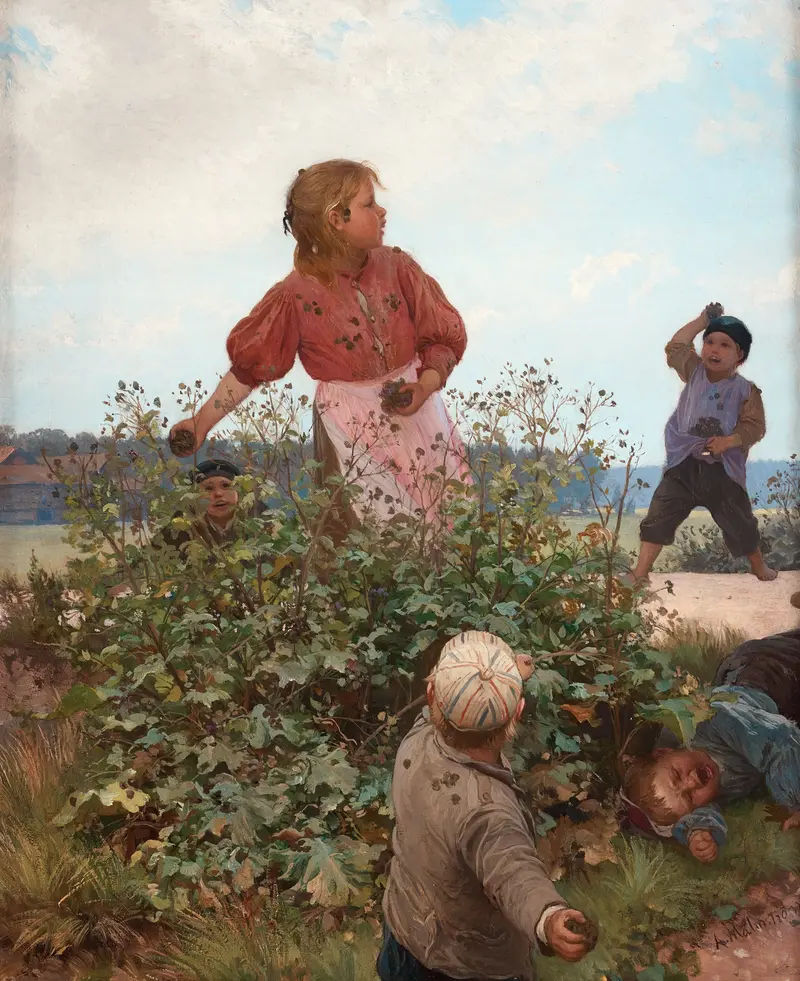
A modern Blenda
August Malmström
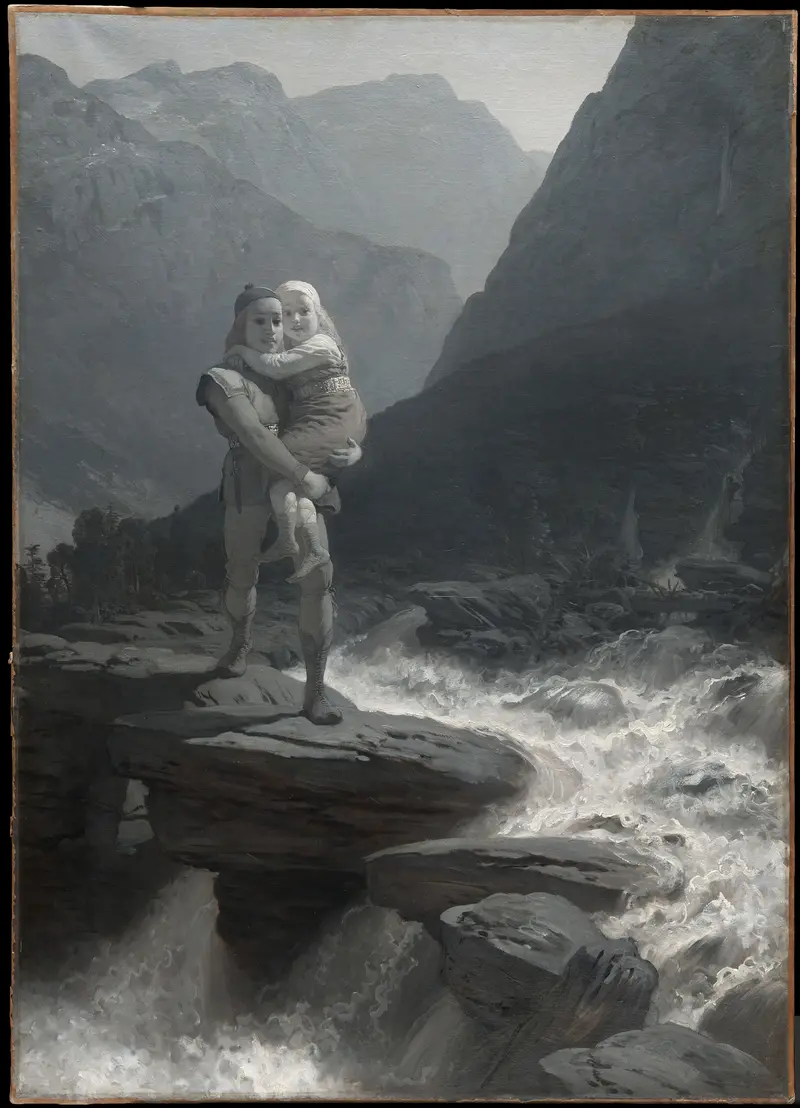
Frithiof and Ingeborg
August Malmström
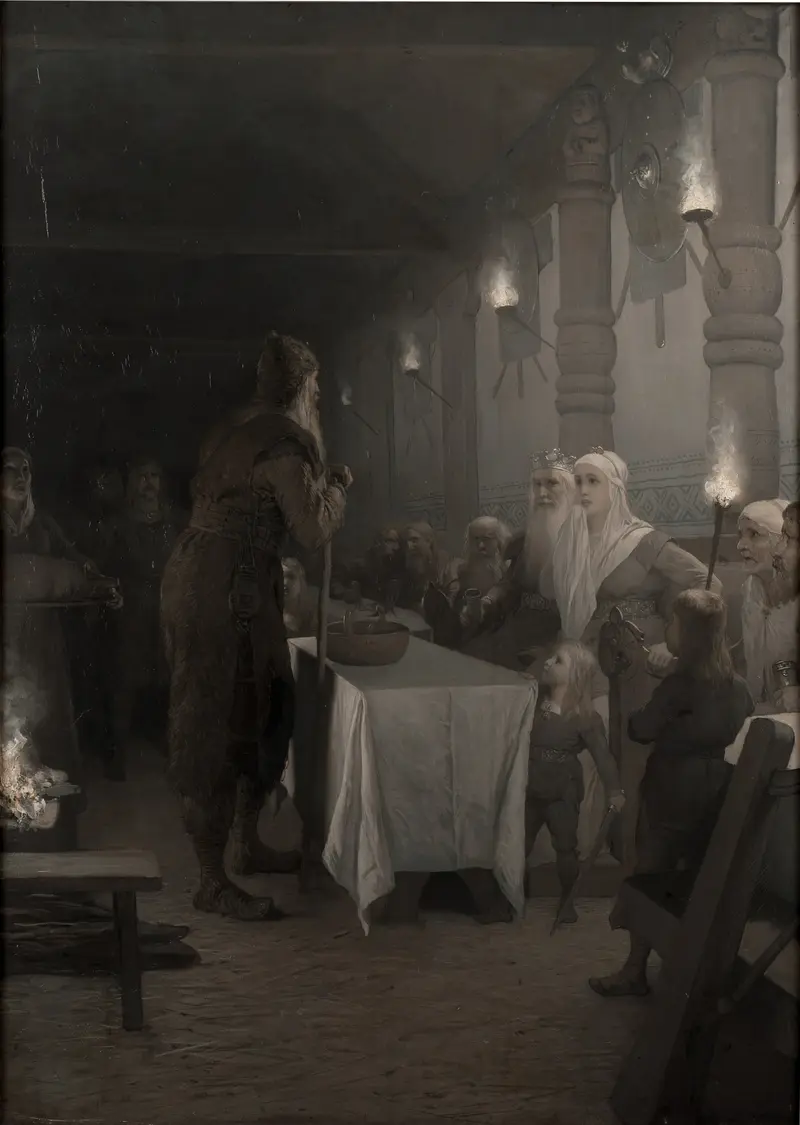
Frithiof kommer till Kung Ring (ur Frithiofs saga)
August Malmström
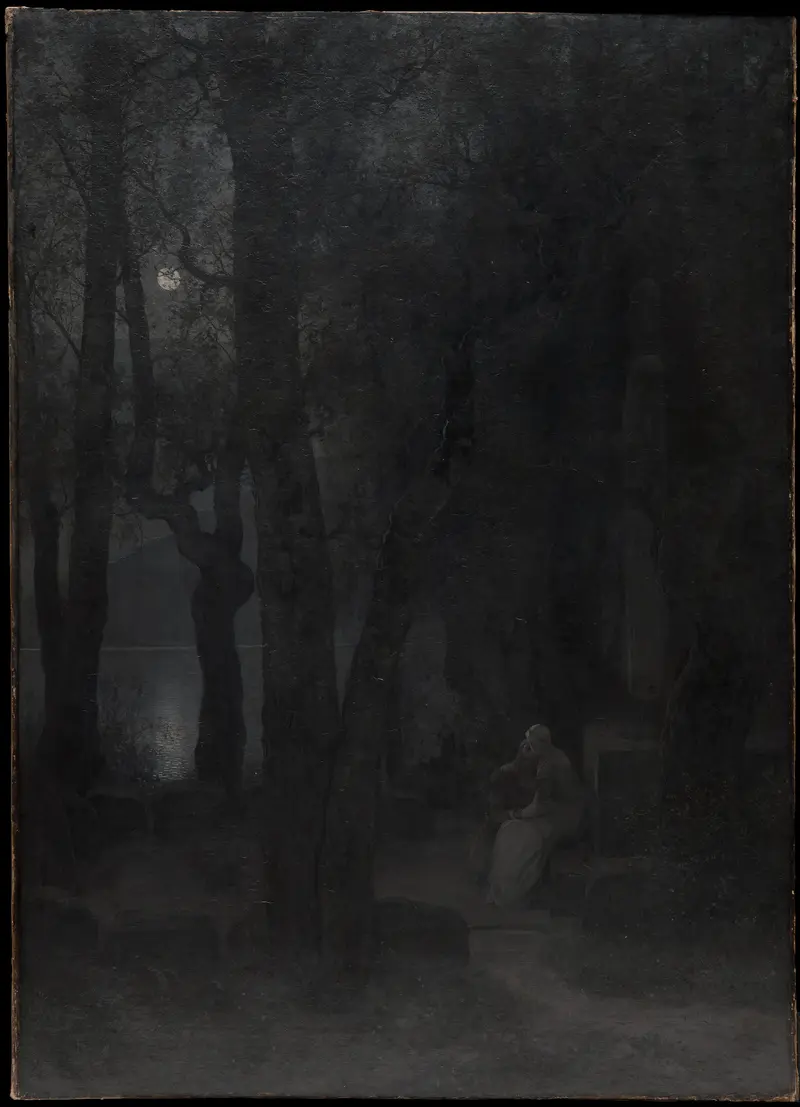
Frithiofs lycka (ur Frithiofs saga)
August Malmström
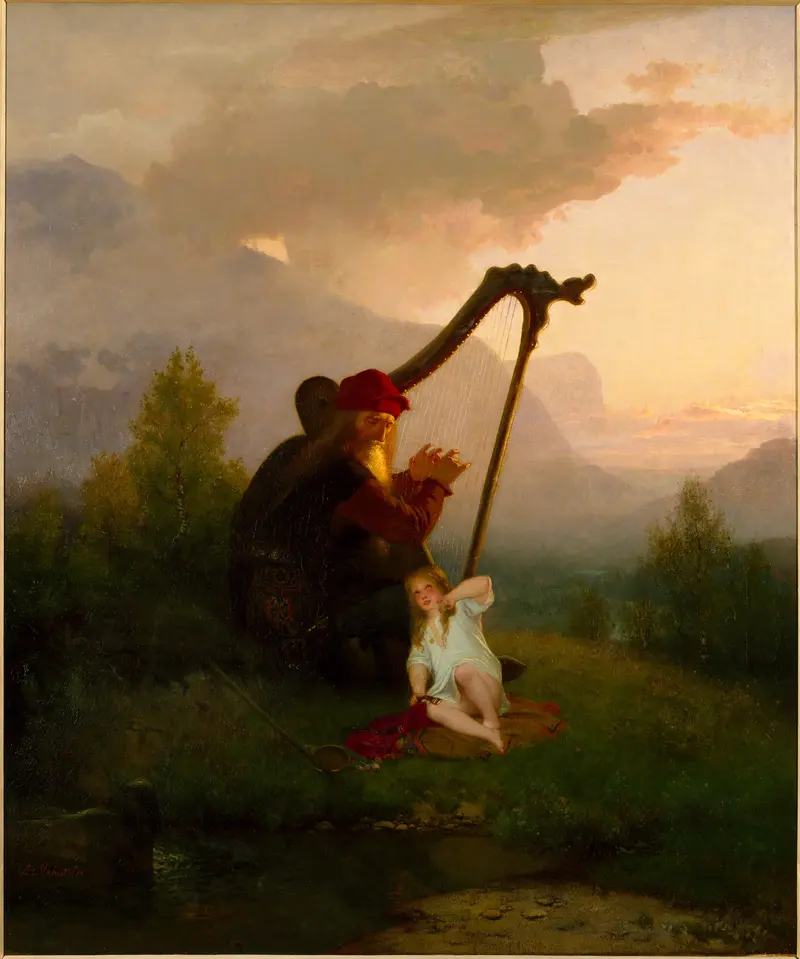
King Heimer and Aslög
August Malmström
More Genre Scene Art

Banquet of the Officers of the St George Civic Guard
Frans Hals

Rembrandt and Saskia in the Scene of the Prodigal Son
Rembrandt van Rijn

Bal du moulin de la Galette
Pierre-Auguste Renoir

Quadrille at the Moulin Rouge
Henri de Toulouse-Lautrec

A Burial at Ornans
Gustave Courbet

When Will You Marry?
Paul Gauguin