The hunting party — History & Facts
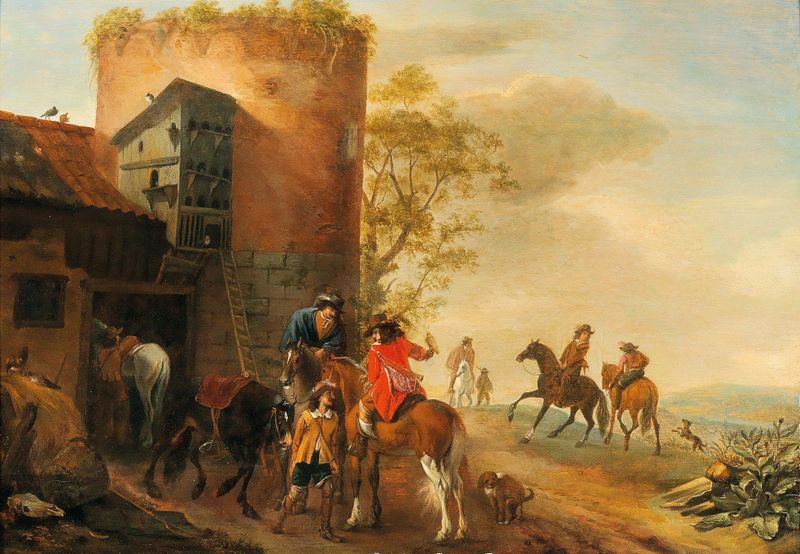
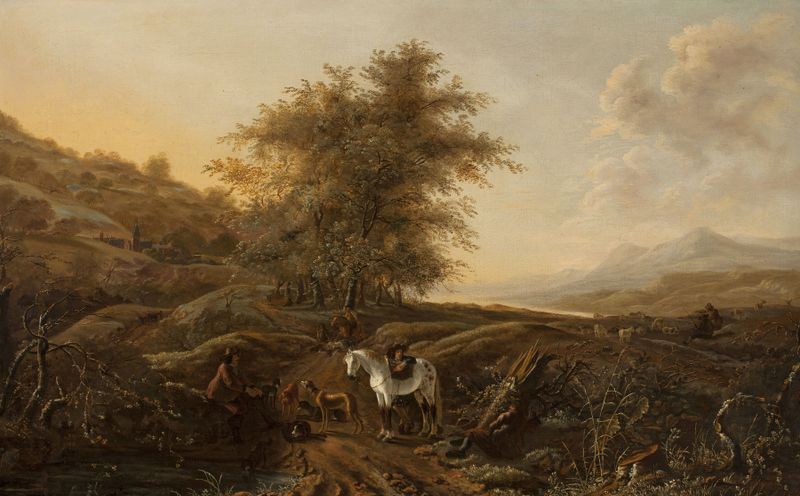
In The Hunting Party, the passage of time feels suspended as the moment unfurls, inviting us to linger on both the thrill of the chase and the stillness of anticipation. Look to the left at the intense expressions of the hunters, poised with bows and arrows, their bodies taut with eager energy. Notice how the soft light filters through the trees, creating a dappled pattern on the forest floor that contrasts with the rich, earthy tones of their garments. The composition draws the eye inward, towards the central figures, while the surrounding foliage envelops them, highlighting their isolation and the bond forged in pursuit.
Each detail is meticulously rendered, showcasing Stoop’s deft technique and mastery of light. Beneath this lively tableau lies a deeper commentary on the fleeting nature of time and life. The hunters, brimming with vitality, embody the eternal cycle of pursuit and capture, yet their stillness hints at an impending loss—what is gained through the hunt may also be lost, a reminder of mortality. The interplay of light and shadow further emphasizes this tension, suggesting that not all moments are meant to be seized, and some may ultimately elude us. Dirk Stoop created this work in 1649, during a time when Dutch art was transitioning from baroque grandeur to more intimate and personal themes.
Living in Amsterdam, he was part of a vibrant artistic community, influenced by the changing social landscape and a burgeoning interest in naturalism. This period saw the rise of genre painting, and Stoop’s focus on hunting scenes connected him to a tradition that explored both the human condition and the intricate relationship between man and nature.