The Laurent Boarding House, Grez-sur-Loing — History & Facts
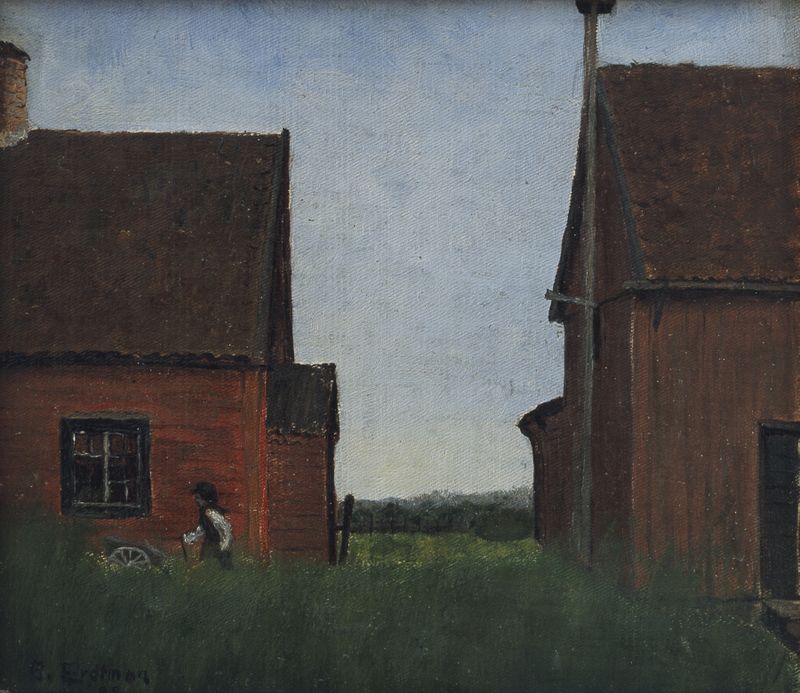
What if silence could speak through light? In The Laurent Boarding House, Grez-sur-Loing, this idea blossoms into a profound meditation on the divine presence that lingers in everyday life. Look to the left at the gentle arch of the tree branches, framing the modest boarding house. The sunlight spills softly across the scene, illuminating the warm hues of the wooden façade and casting dappled shadows on the earth below. Notice how the artist employs a delicate balance of greens and browns, evoking a serene atmosphere that invites the viewer to linger.
The composition is a harmonious interplay of structure and nature, subtle yet powerful in its invitation to contemplate the simplicity of existence. The tranquil setting resonates with an underlying theme of solitude intertwined with community. The house, though inhabited, stands apart from its surroundings, embodying the tension between isolation and connection. Small details, like the scattered leaves and the inviting doorway, hint at stories untold, suggesting that divinity lies not just in the grandeur of life but also in these quiet moments of communion with nature and oneself. Elias Erdtman painted this piece in 1886 while residing in the artists’ colony of Grez-sur-Loing, a haven for creatives seeking inspiration from the enchanting French countryside.
At this time, the Impressionist movement was thriving, and Erdtman, influenced by its ideals, sought to capture the ephemeral qualities of light and atmosphere. His work reflects both a personal exploration and a broader artistic dialogue, deeply rooted in the transformative power of art.