
The Liverpool and National Steeplechase at Aintree, 1843 — History & Facts
Can beauty exist without sorrow? In The Liverpool and National Steeplechase at Aintree, the viewer encounters a moment where triumph intertwines with the specter of risk, capturing the very essence of human aspiration and the thrill of competition. Look to the center of the canvas, where the vivid energy of the race unfolds. The jockeys, clad in vibrant colors, command attention as they spur their horses over a fence, a dynamic interplay of motion and tension. Notice how the artist employs a rich palette of greens and earth tones, contrasting the lively hues of the riders' silks against the muted background of spectators.
This careful choice not only highlights the action but also evokes a sense of imminent danger, the thrill of the chase amplified by the surrounding stillness. The subtle inclusion of onlookers adds layers of meaning; their varied expressions reflect a spectrum of emotions from anticipation to anxiety. The horses, magnificent and powerful, embody both grace and ferocity, suggesting the fine line between victory and defeat. Each stride carries the weight of hopes, dreams, and the ever-present specter of failure—a poignant reminder that the pursuit of excellence often comes with inherent risks. William Tasker created this work in the early 1840s, a time when steeplechase racing was gaining popularity in England.
Tasker, known for his depictions of horse racing, captured this vibrant moment at Aintree, reflecting both the exhilaration of the event and the cultural significance of horse racing in Victorian society. Amid the excitement of the races, he was navigating his own artistic journey, contributing to a burgeoning interest in capturing motion and drama in art.
More Artworks by William Tasker
Browse all →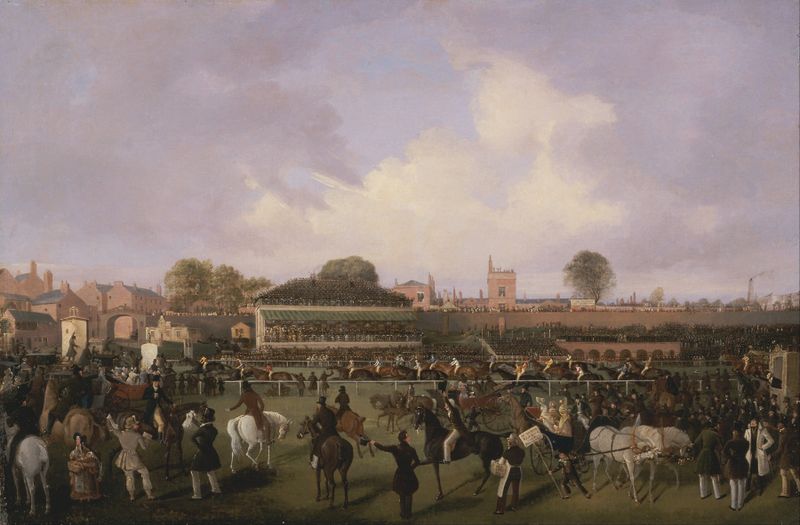
More Historical Art
Browse all →
The Night Watch Militia Company of District II under the Command of Captain Frans Banninck Cocq
Rembrandt van Rijn
Lincoln Memorial
Henry Bacon
The Third of May 1808
Francisco de Goya

Isaac and Rebecca, Known as ‘The Jewish Bride’
Rembrandt van Rijn
The Charge of the Mamelukes (1814)
Francisco de Goya

De vier ruiters van de apocalyps
Albrecht Dürer