
The Loing’s Canal — History & Facts
Where does light end, and longing begin? In the delicate interplay of color and shadow, The Loing's Canal captures the essence of fleeting moments and unspoken desires. Look to the left at the shimmering surface of the water, where the gentle ripples reflect the soft hues of the sky. The strokes are fluid and impressionistic, allowing the light to dance across the canvas, illuminating the tranquil scene. Notice how the trees on the banks frame the canal, their rich greens contrasting with the pale blues and sandy yellows.
This harmonious palette draws your eye into the depth of the landscape, where the horizon fades into a haze of possibility. Beneath the serene exterior lies a tension between stillness and movement. The boats float languidly, yet the brushwork suggests an underlying current of energy, hinting at the life that flows through the scene. The interplay of light and shadow evokes a bittersweet nostalgia, as if the viewer is peeking into a memory, longing yet never fully grasping it.
Each stroke of paint whispers a story of transience and connection, inviting reflection on what lies just beyond the visible. In 1892, Alfred Sisley painted this piece while living in France, amidst the burgeoning Impressionist movement that sought to capture the ephemeral effects of light and atmosphere. At this time, he faced financial uncertainties while striving for recognition amid a sea of fellow artists. The vibrant canal scene encapsulates not only his mastery of capturing nature but also his profound connection to place—a longing for stability in a world of change.
More Artworks by Alfred Sisley
Browse all →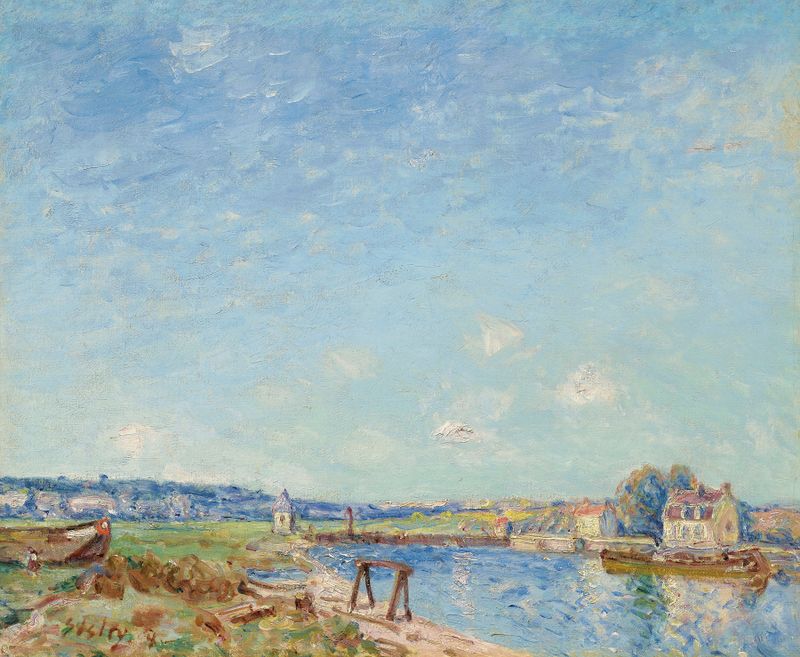
Le Loing à Saint-Mammès
Alfred Sisley
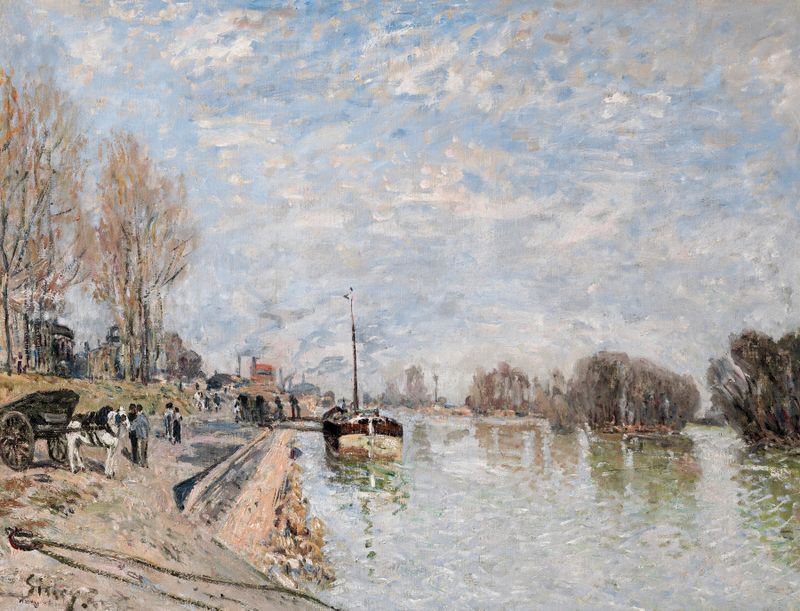
La Seine à Suresnes
Alfred Sisley
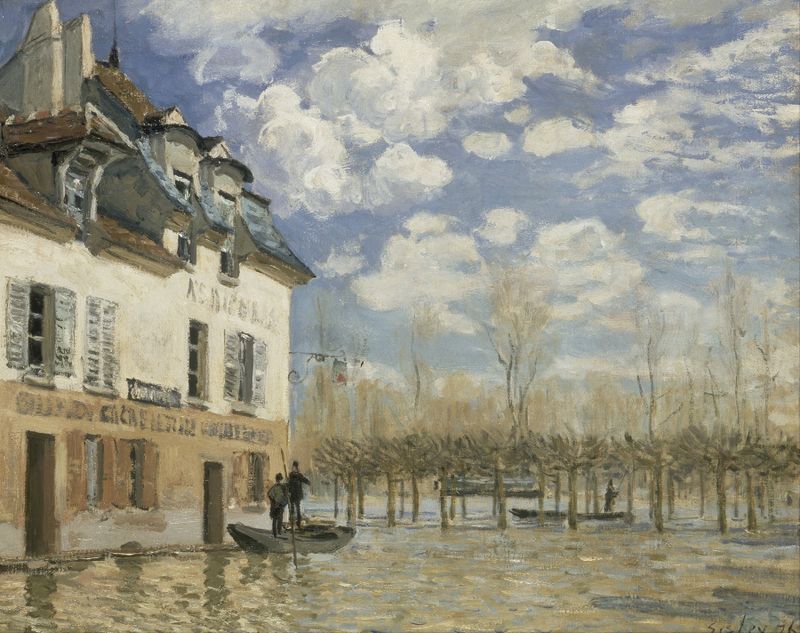
Boat in the Flood at Port Marly
Alfred Sisley
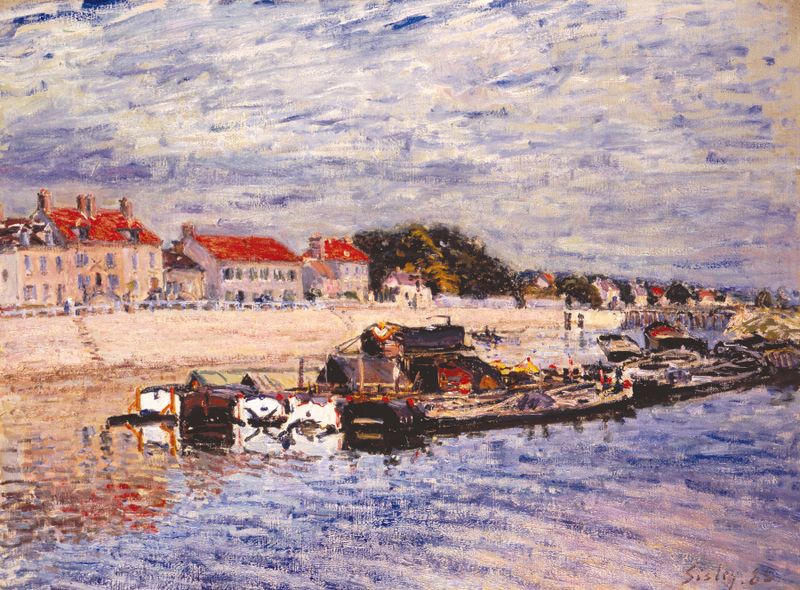
Barges on the Loing at Saint-Mammès
Alfred Sisley

L’allée des peupliers au bord du Loing
Alfred Sisley

Molesey Weir, Hampton Court
Alfred Sisley
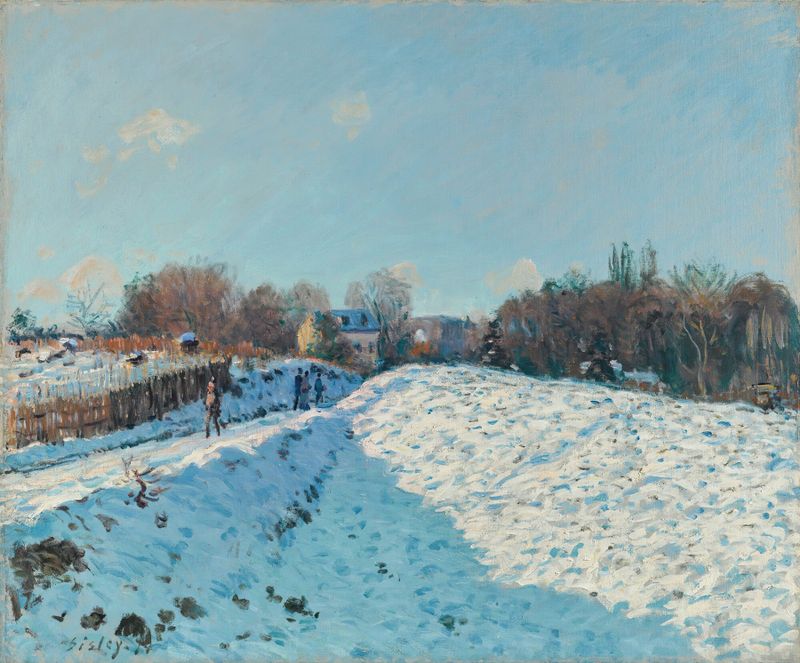
Effet De Neige À Louveciennes
Alfred Sisley
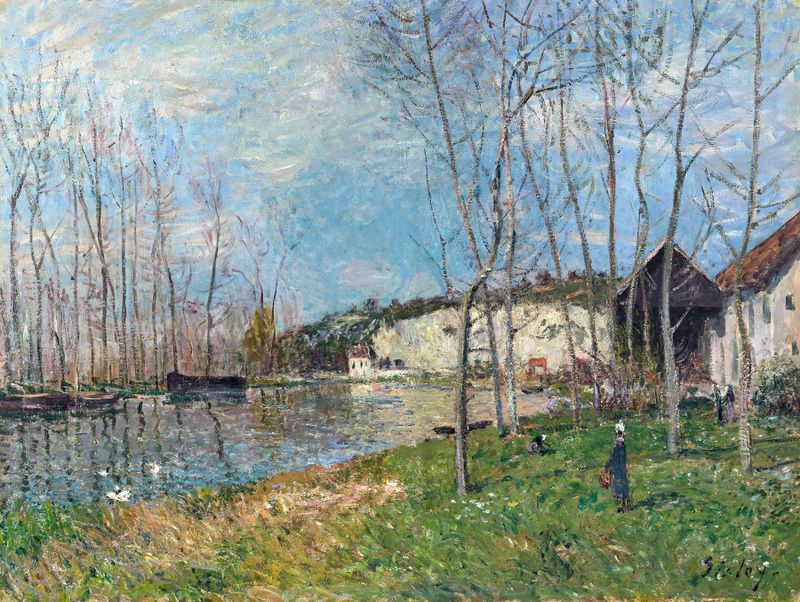
Printemps au bord du Loing
Alfred Sisley
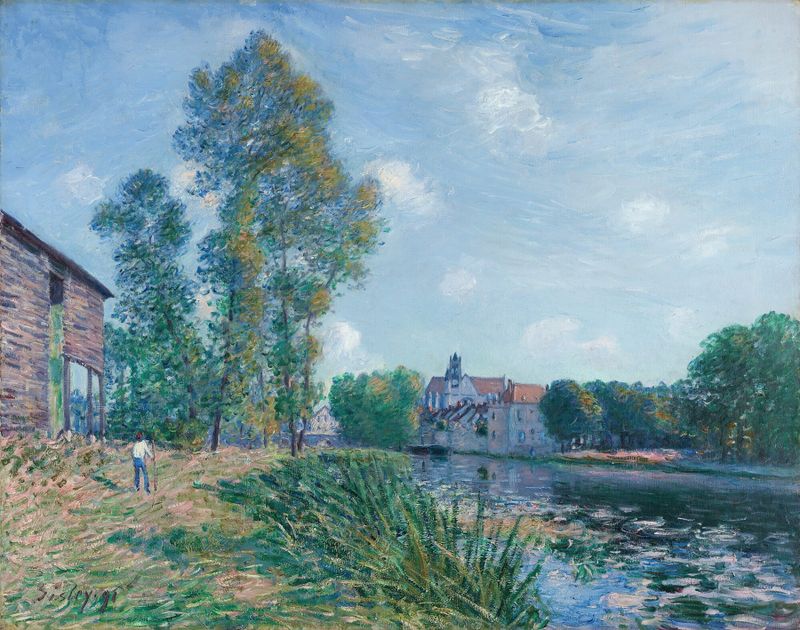
Le Loing À Moret, En Été
Alfred Sisley
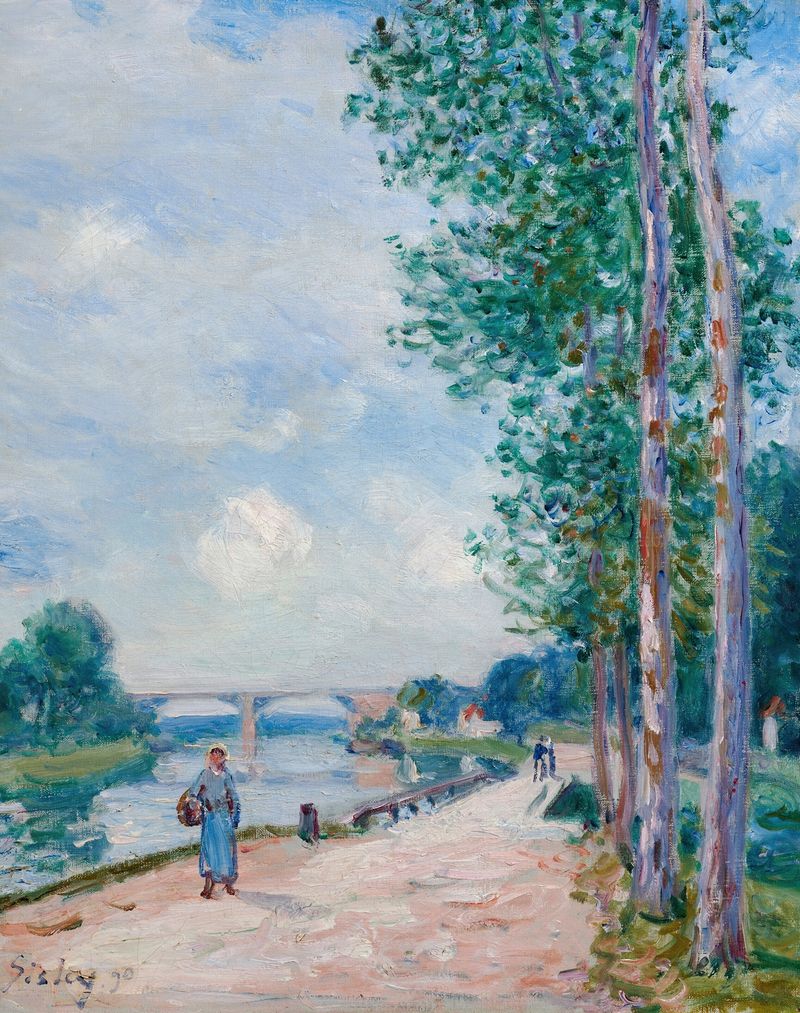
Les bords du Loing près de Moret
Alfred Sisley





