The Lumberwoman — History & Facts
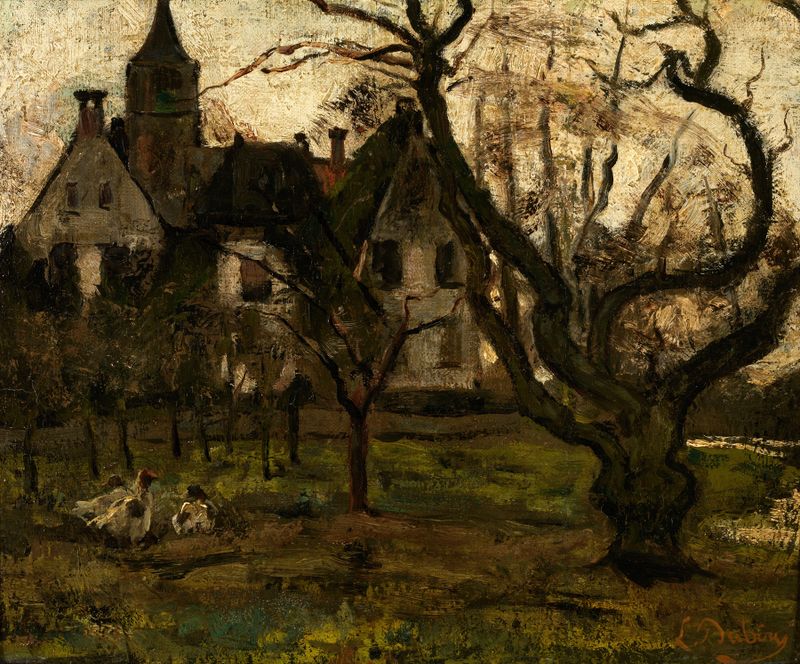
In the quietude of The Lumberwoman, we are confronted with the stark emptiness that often accompanies labor and solitude. The image resonates deeply, echoing the unspoken stories of those who toil in nature’s embrace, their struggles often overlooked in the march of progress. Here, we sense a poignant reflection on the intersection of strength and isolation. Look to the left, where the figure of the lumberwoman stands resolute against a backdrop of towering trees, their shadowy presence suggesting both protection and confinement.
The artist employs a muted palette, allowing earthy tones of browns and greens to dominate, evoking the rawness of the woodland setting. Notice how the dappled light filters through the foliage, illuminating her focused gaze and calloused hands, as if to highlight the relationship between the laborer and her environment — both hard and nurturing. The emotional tension within this work lies in the contrast between the woman’s strength and the profound sense of solitude enveloping her. The deliberate absence of other figures amplifies her isolation, while her strong posture conveys unwavering determination.
Each tree, standing sentinel around her, signifies both the burden of her work and the emptiness that accompanies it — a profound commentary on the often-unseen sacrifices of women in labor. The viewer is drawn to the subtle reflections of resilience and vulnerability woven together in her expression. In 1874, Louis Dubois created this work during a period marked by industrial expansion in France. As urban landscapes began to transform, the artist sought to capture the lives of those who remained connected to the natural world through labor.
This piece stands as a testament to the artist’s sensitivity to the evolving social dynamics of his time, offering a glimpse into the lives of women who forged their identities amidst the shifting tides of society.