The Mill — History & Facts
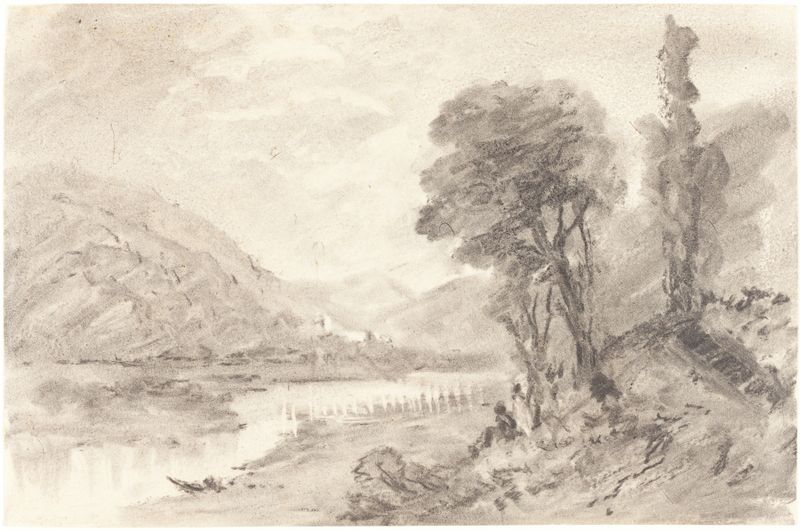
Can beauty exist without sorrow? In the first half of the 19th century, the quest for this balance found its expression in the landscape of a mill, where nature and industry collide in a delicate dance of color. Look closely at the rich greens and browns that dominate the canvas, drawing your eye to the mill's sturdy structure nearly swallowed by the verdant foliage. The light breaks through the trees, illuminating the water's surface below, where ripples shimmer like scattered gems. Each brushstroke reveals the contrasting textures of the rough stone and the smooth flow of the stream, inviting contemplation on the harmony of the natural and the man-made. Yet, beneath this serene exterior lies a tension.
The mill stands as a symbol of progress, but its presence also suggests an encroachment on nature’s beauty—what once flourished now bears the weight of industry. The vibrant hues, while enticing, evoke a lingering sense of melancholy; they remind us that with every innovation comes a cost. The interplay between light and shadow deepens this emotional landscape, urging the viewer to ponder the consequences of relentless advancement. During this period, the artist was part of a broader movement, grappling with industrialization's impact on the English countryside.
As the world swiftly evolved around them, the mill became a poignant subject—reflecting a nostalgia for a simpler past amidst rapid change. This work, painted within a context of societal transformation, captures the simultaneous allure and sorrow of a world embracing progress.