Sea Coast Scene — History & Facts
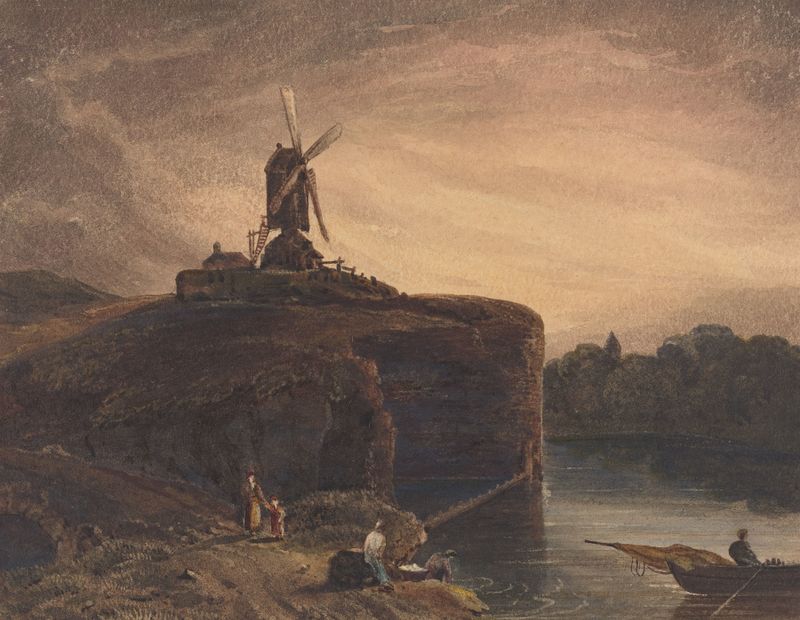
Can beauty exist without sorrow? In the fleeting moments where land meets sea, we find a divine interplay of light and shadow that evokes the eternal struggles of existence. Focus on the horizon, where the gentle undulations of the coastline meld with the soft embrace of the sky. The painter skillfully captures the dance of sunlight on the water, each glimmering wave reflecting a myriad of blues and whites. Notice the brushstrokes that breathe life into the clouds, with wisps swirling above, crafting a serene yet stirring atmosphere that invites contemplation. Yet, beneath this picturesque serenity lies a subtle tension.
The turbulent waves hint at storms passed and yet to come, while the solitary figure on the shore suggests isolation amidst beauty. This juxtaposition reveals the complexity of nature, where moments of peace are often laced with an underlying sense of longing or melancholy, reminding us that divinity often resides in the balance of joy and sadness. In the 19th century, the British art scene was evolving, influenced by Romanticism and a growing fascination with nature. The artist, working during this period, sought to reflect the sublime qualities of the natural world while grappling with themes of human experience.
This piece embodies the era's quest for truth in beauty, revealing deeper emotional landscapes through its tranquil yet charged coastal imagery.