The Mill at the Loue — History & Facts
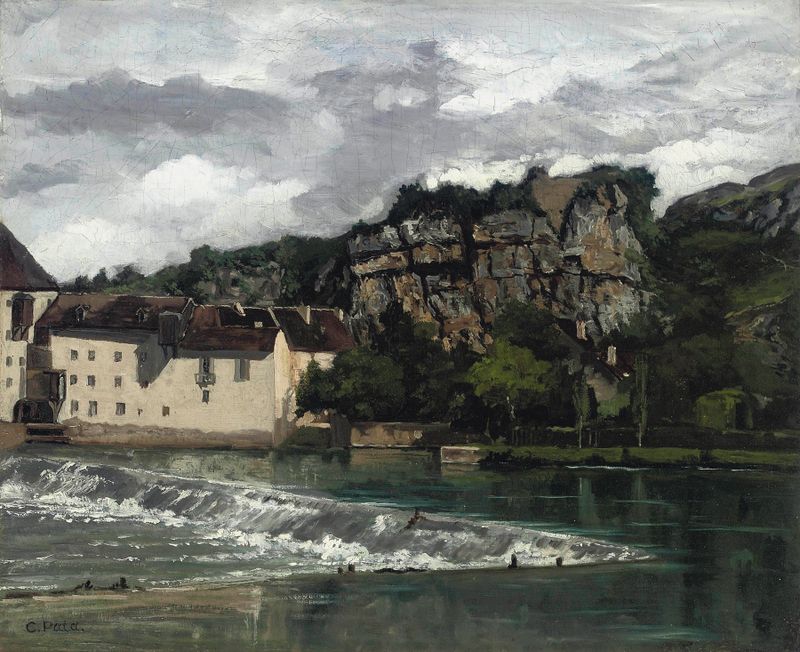
In a world where beauty is fleeting, one can find solace in the timelessness of art. The canvas captures a delicate intersection of nature and human craftsmanship, where the serene whispers of a mill blend harmoniously with the embrace of the surrounding landscape. Focus on the left side of the composition, where the gently flowing water shimmers under the dappled sunlight, creating a play of reflections that draws the eye. Notice how the warm hues of ochre and green meld into each other, conveying a sense of tranquility.
The mill, with its rustic charm, stands proudly at the center, its wooden structure intricately detailed, inviting closer inspection. The artist’s use of soft brushstrokes evokes movement, as if the scene is alive with the sounds of nature. Deep beneath the surface, this painting speaks of the relationship between man and nature, a reminder of the harmony that once existed before industrialization took its toll. The contrasts between the solid mill and the fluid water mirror the balance of creation and destruction, while the distant trees frame the scene in a protective embrace, hinting at the fragility of beauty.
The stillness of the moment carries an unspoken nostalgia, inviting viewers to reflect on what has been lost. Cherubino Patà painted this piece between 1872 and 1873, during a time when the art world was evolving, and Impressionism was beginning to take root. Living in France, Patà was influenced by the changing perceptions of landscape and light, seeking to capture the essence of beauty in everyday life. The painting emerges as a testament to both his skill and the era's growing appreciation for the natural world, encapsulating the fleeting beauty of a bygone time.