The Milliner — History & Facts
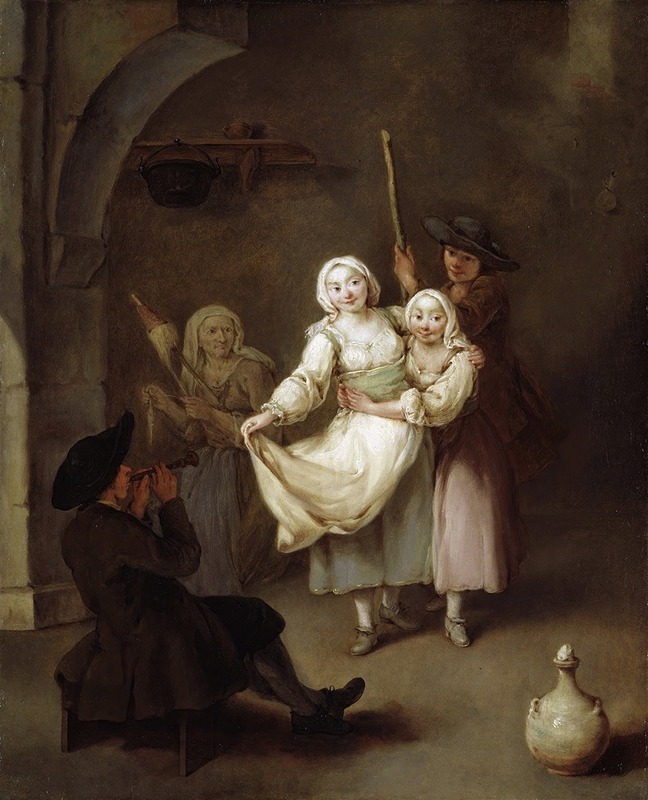
In The Milliner, the viewer is drawn into a world where the delicate layers of elegance mask deeper truths. Here, the allure of fashion transcends mere aesthetics, beckoning us to explore the complexities beneath the surface. Look closely at the figure in the center, adorned in a lavish gown and an elaborate hat. Notice how the rich hues of her attire contrast with the muted tones of the room, casting her as both the object of admiration and an emblem of societal constraints.
The soft brushwork captures the glint of the accessories, while the warm light envelops her, emphasizing the intimate moment shared with her attentive customer. The composition is carefully balanced, guiding the eye to the delicate interplay between the milliner's craftsmanship and the woman’s poised demeanor. Within the scene, tensions simmer beneath the surface; the joy of beauty is tainted by the labor that creates it. The milliner, a skilled artisan, hints at the hidden struggles of her craft, where creativity flourishes amid the demands of commerce.
While the viewer is captivated by the splendor on display, the subtleties of the expressions suggest a longing for authenticity, reminding us that even the most exquisite appearances can conceal unseen burdens. Pietro Longhi created this work around 1765-1770 during a time when Venice was experiencing a cultural flourish, yet social hierarchies remained rigid. He was known for his insightful depictions of Venetian society, capturing moments laden with nuance and complexity. This painting reflects his keen observation of the interplay between beauty and the often-unseen realities of daily life in a vibrant yet constrained world.