Lady at Her Toilette — History & Facts
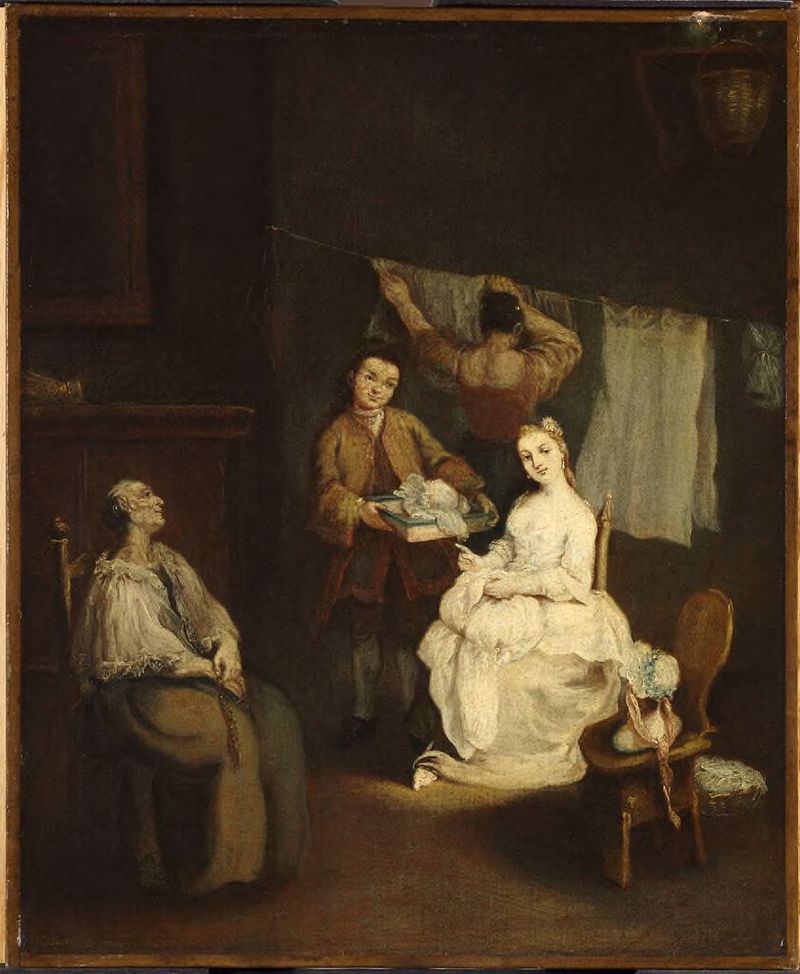
In the solitude of her dressing room, a woman prepares for an unknown encounter, surrounded by the intimate chaos of her belongings. Each item—jewels scattered across the table and the delicate fabrics draped about—whispers of her effort to present herself to the world, yet the air is thick with a palpable loneliness that clings to her like the scent of her perfumed oils. Look to the left at the mirror, where the soft glow of light captures her reflection, inviting you to witness both her beauty and her solitude. Notice the delicate brushstrokes that delineate the textures of her gown, from the intricate lace to the luxurious silk, each detail revealing Longhi's mastery of capturing elegance.
The pale palette of soft pastels contrasts with the darkened corners of the room, emphasizing her isolation amidst the lavish surroundings, drawing your eye back to the center where she stands, poised yet somehow distant. Within this seemingly simple routine lies a profound commentary on loneliness and self-presentation. The objects around her—a comb, a delicate powder box—become more than mere accessories; they transform into symbols of her internal struggle, embodying the duality between personal identity and societal expectations. The tension between her elaborate setting and her contemplative expression evokes a sense of melancholy, reflecting the unseen battles of women in the 18th century, caught between their desires and the demands placed upon them. Created in the late 1740s, Lady at Her Toilette emerged during a time when Pietro Longhi was establishing himself in Venice's art scene.
A period marked by a burgeoning interest in genre painting, it mirrored the societal dynamics of the time, focusing on the private lives of individuals while subtly critiquing their vulnerabilities. Longhi's work acted as both a window into intimate moments and a reflection on the isolation inherent in such personal experiences.