
The Municipal Hall — History & Facts
In the silent void where chaos often reigns, one finds solace in the stillness of artistry. It is in these moments of contemplation that we discover the deeper truths of our existence. Focus first on the stark lines of the Municipal Hall, where architectural precision meets the softness of fading light. Notice how the shadows elongate across the facade, creating a sense of depth and inviting the eye to wander.
The interplay of muted colors—a palette of grays and earthy tones—evokes a certain melancholia, as if the building itself carries the weight of untold stories within its walls. Each brushstroke meticulously defines the contours, drawing one into a space that feels both intimate and expansive. Delve deeper into the contrasts present in this work. The solidity of the hall, with its rigid structure, stands against the fluidity of the surrounding environment, suggesting a dialogue between permanence and transience.
Look closely at the hints of life—faint silhouettes that, although indistinct, echo the presence of a community just outside the frame. This subtle play between absence and presence reveals an emotional tension, inviting viewers to reflect on the void that often accompanies human interaction and connection. Created in 1947, Municipal Hall reflects Akamatsu Rinsaku's engagement with post-war Japan, a nation grappling with loss and rebuilding. Emerging from a time of turmoil, the artist sought to capture the essence of resilience through architecture, a metaphor for hope amidst a backdrop of uncertainty.
Rinsaku’s work emerged during a significant shift in the art world, transitioning from traditional techniques to a modern expression that strove to encapsulate the complexities of the human experience.
More Artworks by Akamatsu Rinsaku
Browse all →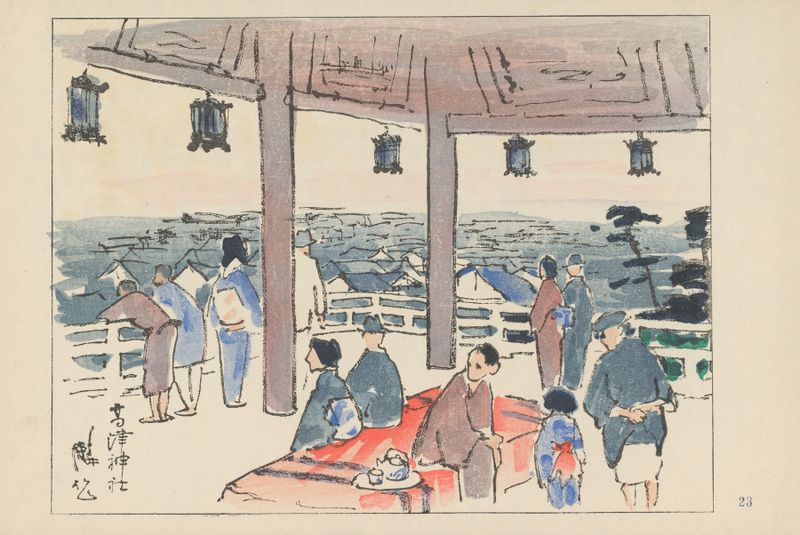
Kozu shrine dedicated to Nintoku Emperor
Akamatsu Rinsaku
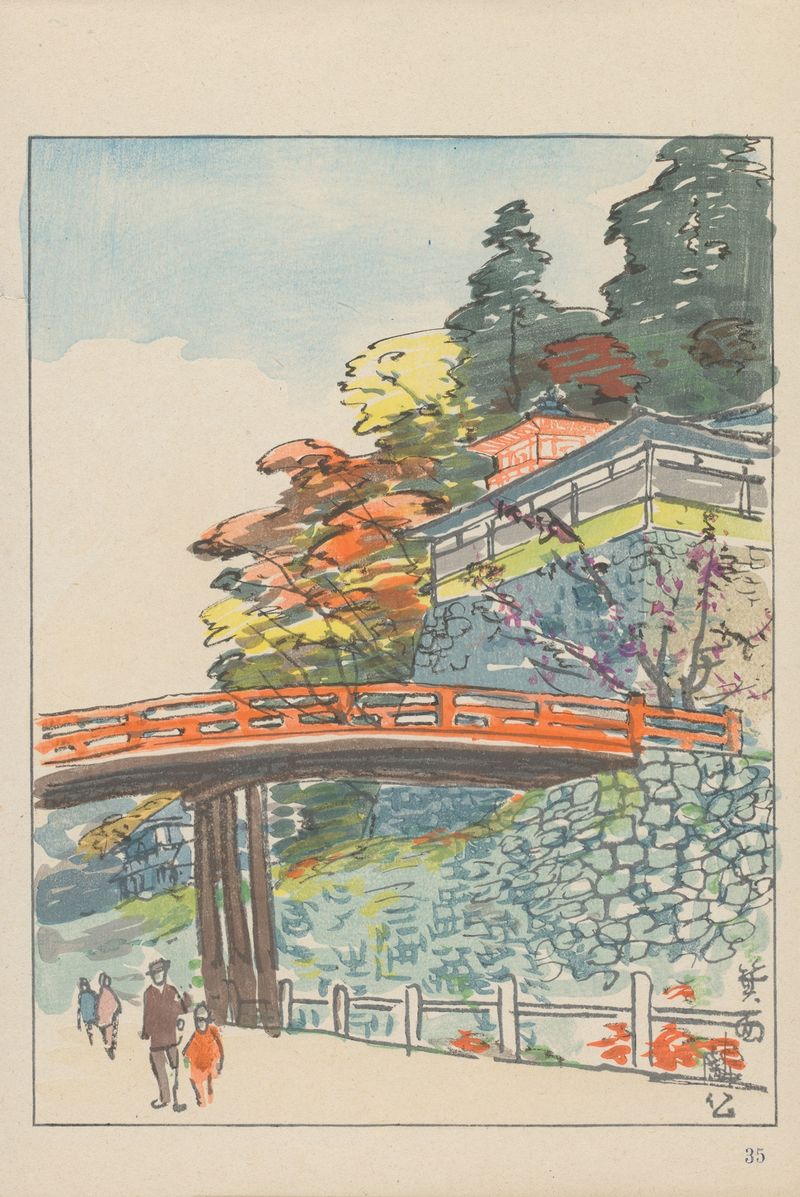
Minoo, National Park
Akamatsu Rinsaku
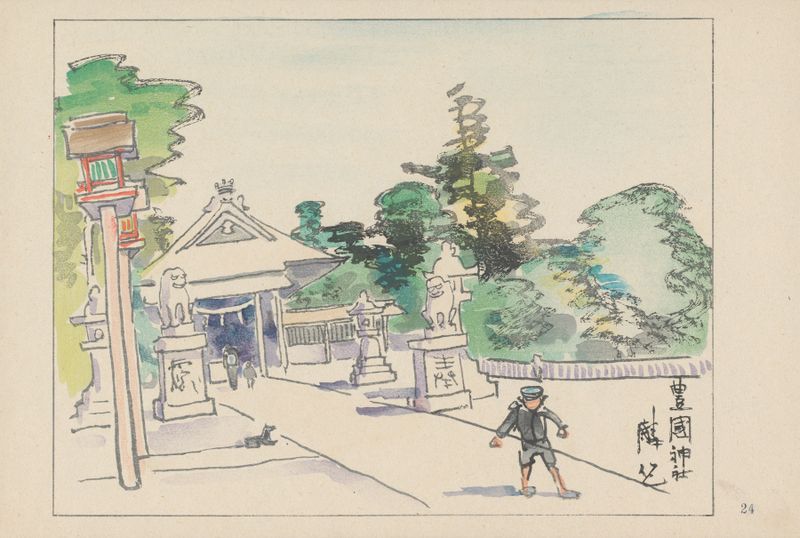
Toyokuni shrine dedicated to Toyotomi Hideyoshi
Akamatsu Rinsaku

Tsumura betsuin, the agency of Nishi-honganji
Akamatsu Rinsaku
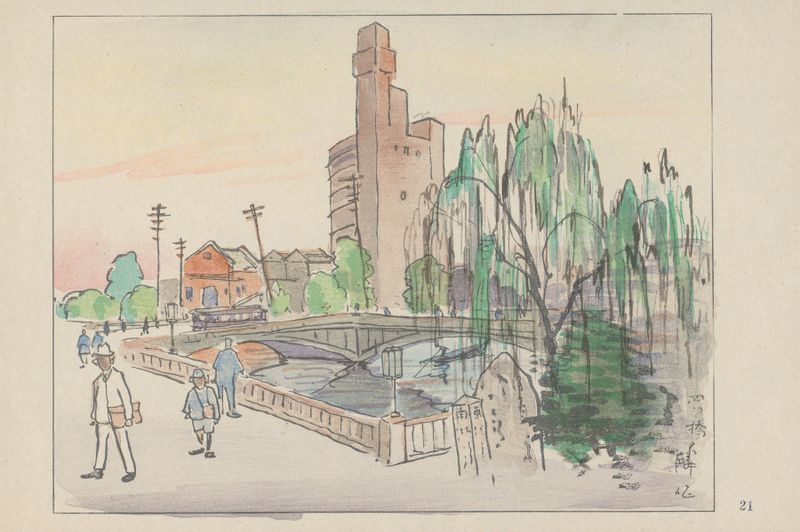
Yotsubashi, four joint bridges
Akamatsu Rinsaku
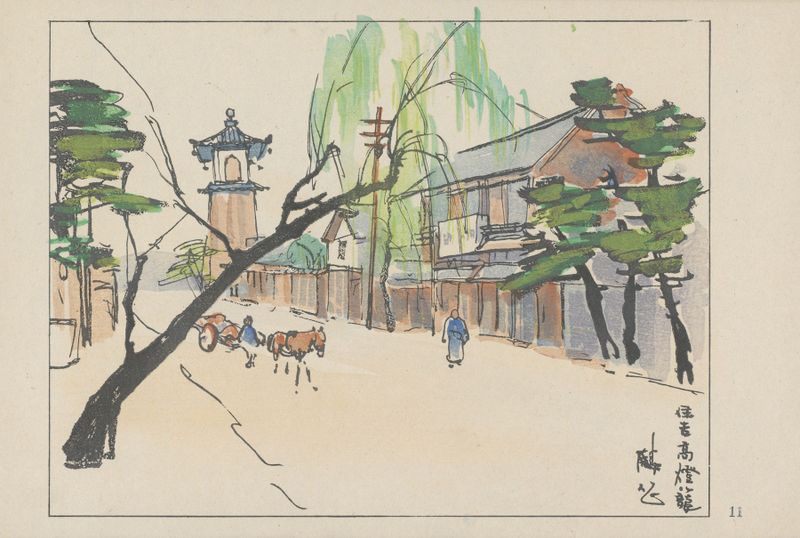
The high lanton at Sumiyoshi, a light house in older time
Akamatsu Rinsaku
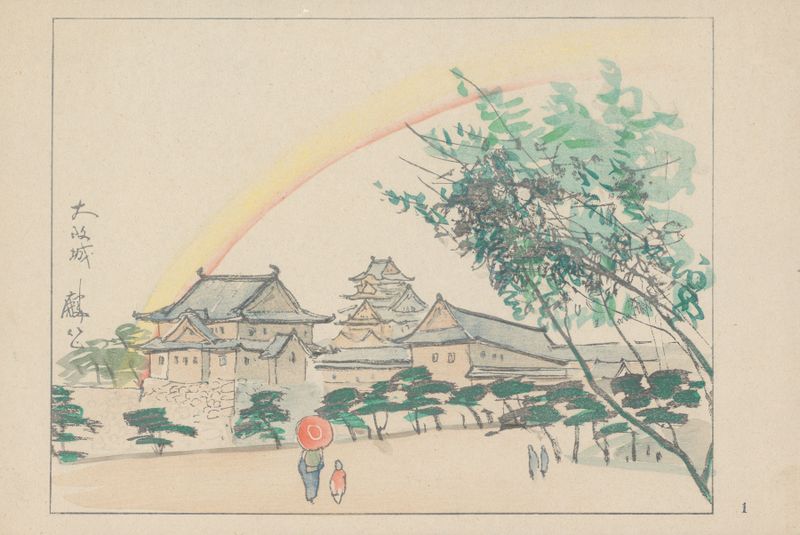
Osaka Castle, built by Toyotomi Hideyoshi in 1585 A.D
Akamatsu Rinsaku
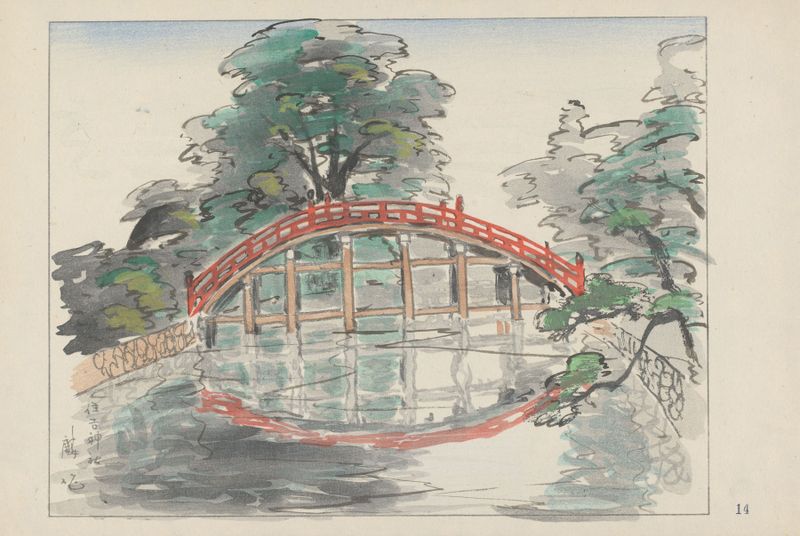
Sumiyoshi Shinto shrine
Akamatsu Rinsaku
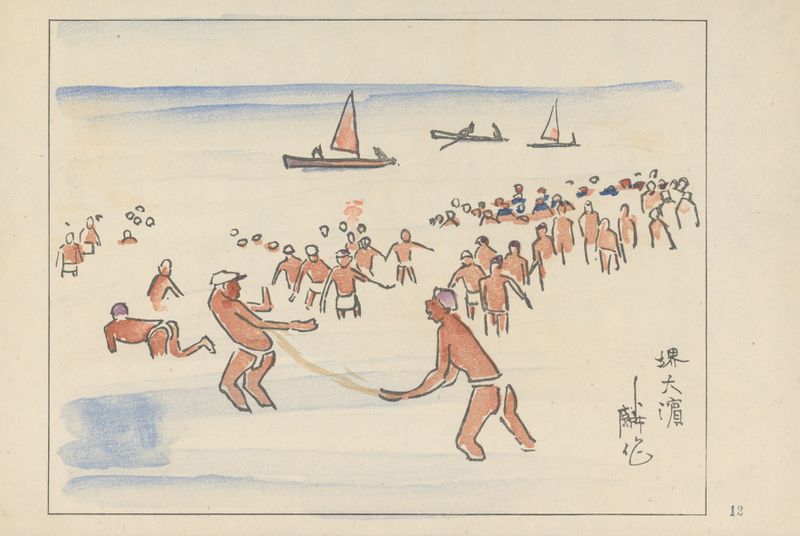
Sakai Ohama, swiming beach
Akamatsu Rinsaku

Kawaguchi, the estuary of Yodo river
Akamatsu Rinsaku
More Architecture Art
Browse all →
The statue of Liberty
Frédéric Auguste Bartholdi

View of Houses in Delft, Known as ‘The Little Street’
Johannes Vermeer

View of Houses in Delft, Known as ‘The Little Street’
Johannes Vermeer

The Cathedral in Rouen. The portal, Grey Weather
Claude Monet

The yellow house
Vincent van Gogh

The Church in Auvers-sur-Oise, View from the Chevet
Vincent van Gogh