The Nativity (Bladelin Triptych, central panel) — History & Facts
The central panel of the Bladelin Triptych, painted by Rogier van der Weyden circa 1445–1450 in oil on oak, depicts the Nativity of Jesus. This work was created during the artist’s mature period, when he was active in the Burgundian Netherlands and renowned for his altarpieces and devotional panels. The triptych was commissioned by Pieter Bladelin, a prominent Burgundian official, and is notable for its integration of contemporary Flemish settings with sacred subjects. The scene presents the Virgin Mary and Joseph adoring the Christ Child, who lies on the ground before a ruined stable.
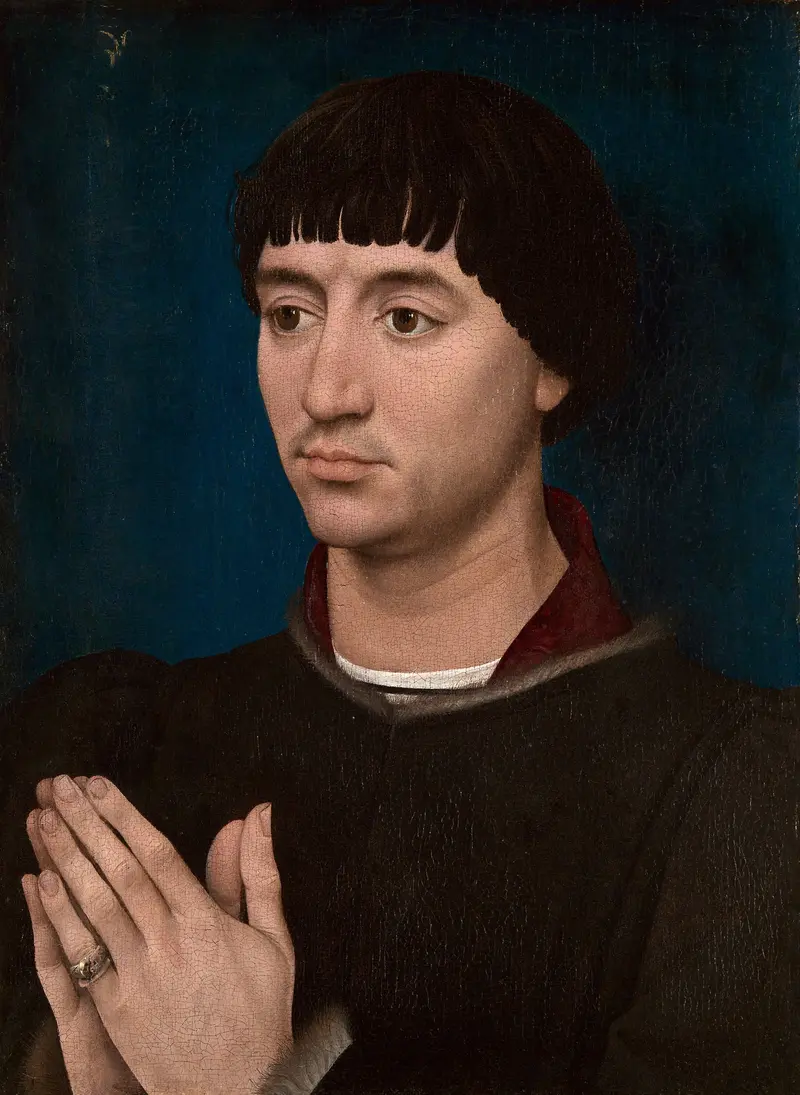
Mary is dressed in a blue robe, her head bowed and hands joined in prayer, with a radiant halo emphasizing her sanctity. Joseph, in a red cloak, kneels nearby, while a group of angels in golden garments sing or pray beside the infant. A kneeling donor figure, identified as Pieter Bladelin, appears at the right, distinguished by his formal black attire.
The dilapidated architecture, ox and ass, and the distant cityscape are rendered with meticulous detail, and the landscape is bathed in clear, even light characteristic of Netherlandish painting of the period. The Bladelin Triptych was commissioned for a private chapel by Pieter Bladelin, treasurer to Philip the Good, Duke of Burgundy. The work remained in Bladelin’s foundation in Middelburg until the late eighteenth century, after which it entered various collections. Today, the triptych is recognized as a significant example of Rogier van der Weyden’s religious commissions, reflecting both the devotional practices and the social aspirations of its patron.
The central panel is held in a public collection and continues to be studied for its iconography and technical refinement.