The Pasture Lot — History & Facts
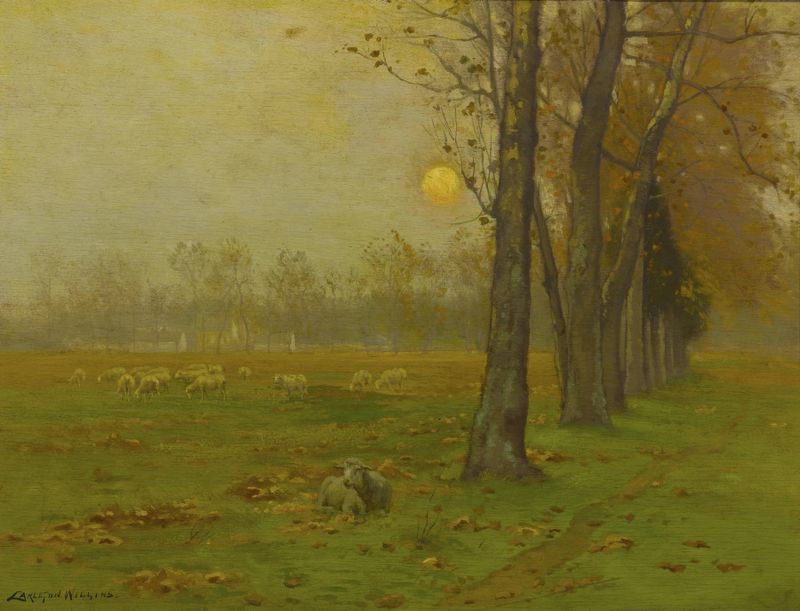
In the stillness of The Pasture Lot, a revelation unfolds—a serene moment that invites reflection and introspection. Focus first on the gentle expanse of verdant grass that dominates the foreground, an inviting canvas of greens touched by the soft golden hues of late afternoon light. Notice how the artist’s brushstrokes create texture, allowing the blades of grass to sway with a life of their own, beckoning the viewer to step into this tranquil scene. The rustic wooden fence, slightly off-center, draws your gaze to the horizon where a soft, cloud-streaked sky hints at the day's end, framing the pasture as a sacred space of peace and contemplation. The emotional tension manifests in the contrast between the vibrant earth and the subtle shadows cast by the setting sun.
Each element speaks to the transience of time; the stillness of the pasture juxtaposed against the fleeting day suggests a longing for permanence. The fence, both a separator and a connector, symbolizes boundaries in life, while the distant trees stand sentinel, embodying both solitude and companionship. This interplay reveals a complex relationship with nature—a search for solace amidst the inevitable passage of time. Carleton Wiggins painted The Pasture Lot in 1907, during a period marked by an increasing interest in the pastoral scenes of rural America.
Living in the artistic hub of New York, he was influenced by the Ashcan School, which emphasized realism and everyday life. This work reflects his dedication to capturing the beauty of rural landscapes and the emotional truths they convey, standing as a testament to a simpler, yet profound connection to nature.