
The Pont d’Alma at Twilight — History & Facts
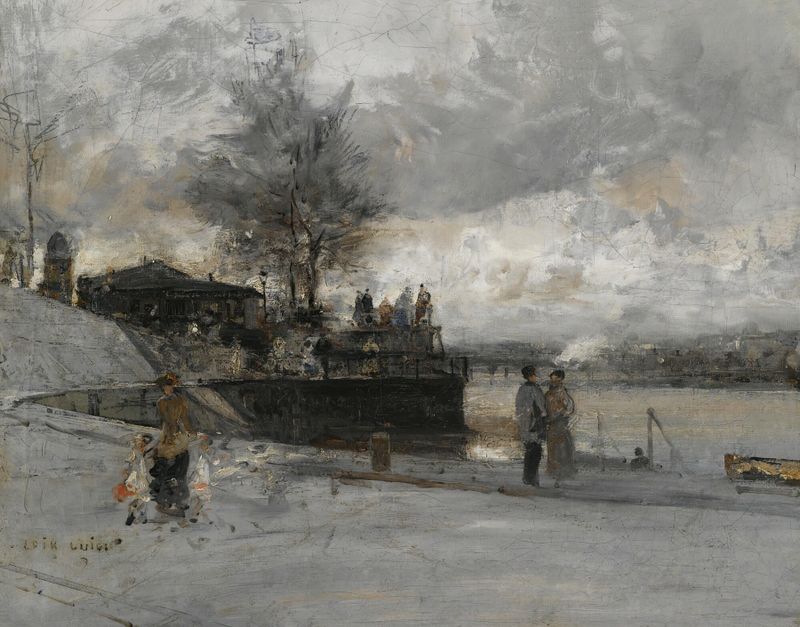
Could a single brushstroke hold eternity? In The Pont d’Alma at Twilight, luminous hues collide and dance, capturing moments that transcend time. Look to the center, where the bridge stretches gracefully across the canvas, becoming the axis of movement. The vibrant oranges and soft purples blend seamlessly, imbuing the sky with an ethereal glow that signals the day’s end. Notice how the reflections shimmer in the water below, the light fractured like dreams, inviting your gaze into the depths of the scene.
The delicate details of the figures strolling along the bridge are rendered with a lightness that evokes both leisure and contemplation. The juxtaposition of stillness and motion plays a significant role here; the figures, casually strolling against the dynamic backdrop, suggest fleeting moments amid the constancy of nature. The twilight light envelops them, hinting at ephemeral connections—perhaps conversations never fully articulated or thoughts left unshared. Each brushstroke contributes to a sense of longing, amplifying the emotional weight embedded in this serene yet charged moment. Luigi Loir painted this work around 1914, during a time marked by rapid changes in art and society.
Living in Paris, he was influenced by the Post-Impressionist movement and sought to capture the beauty of everyday life through light and color. As Europe stood on the brink of war, this painting offers a glimpse into a world filled with both serenity and impending transformation.
More Artworks by Luigi Loir
Browse all →
Marché aux fleurs sous la neige
Luigi Loir

Le Louvre, Paris
Luigi Loir
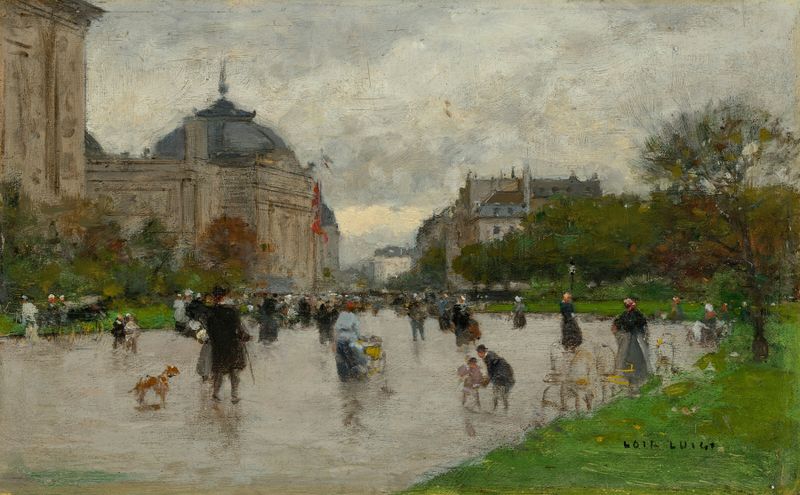
The Champs Élysées, Paris
Luigi Loir
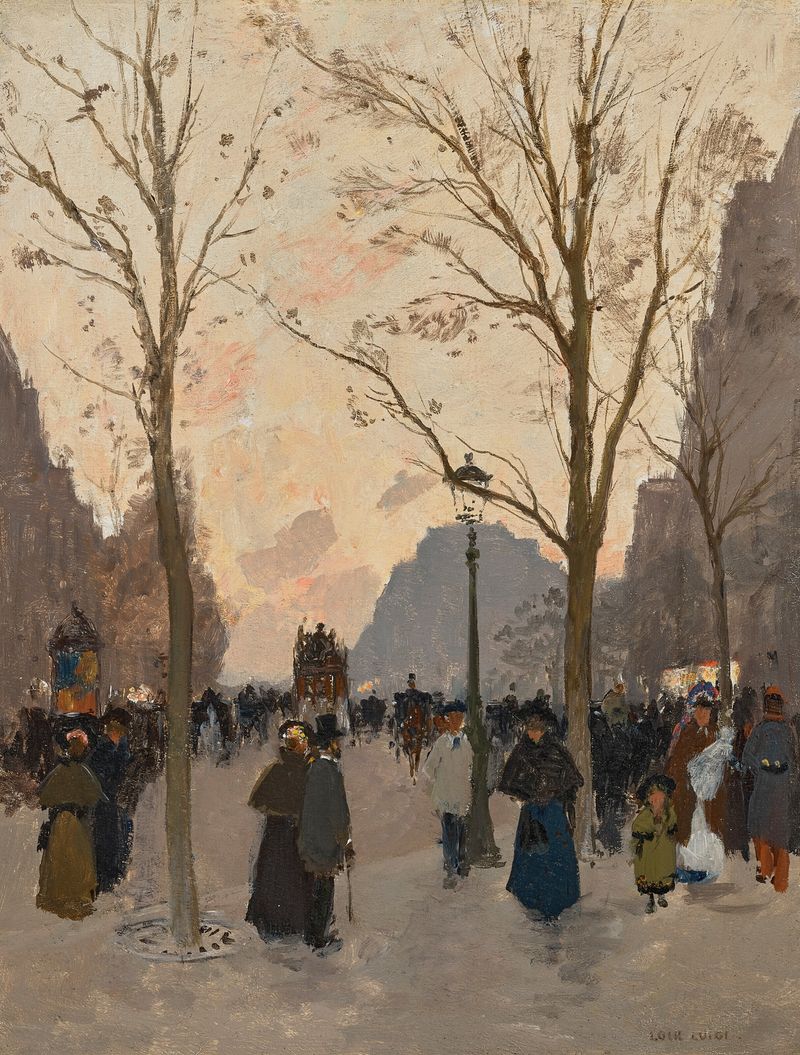
La Place de la République, Paris
Luigi Loir

Le boulevard du Palais, vu de la place Saint-Michel
Luigi Loir

La fête foraine
Luigi Loir
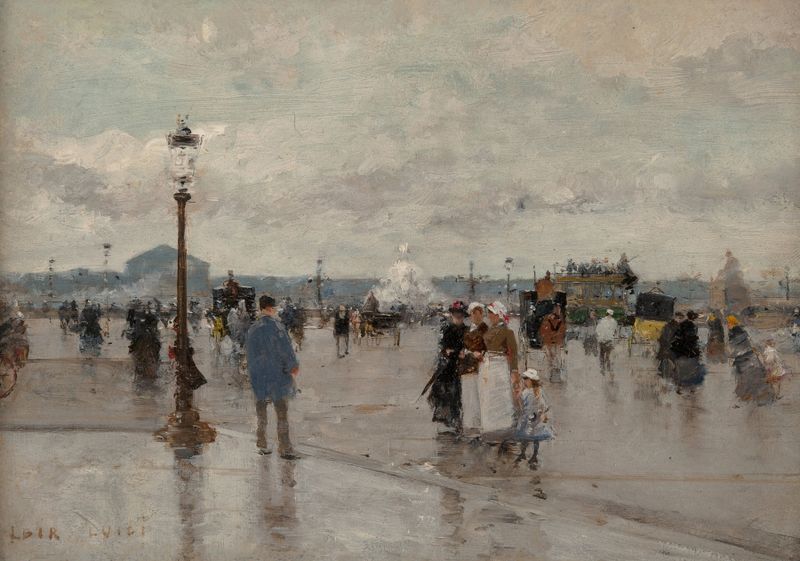
La sortie de Paris, Porte d’Asnières
Luigi Loir
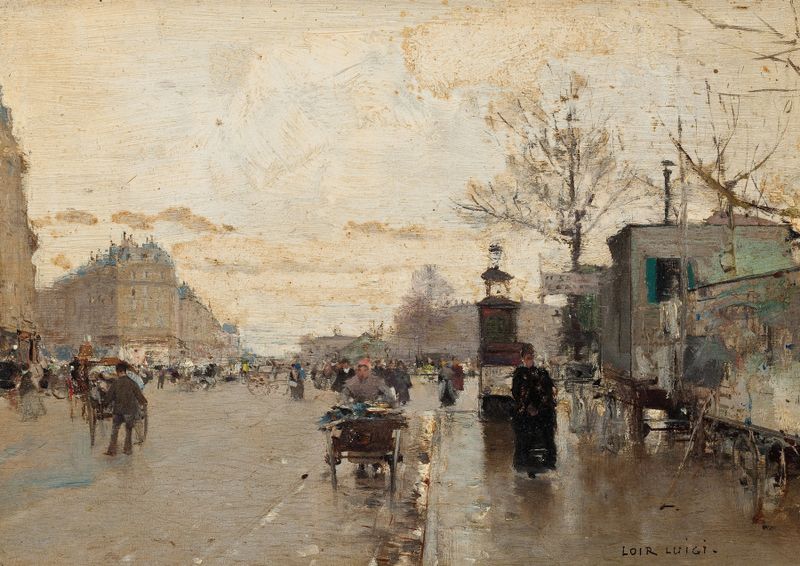
Parisian Street Scene
Luigi Loir

Les Quais De La Seine, 1900
Luigi Loir
Quai Au Bord De La Seine, Paris
Luigi Loir





