The Races at Longchamp — History & Facts
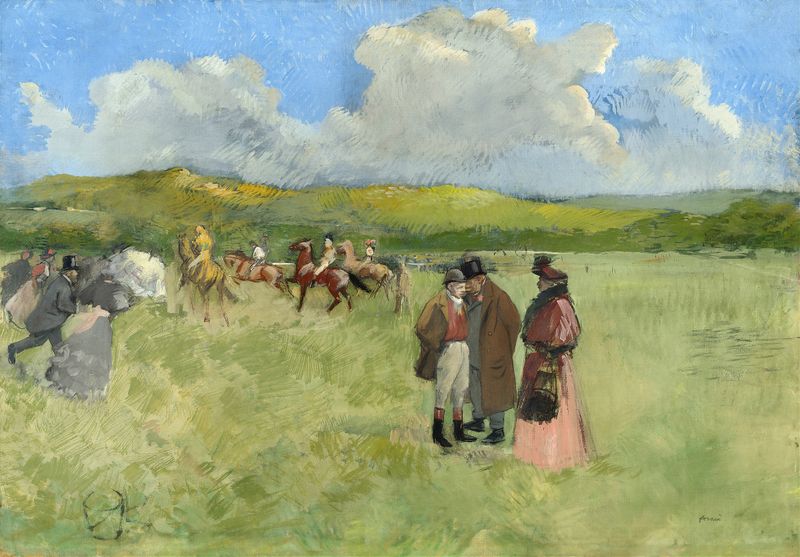
Can beauty exist without sorrow? In the world of horse racing, where exhilaration meets quiet reflection, one can only ponder the delicate balance between joy and despair. Focus on the center of the canvas, where the grandstands pulsate with life, yet a striking stillness hangs in the air. The use of muted colors creates a sense of nostalgia, as if time itself has paused to absorb the spectacle. A sense of anticipation wafts through the scene, evident in the gestures of the elegantly dressed spectators, whose eyes are drawn toward the racing track, while the horses, cloaked in vibrant hues, appear almost spectral against the backdrop of the event. Delve deeper, and you’ll notice the subtle contrasts at play—how the exuberance of the race contrasts with the contemplative expressions of the onlookers.
In this dialogue between motion and stillness, the artist captures a fleeting moment: the thrill of victory intertwined with the shadow of defeat. The silence among the crowd hints at shared hopes and collective anxieties, elevating the experience of the race to something more than mere entertainment. Created around 1891, the artist painted this piece during a time when Paris was alive with cultural dynamism and the Impressionist movement was reshaping the art world. Forain, known for his keen observations of social life, was reflecting on the changing spectacles of modernity.
As he navigated his own artistic path, The Races at Longchamp serves as a poignant reflection of the fleeting nature of beauty amidst the thrill of competition.