
The raising of Lazarus: small plate — History & Facts
Could a single brushstroke hold eternity? In The Raising of Lazarus: Small Plate, chaos and serenity intertwine, revealing a moment suspended between life and death. Look to the center of the composition, where the figure of Lazarus emerges from darkness into a halo of light. The delicate strokes of oil paint exhibit a tension between vibrant colors and deep shadows, crafted with the masterful chiaroscuro that characterizes the artist’s style. Notice how the subtle variations in the flesh tones hint at warmth and life, contrasting starkly with the cool, muted palette of the surrounding figures, enveloped in their disbelief. The emotional tension within this piece is palpable; the crowd's frantic gestures convey a mix of awe, fear, and hesitation.
Each figure, though distinct, seems to echo the same chaotic energy — an instinctual struggle with the miracle unfolding before them. The contrast of Lazarus’s stillness against the animated reactions of those around him creates a powerful dialogue, hinting at the complexities of faith and doubt that define the human experience. In 1642, Rembrandt was navigating a turbulent period in both his personal life and the art world, with financial strains intermingling with his quest for artistic identity. This small plate, a testament to his brilliance, emerged amidst the Baroque movement's dramatic explorations of light and emotion, reflecting not just the biblical narrative but also the artist's own grappling with life's fleeting nature and the chaos that often accompanies profound moments.
More Artworks by Rembrandt van Rijn
Browse all →
The Night Watch Militia Company of District II under the Command of Captain Frans Banninck Cocq
Rembrandt van Rijn

The Return of the Prodigal Son
Rembrandt van Rijn

The Hundred Guilder Print: the figures leaning on the wall in the centre left
Rembrandt van Rijn

The Hundred Guilder Print: the central piece with Christ preaching, the plate arched
Rembrandt van Rijn

Isaac and Rebecca, Known as ‘The Jewish Bride’
Rembrandt van Rijn
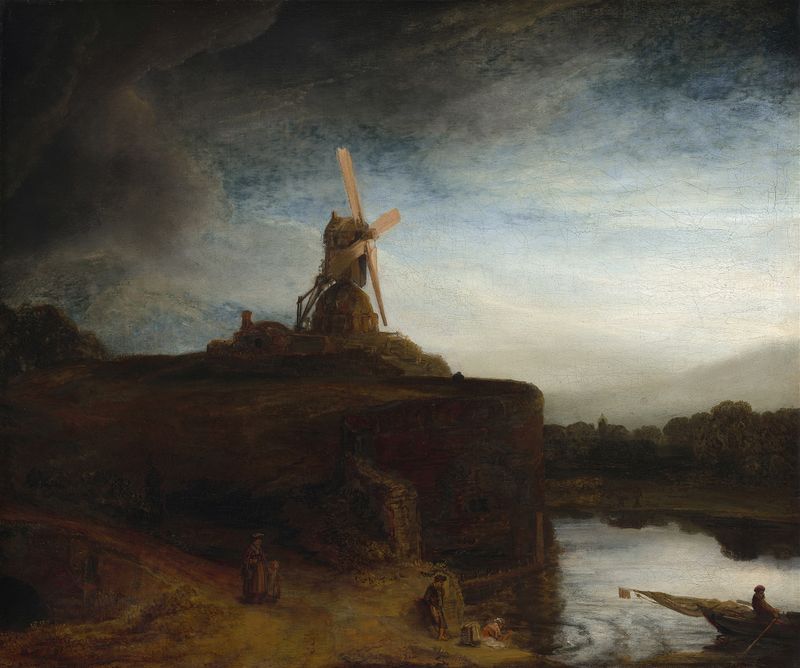
The Mill
Rembrandt van Rijn

The Sampling Officials of the Amsterdam Drapers’ Guild, Known as ‘The Syndics’
Rembrandt van Rijn

The return of the prodigal son
Rembrandt van Rijn
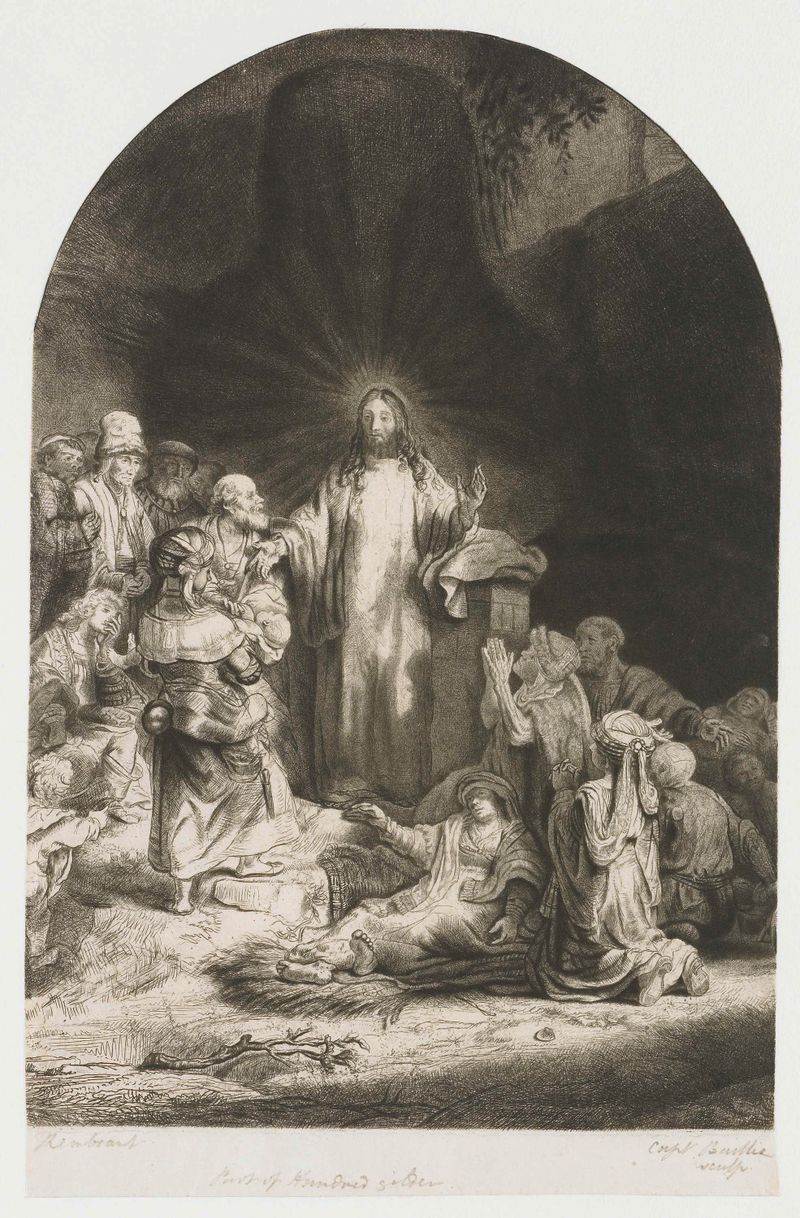
The Hundred Guilder Print: the central piece with Christ preaching, the plate arched
Rembrandt van Rijn

The Hundred Guilder Print: the man seen on the back in the lower left corner
Rembrandt van Rijn
More Religious Art
Browse all →The Return of the Prodigal Son
Rembrandt van Rijn

The Garden of Earthly Delights
El Bosco

Count Orgaz’ funeral
El Greco
The Hundred Guilder Print: the central piece with Christ preaching, the plate arched
Rembrandt van Rijn

The Descent from the Cross
Rogier van der Weyden
The return of the prodigal son
Rembrandt van Rijn