The ramparts and the bridge at Rabastens — History & Facts
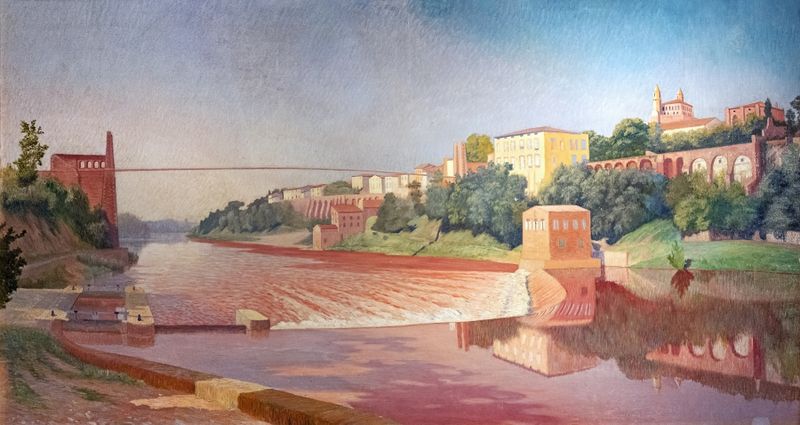
Art reveals the soul when the world turns away. In the stillness of a moment captured, the essence of rebirth unfolds through the bridge and ramparts, inviting reflection on the passage of time and the cycles of life. Focus first on the bridge, its arching form inviting the viewer into the composition, symbolizing connection and transition. Notice how the warm, sun-drenched golden hues contrast with the cool shadows that dance beneath the ramparts.
Prouho’s brushwork is both precise and fluid, giving the landscape a sense of vitality, as though nature itself is breathing. The sky, a vibrant canvas of blues and whites, suggests the promise of renewal, while the earthy tones grounding the scene evoke stability and permanence. Delve deeper into the details and observe the texture of the stones in the ramparts, their weathered surfaces telling stories of endurance against time’s relentless march. The gentle ripples in the water reflect not only the bridge but also the fleeting nature of moments—an interplay of life and memory.
The juxtaposition of the sturdy fortifications against the fluidity of the river hints at the tension between man-made structures and the relentless forces of nature, embodying the cycle of creation and decay. Paul Prouho painted this piece during a period marked by the rise of post-impressionism in France, where a focus on emotional expression and personal interpretation flourished. Working primarily in the late 19th century, Prouho sought to capture both the beauty of the landscape and the complexities of human experience, reflecting a world on the cusp of modernity while still deeply connected to its roots.