Causeway of Rabastens — History & Facts
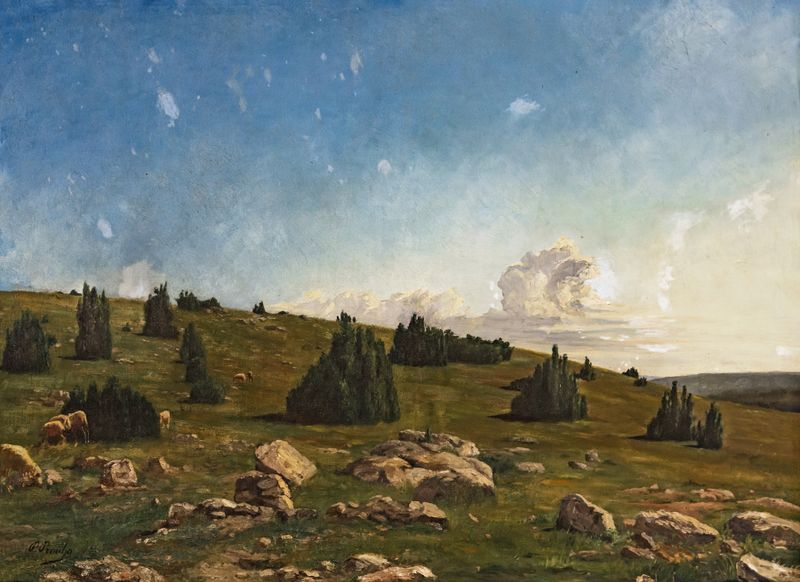
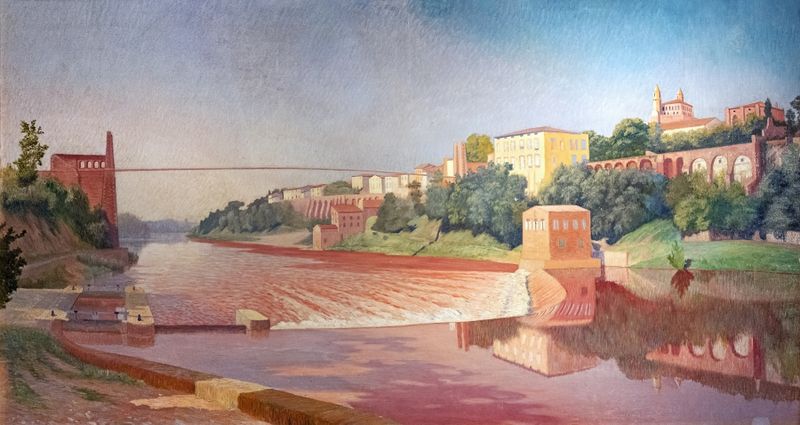
Where does light end, and longing begin? It is in that delicate threshold that Causeway of Rabastens finds its pulse, an echo of ecstasy that transcends the ordinary. Each brushstroke whispers secrets of the heart, capturing a moment that hovers between reality and reverie. Look to the left at the vibrant hues of the sky, where soft, pastel tones melt into each other, evoking a gentle twilight. The path winds through a lush landscape, drawing the eye toward a distant horizon, enveloped in a warm, golden glow.
Notice how the brushwork varies: the sky, fluid and almost ethereal, contrasts sharply with the textured earth, which is rendered with deliberate strokes that ground the composition. This juxtaposition invites the viewer to journey through both light and shadow, creating a rhythm that feels almost musical. Hidden within this serene landscape lies a tension between solitude and connection. The empty path suggests a personal journey, an invitation for introspection, while the surrounding nature pulsates with life, hinting at the thriving world beyond the canvas.
The play of light against the land hints at the ephemeral quality of beauty and experience, intertwining joy with an underlying sense of yearning that lingers long after the viewing. Prouho created this work at an unspecified time when Impressionism was evolving, firmly establishing itself as a movement that focused on capturing fleeting moments and sensory experiences. His approach during this period reflected broader artistic trends that sought to celebrate the interplay of color and light as a means to convey deeper emotions and an intimate connection to the world.