The ramparts at Rabastens — History & Facts
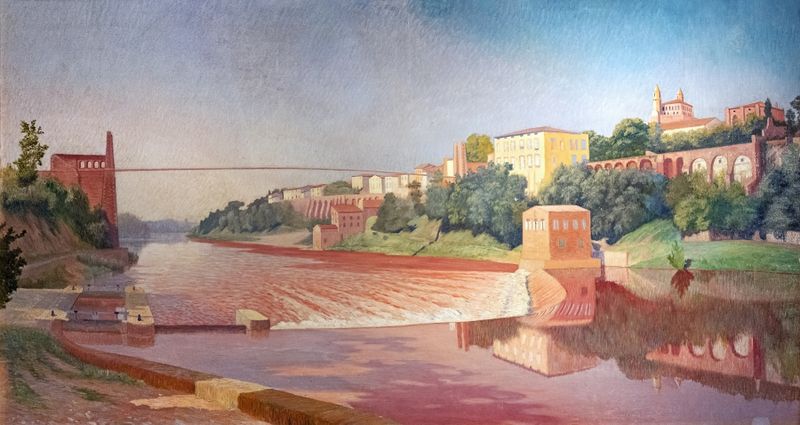
This poignant reflection draws us into the essence of light and shadow, where they dance together, revealing life’s most profound truths. Look to the top right, where warm rays cascade over the ramparts, illuminating the earth tones of the stones and creating a striking contrast with the cooler shadows that linger beneath. The interplay of light serves not only as a guide for the eye but also as an emotional compass, directing us to the whispers of history embedded within the landscape. Each stroke feels deliberate, capturing the rugged texture of the terracotta, inviting the viewer to trace their fingers along the contours of time. Yet, amid this radiant beauty, there lies a deeper tension.
The stark highlights and deep shadows embody the fragility of fortitude—each rampart stands strong against the passage of time, yet wears a veil of melancholy in the unseen stories of those who once sought refuge within its walls. The distant horizon is tinged with uncertainty, suggesting change, while the lush green of the foreground hints at life’s resilience, a soft reminder that growth often thrives in the shadow of struggle. During the time he painted this work, Prouho was navigating the complexities of a rapidly changing artistic landscape in the late 19th century. As a part of the French art scene, he was influenced by Impressionism, exploring the nuances of light in nature while striving to carve out his unique expression.
The era was marked by a shift toward capturing the ephemeral qualities of the world, reflecting both the beauty and tragedy of existence.