
The rest on the flight into Egypt: a night piece — History & Facts
Could beauty survive in a century of chaos? In The rest on the flight into Egypt: a night piece, we witness a moment of tender solace amid turmoil, encapsulating the fragile hope of a fleeing family. Look to the center where the figures of Mary and the child Jesus are nestled, illuminated by gentle, golden light that seems to radiate from their presence. The deep shadows surrounding them create a striking contrast, heightening the sense of intimacy in this sacred pause. Notice how the landscape melts into darkness, allowing the figures to emerge, almost ethereal, as if they are the heart of the canvas itself.
The rich, earthy tones of the ground and plant life ground the scene, while soft brushwork enhances the dreamlike quality. Here, the tender expressions of the Virgin and Child evoke profound emotion, suggestive of both vulnerability and divine protection. The juxtaposition of the serene moment against the backdrop of impending danger—reflected in the darkened sky and obscured figures nearby—heightens the emotional tension. The presence of the donkey adds a touch of humility and weariness, symbolizing the burdens of motherhood and the weight of their journey. In the early 1640s, amidst a turbulent socio-political landscape in Europe, Rembrandt painted this artwork while living in Amsterdam, experiencing both artistic success and personal challenges.
This period marked a shift in his style towards a more intimate exploration of human emotion and spirituality, reflecting his desire to convey beauty and solace even in times of great unrest.
More Artworks by Rembrandt van Rijn
Browse all →
The Night Watch Militia Company of District II under the Command of Captain Frans Banninck Cocq
Rembrandt van Rijn

The Return of the Prodigal Son
Rembrandt van Rijn

The Hundred Guilder Print: the figures leaning on the wall in the centre left
Rembrandt van Rijn

The Hundred Guilder Print: the central piece with Christ preaching, the plate arched
Rembrandt van Rijn

Isaac and Rebecca, Known as ‘The Jewish Bride’
Rembrandt van Rijn
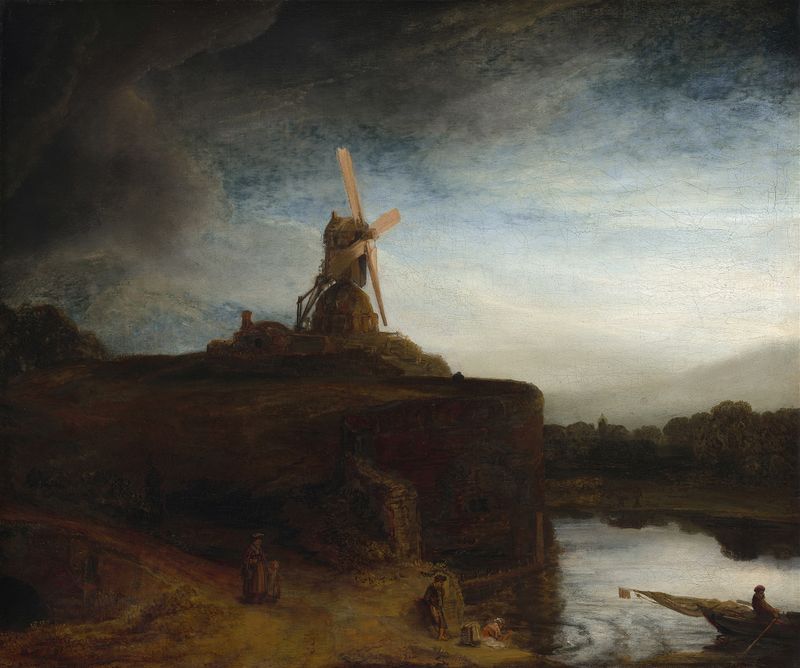
The Mill
Rembrandt van Rijn

The Sampling Officials of the Amsterdam Drapers’ Guild, Known as ‘The Syndics’
Rembrandt van Rijn

The return of the prodigal son
Rembrandt van Rijn
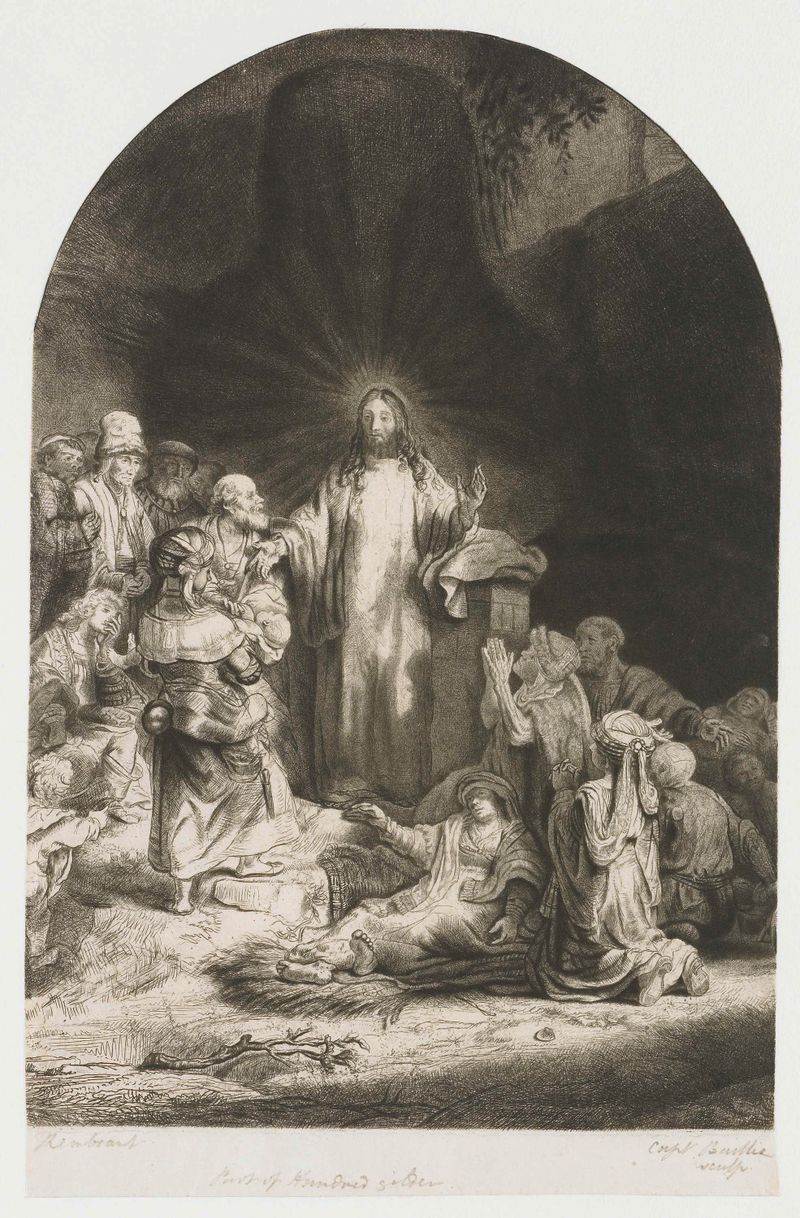
The Hundred Guilder Print: the central piece with Christ preaching, the plate arched
Rembrandt van Rijn

The Hundred Guilder Print: the man seen on the back in the lower left corner
Rembrandt van Rijn
More Religious Art
Browse all →The Return of the Prodigal Son
Rembrandt van Rijn

The Garden of Earthly Delights
El Bosco

Count Orgaz’ funeral
El Greco
The Hundred Guilder Print: the central piece with Christ preaching, the plate arched
Rembrandt van Rijn

The Descent from the Cross
Rogier van der Weyden
The return of the prodigal son
Rembrandt van Rijn